Things to do in Nule
Things to see in Nule, Sardinia: Nuraghe Voes, Santu Lisei, Catalan-Gothic churches, hand-woven a framas rugs and the June feast of Sant'Antonio.
We are gathering the first experiences for this area. Check back soon, or tell us about an operator you know.
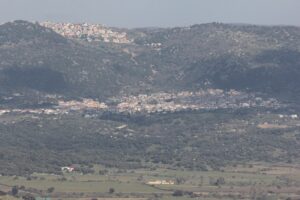
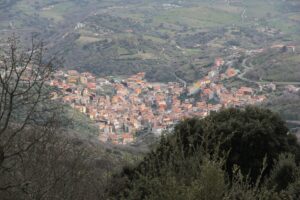
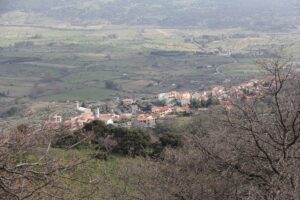
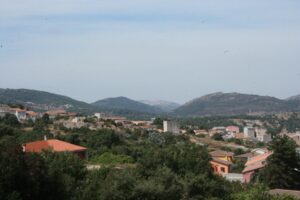
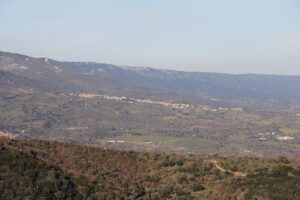
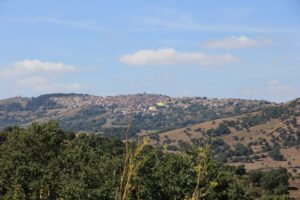
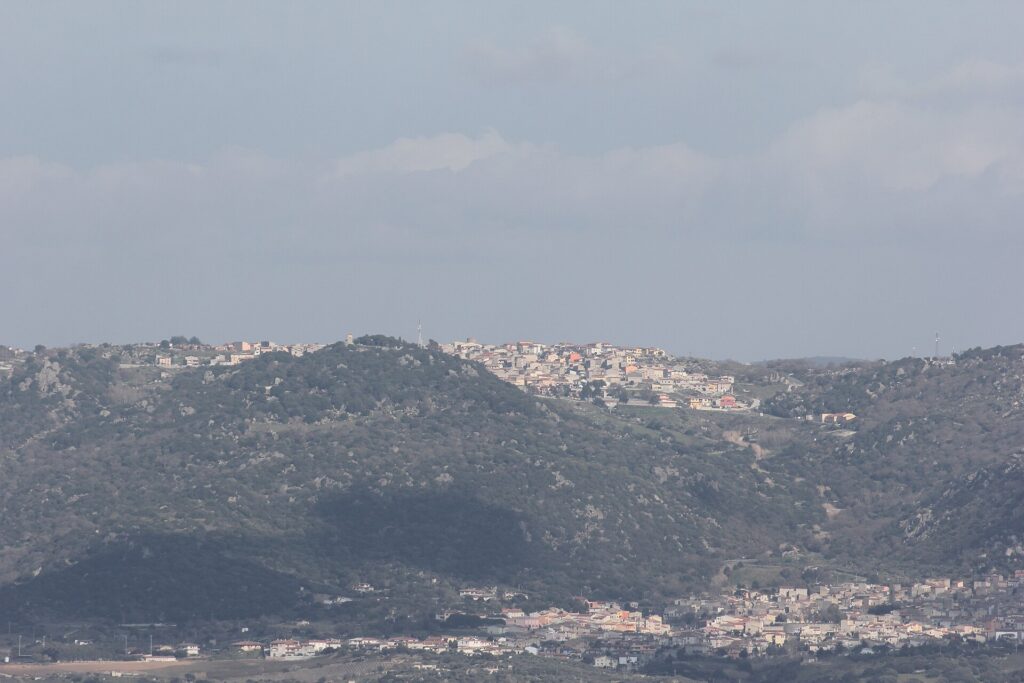
Nule is a village in the Goceano, in north-central Sardinia, at around 700 metres on the edge of the Buddusò plateau. From its viewpoint you can take in the whole Goceano down to the Tirso valley. It is famous across the island for its hand-woven rugs and guards one of the most impressive nuraghi in northern Sardinia: a destination for lovers of genuine craftsmanship, archaeology and upland scenery.
What to see in Nule
Nuraghe Voes
About 7 km from the village, Nuraghe Voes is the area's grandest and best-preserved monument. Dating to around 1200-1000 BC, it has a central tower, originally on two floors, and a three-lobed granite bastion with an inner courtyard, recalling the famous Santu Antine at Torralba. Roman coins and a Punic pottery fragment were also found here.
Santu Lisei
In the north of the territory, towards Osidda, Santu Lisei keeps traces of a prehistoric village and a dolmen. This is where the Nule bronze was found, a figurine with a bull's body and human head now in the National Archaeological Museum in Cagliari.
More nuraghi and tombs
The area counts many nuraghi, including the Istelai complex, and several giants' tombs, such as those at Isporo.
The churches
The parish church of Santa Maria Assunta, in Catalan-Gothic style and dated 1601, has two bell towers, one of them cylindrical, a Baroque wooden altar and fine paintings. The former parish church of Santa Croce, from the 16th century, holds a wooden crucifix.
Things to do in Nule
- Meet the weavers and watch the upright looms at work.
- Archaeology trips to Nuraghe Voes and Santu Lisei.
- Views from the lookout over the Goceano and Monte Tolidda.
- Hiking on the plateau and in the nearby Fiorentini and Forest'Anela woods.
Scroll down to find the experiences offered by local operators and book yours.
History
The area was inhabited in pre-nuragic and nuragic times, as dolmens, menhirs, giants' tombs and nuraghi show; Phoenician-Punic cinerary urns have also been found. In the Middle Ages Nule, then called Nuel, belonged to the Judicate of Torres; after 1259 it passed to the Doria, then to Arborea and, from the mid-14th century, to the Aragonese. In the 18th century it became part of the Duchy of Monte Acuto and was bought out of feudal rule in 1839.
Food and local products
The ultimate souvenir is a Nule rug: Sardinian wool woven on an upright loom, with the signature a framas pattern of thin, brightly coloured flames. The weave is dense and both sides are identical with the colours reversed; some modern designs are by the artist Eugenio Tavolara. At the table, expect pecorino, pasta, breads and shepherd-tradition sweets.
Festivals and traditions
- Nule, idda 'e manos bonas ("village of good hands"), traditionally in late April: craft workshops open their doors to visitors.
- Sant'Antonio da Padova, on 13 June, preceded by the days of S'Impinnu (the vow): blessed bread with cheese, baked by village women and donated by shepherds, is handed out.
Nearby
- Benetutti and the San Saturnino hot springs.
- Osidda and Buddusò, on the plateau.
- Bitti and the nuragic sanctuary of Romanzesu.
- Bultei and Fiorentini forest.
Getting there and when to go
Olbia, with airport and ferry port, is about an hour and a quarter's drive away. Spring and early summer are ideal: the workshop festival and Sant'Antonio both fall then, and the plateau is green.
FAQ
Where can I buy a Nule rug?
Directly from the village weavers, who work to order and are happy to show you the loom.
How long do I need for Nule?
Half a day for the village and workshops; a full day with Nuraghe Voes.
Is Nule good for families?
Yes: watching a loom at work and climbing a nuraghe are experiences children remember.