Things to do in Boroneddu
Things to see in Boroneddu near Lake Omodeo: San Salvatore sanctuary, the Sardinian fairy-tale museum, nuraghi and prickly pear country.
We are gathering the first experiences for this area. Check back soon, or tell us about an operator you know.
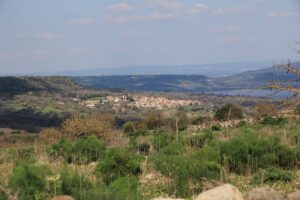
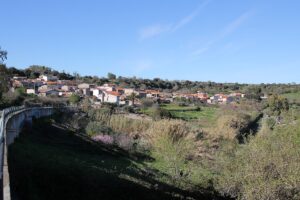
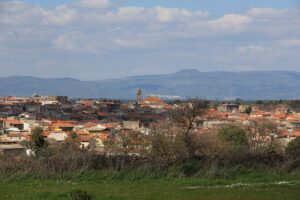
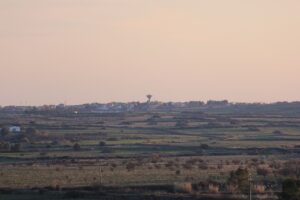
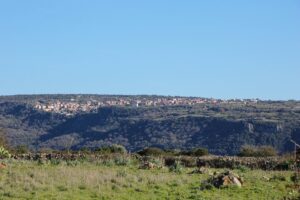
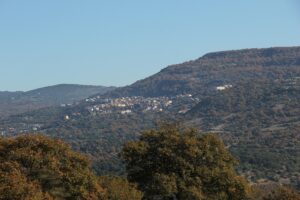
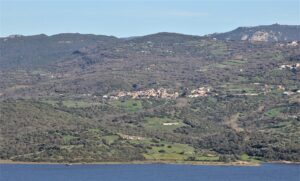
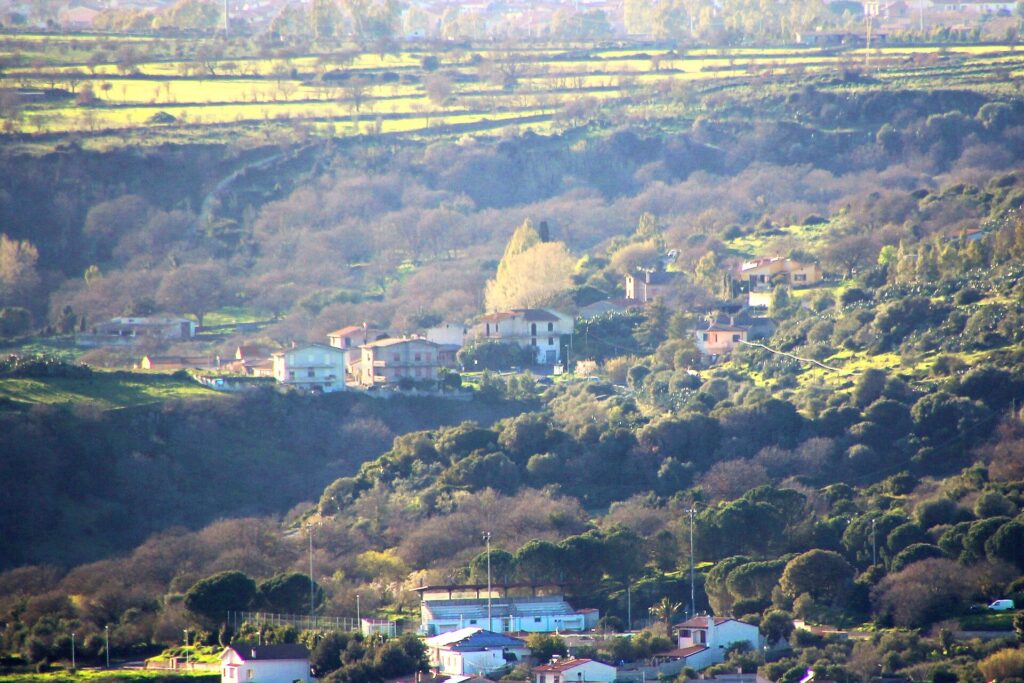
Boroneddu is a small village in the Guilcer district, home to about 140 people, set on a basalt plateau that slopes gently down to the Lake Omodeo valley. Oak woods, Mediterranean scrub and the Barigadu hills frame the view. Come here for silence, nuraghi scattered across the fields and simple flavours, like the prickly pears that grow everywhere on the basalt slopes.
What to see in Boroneddu
Sanctuary of San Salvatore
About 2 km from the village, on the site of the medieval settlement, stands the sanctuary of San Salvatore. It holds a cone-shaped basalt block carved with a Byzantine cross. Next to the church are the muristenes, small houses where pilgrims stay during the novena.
Church of San Lorenzo
The parish church, built in 1886 from squared dark basalt blocks, has a facade divided by pilasters and an open bell gable.
Museum of Sardinian Fairy Tales
A small museum dedicated to the island's folk tales, featuring works by the artist Maria Lai. Its panels show country life, the shepherd's hut (su pinnettu) and women's daily work.
The nuraghi
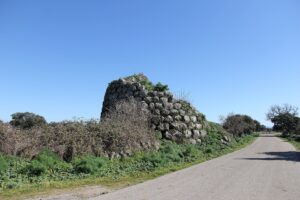
A ring of nuraghi, the Bronze Age stone towers typical of Sardinia, surrounds the village. The best known is the Su Montigu complex; others include Cortinas, Fiscas, Ispinosu, Malosa, Trubeli and Ostele, the highest.
Things to do in Boroneddu
Boroneddu is a gateway to the Omodeo valley: long walks lead from the plateau down to the lake and the Tirso river, great for mountain biking too. Go nuraghe hunting in the countryside, watch birds along the shore or paddle a canoe on the lake. Scroll down for the experiences offered by local operators and pick your outing.
History
The area was settled in Nuragic times. In the Middle Ages the village, named Orene or Borene in the Condaghe of Bonarcado, belonged to the Giudicato of Arborea. After the Aragonese conquest it passed between feudal families until 1839. In 1927 it was merged into Ghilarza and only regained its independence in 1988. Its coat of arms shows a nuraghe and the motto Felix terra Boroneddu.
Food and shopping
Bread is still baked in wood-fired ovens and fabrics woven on looms. Try prickly pears, seasonal wild asparagus and fennel, and panischedda, a sweet made with sapa (cooked grape must), walnuts and almonds.
Festivals and traditions
- Bonfires of Sant'Antonio abate: mid-January, when panischedda is offered.
- Wild asparagus and fennel festival: March.
- Prickly pear festival: summer, with dishes made from the fruit.
- San Salvatore: mid-September, with the novena at the sanctuary.
Nearby
- Ghilarza, with Casa Gramsci and the lakeside church of San Pietro di Zuri.
- Tadasuni and Soddì, villages overlooking the lake; Soddì displays trunks from a fossil forest.
- Sedilo, with the San Costantino sanctuary and the Ardia horse race in July.
- Nuraghe Losa in Abbasanta, one of the finest on the island.
Getting there and when to go
Boroneddu is a few minutes from the SS131 highway (Abbasanta exit), about 40 km from Oristano and 50 km from Nuoro. Alghero and Cagliari airports are both roughly one to one and a half hours away by car; the nearest station is Abbasanta. Visit in spring, when the fields are green and asparagus is in season, or in late summer for prickly pears.
FAQ
How long do I need in Boroneddu?
A couple of hours for the village, museum and sanctuary; a full day if you add a hike to the lake.
Is Boroneddu good for families?
Yes: children enjoy the fairy-tale museum and the plateau walks are easy.
Which is the main nuraghe in Boroneddu?
Su Montigu is the best known, while Ostele sits highest.