Things to do in Solarussa
Things to see in Solarussa near Oristano: San Gregorio church, nuraghi, the Mitza Pidighi sacred spring, Vernaccia wine cellars and village festivals.
We are gathering the first experiences for this area. Check back soon, or tell us about an operator you know.
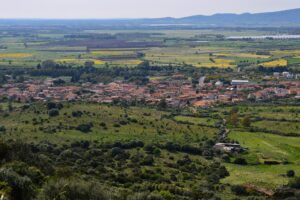
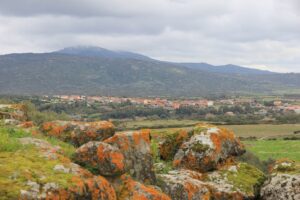
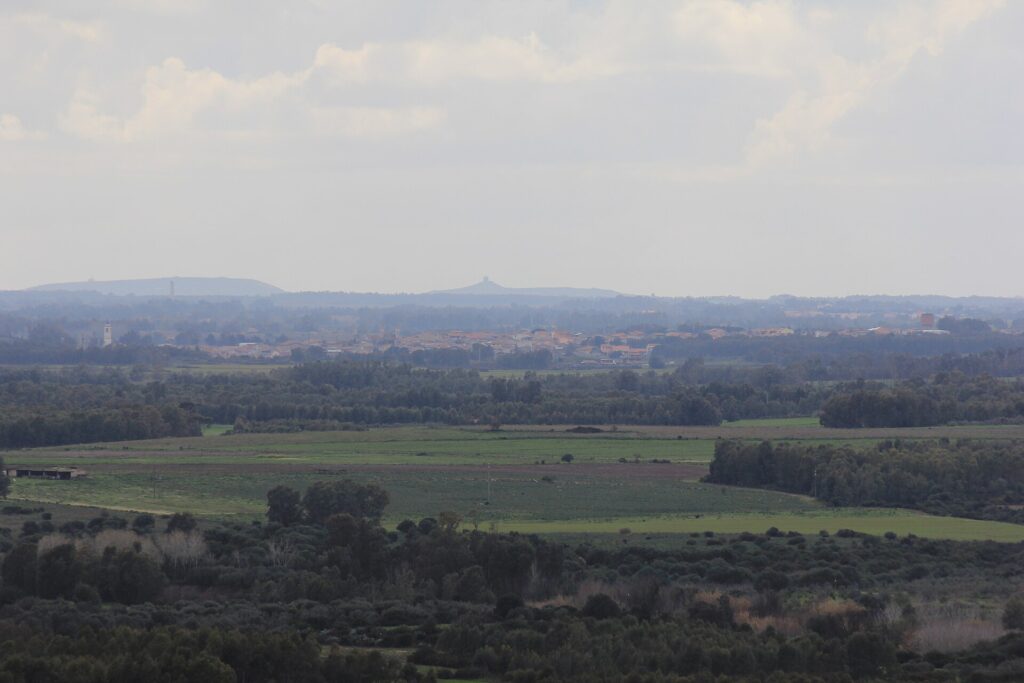
Solarussa lies in the lower Tirso valley, about 12 km from Oristano, in one of Sardinia's most fertile farming areas. It's one of the historic homes of Vernaccia, Oristano's amber wine, and has fine churches, nuraghi and an ancient sacred spring. It's the right stop if you love wine, archaeology and village festivals, perhaps combined with a beach day in the Sinis.
What to see in Solarussa
Church of San Gregorio Magno
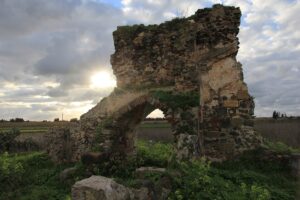
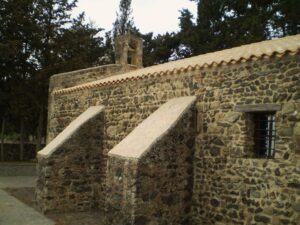
On a hill outside the village stands the country church of San Gregorio, built between the 12th and 13th centuries in simple Romanesque style from trachyte and basalt. Nearby are nuragic remains and, at Putz'e Angius, the ruins of a Roman-era well.
The village churches
The parish church of San Pietro Apostolo, consecrated in 1835, holds two 18th-century paintings by Pietro Angeletti. The Church of the Souls (Chiesa delle Anime), from 1749, has a polychrome marble altar and a wooden pulpit. In the upper village, the Madonna delle Grazie, a former pilgrimage church, stands out with its three-tier loggia and twin bell towers.
Nuraghi and the Mitza Pidighi spring
The Pidighi complex includes two similar nuraghi, Pidighi and Muru Accas. Next to them, the Mitza Pidighi spring was used as early as the 4th millennium BC; around 1000 BC an enclosure, possibly with an altar, was built around it, and water still flows today.
Old centre
Traditional houses built with bricks and tiles from local kilns, in use until the mid-1900s, some decorated with murals, tell the story of farming life. Casa Sanna, with wrought-iron balconies, hosts cultural events.
Things to do in Solarussa
Visit the cellars and taste Vernaccia, grown especially in the Bennaxi countryside; cycle the flat lanes between vines and olive groves down to the bend of the Tirso. Just below you'll find experiences offered by local operators: tastings, excursions and guided visits to discover the area.
History
The name may come from the reddish colour of the soil. Inhabited in the Nuragic era, the area saw Phoenician-Punic settlers and, in Roman times, a staging post on the road to Tharros: coins and pottery have turned up at Cuccuru Madau. From the Middle Ages it belonged to the Giudicato of Arborea, and in 1388 its representatives signed the peace between Eleonora of Arborea and the Crown of Aragon. Feudal lords and epidemics followed, and in the 1800s phylloxera hit the vineyards and many emigrated.
Food and local products
Vernaccia di Oristano is the star, perfect with almond sweets. The countryside also yields olives, artichokes, tomatoes, watermelons and melons.
Festivals and traditions
- Carnival: the village mask is su Bingiatteri, the vine grower.
- Madonna delle Grazie: in late May.
- San Gregorio: in mid-October, the most important feast.
- Vernaccia festival: with tastings and local dishes.
Nearby
- Siamaggiore (about 1 km): the artichoke festival and San Ciriaco.
- Zerfaliu: citrus groves and the nuraghe 'e Mesu.
- Paulilatino: the sacred well of Santa Cristina.
- Oristano and Tharros: medieval history and an ancient city by the sea.
Getting there and when to go
Solarussa is close to the SS131 and has a station on the Cagliari–Oristano–Sassari railway. The handiest airports are Cagliari-Elmas (about an hour and a quarter by car) and Alghero (about an hour and a half). Spring and autumn are ideal; mid-October brings the San Gregorio feast.
FAQ
How long do I need for Solarussa?
Half a day for the churches, Pidighi and a tasting.
What is Vernaccia?
An amber white wine from a local grape, long-aged, typical of the lower Tirso valley.
Can I get there by train?
Yes, Solarussa has a station on Sardinia's main north–south line.