Things to do in Ghilarza
Things to do in Ghilarza, Sardinia: Gramsci's house museum, Aragonese tower, San Pietro di Zuri, San Serafino on Lake Omodeo and nearby nuraghi.
We are gathering the first experiences for this area. Check back soon, or tell us about an operator you know.
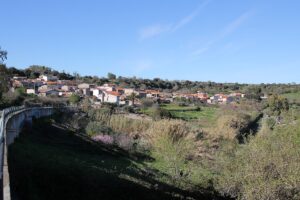
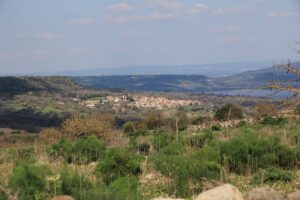
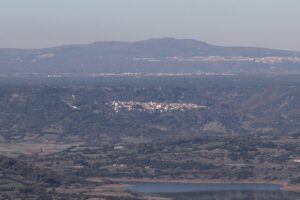
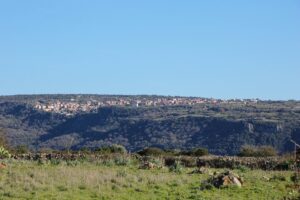
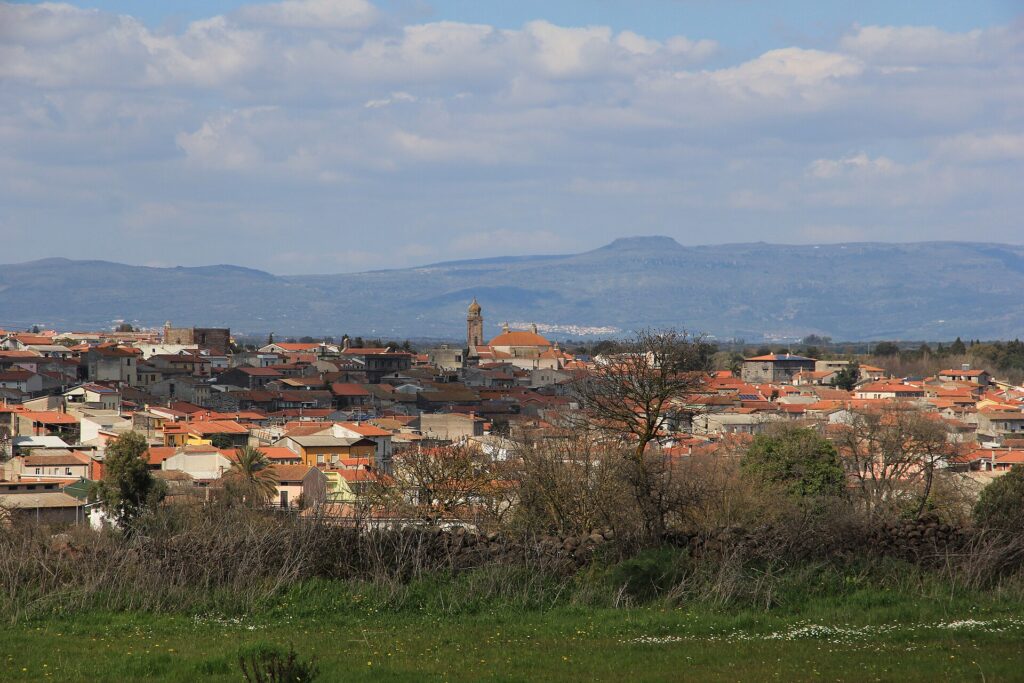
Ghilarza is a village in central Sardinia, on the Abbasanta plateau, a few kilometres from Lake Omodeo and about 35 minutes by car from Oristano. It is best known as the place where Antonio Gramsci grew up, but it's also worth visiting for its dark basalt houses, Aragonese tower, Romanesque churches and evocative sanctuary villages on the lakeshore. It's perfect for lovers of history, Nuragic archaeology and quiet inland landscapes, and easy to reach from the SS131 highway.
What to see in Ghilarza
Casa Gramsci
On the main street stands the Antonio Gramsci House Museum, where the thinker and politician lived from 1898 to 1911, through his childhood and teens. Photos, documents and personal belongings trace his life from Sardinia to a Fascist prison, and show how deeply this land shaped his ideas.
The Aragonese tower and the basalt centre
In the heart of the village rises the Aragonese tower, built in the 15th century in Gothic-Aragonese style after the fall of the Judicate of Arborea. Once a prison, it now hosts cultural events. Around it, the streets are lined with houses of basalt stone, worked by generations of skilled local stonemasons.
The Church of San Palmerio
On the edge of the village, the 13th-century Romanesque church of San Palmerio stands out for its façade alternating dark basalt blocks with reddish volcanic stone.
San Pietro di Zuri
In the hamlet of Zuri lies one of Sardinia's most curious stories: when Lake Omodeo was created in the 1920s, the Romanesque church of San Pietro was dismantled stone by stone and rebuilt higher up, while the old village disappeared under the water.
The San Serafino sanctuary
On a bend of the lake stands the novenario of San Serafino: a church of very ancient origin surrounded by more than a hundred muristenes, 17th-century pilgrims' houses that come alive during the nine days of the festival. The municipality has several of these sanctuary villages, lived in for only a few days a year.
Things to do in Ghilarza
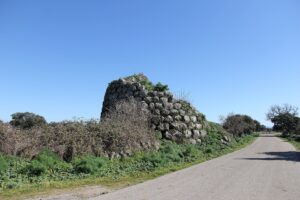
Lake Omodeo, for a long time Europe's largest artificial reservoir, is the star of outdoor life: come for lakeside walks, fishing, canoeing and birdwatching. The plateau around the village is dotted with nuraghi (Bronze Age stone towers), giants' tombs and rock-cut tombs, perfect to explore on a guided hike or by bike. Culture lovers can build an itinerary following Gramsci and the villages of the Guilcer area.
Further down you'll find the experiences offered by local operators: hikes, guided tours and activities to get close to Ghilarza and Lake Omodeo.
History
The area holds pre-Nuragic, Nuragic, Phoenician-Punic, Roman and Byzantine remains. In Roman times it was crossed by the road linking Cagliari to Porto Torres. In the Middle Ages Ghilarza belonged to the Guilcer district in the Judicate of Arborea; after the Judicate fell in 1420 it passed to Aragon and remained a fief until it was redeemed in 1839. In the 19th century a reading club was founded here, a sign of the cultural liveliness that carried into the 20th century, when Ghilarza's stonemasons became a benchmark for building across the island.
What to eat and buy
The food is classic inland Sardinia: home-made bread, fresh pasta, roast meats and pecorino cheeses from the plateau, with wine and olive oil from the nearby hills. Among the most typical souvenirs are objects in basalt, carved by local craftspeople.
Festivals and traditions
The most distinctive traditions are the novenari, such as San Serafino's: for nine days families move into the muristenes around the church, sharing prayers, meals and music. The local dialect, halfway between Campidanese and Logudorese Sardinian, has a lilt all its own that you'll hear clearly at festival time.
Nearby
- Nuraghe Losa at Abbasanta: one of Sardinia's most imposing and best-preserved nuraghi, a few minutes away.
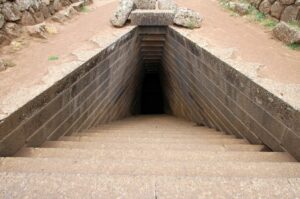
- Santa Cristina at Paulilatino: the famous Nuragic sacred well.
- Sedilo: famous for the Ardia of San Costantino, a breakneck horse race in early July.
- Tadasuni: a small lakeside village with a museum of Sardinian folk instruments.
- Fordongianus: Roman baths and red trachyte houses.
Getting there and when to go
Ghilarza is easy to reach from the SS131 "Diramazione Centrale Nuorese", which has two exits for the village. The nearest airports are Cagliari-Elmas and Alghero, both about an hour and a quarter by car; the nearest railway station is Abbasanta. Spring and autumn are ideal for the lake and the nuraghi, with mild temperatures; summer is hotter but full of festivals in the surrounding villages.
FAQ
Can you visit Gramsci's house in Ghilarza?
Yes, the House Museum is on the main street and open to visitors; check opening times before you go.
How long do you need in Ghilarza?
Half a day covers Casa Gramsci, the tower and San Palmerio; add the lake, Zuri and Nuraghe Losa and make it a full day.
Is Ghilarza good for families?
Yes: the lake and nearby nuraghi such as Losa are easy to visit with children.