Things to do in Uras
Things to see in Uras, Sardinia: the Sa Domu Beccia nuraghe, a Baroque church, the 1470 battle, horseback festivals and hikes on Monte Arci.
We are gathering the first experiences for this area. Check back soon, or tell us about an operator you know.
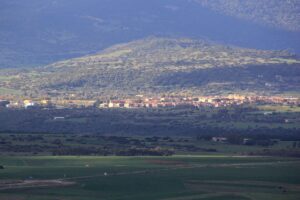
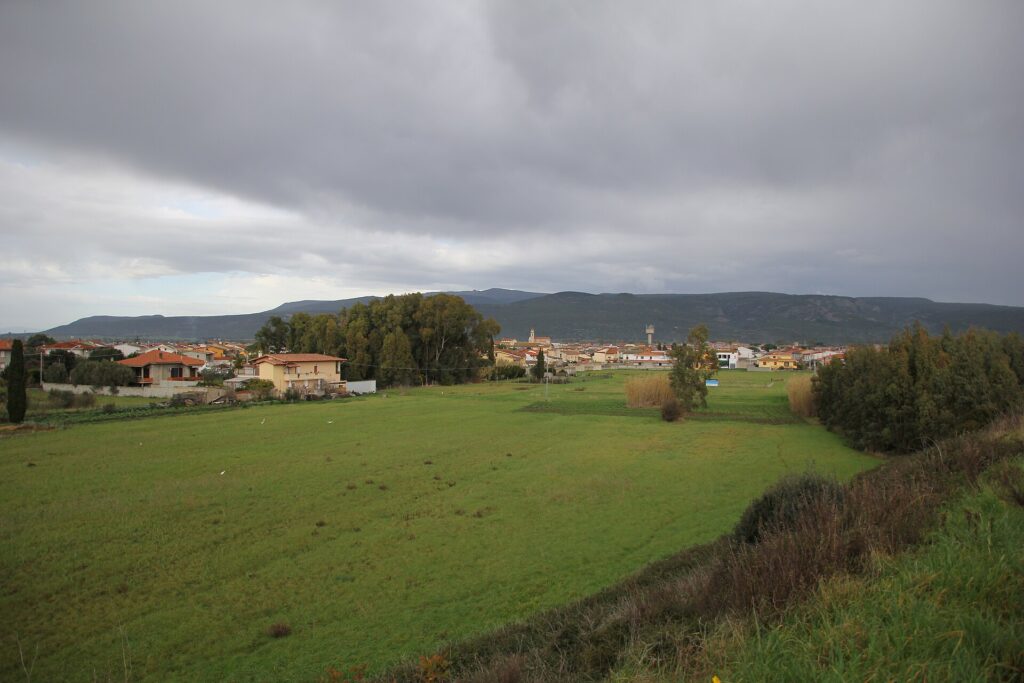
Uras is a village of about 2,600 people in the Campidano of Oristano, at the foot of Monte Arci, about 25 km from Oristano and just off the SS 131 highway. Here the plain meets the mountain of obsidian, the volcanic glass that made this land rich in prehistory. The main reason to stop is Sa Domu Beccia, one of the area's most impressive complex nuraghi, but Uras also has a notable medieval past and heartfelt horseback festivals. Ideal if you love archaeology, nature and tradition.
Things to see in Uras
Sa Domu Beccia nuraghe
Less than a kilometre from the village stands Sa Domu Beccia (“the old house”), a large Bronze Age complex nuraghe built of basalt. It has a multi-towered bastion, a courtyard and an outer wall; to the south lies a well-preserved village of round huts, and on the north side you can make out the outline of a giants' tomb.
Church of Santa Maria Maddalena
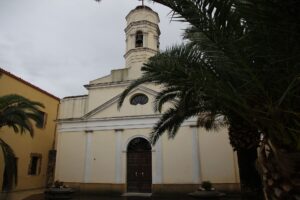
The Baroque parish church was built between 1664 and 1682; the square bell tower with its clock and little dome was added in the early 1700s. Nuragic stones are built into its walls, a sign the site was sacred long before.
San Salvatore and Sant'Antonio
San Salvatore stands near the site of the 1470 battle and partly rests on a Nuragic structure. Sant'Antonio, on the edge of town, has a bell-gable façade and a carved stone altar.
Nuraghi and giants' tombs
The area holds many Nuragic towers and two giants' tombs, evidence of dense ancient settlement.
Things to do in Uras
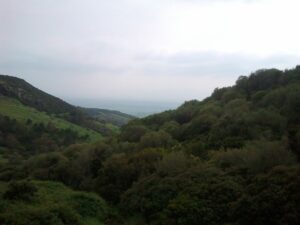
From the village you can head into Monte Arci Park on foot or by mountain bike, among holm oaks, cork oaks and outcrops of obsidian. The surrounding plain suits cycling and horse riding, and the Marceddì lagoons and Costa Verde beaches are not far. Scroll down: right below you'll find experiences offered by local operators, from guided hikes to outdoor activities.
History
The first communities settled here in the Neolithic, drawn by Monte Arci's obsidian, which was worked and traded across the western Mediterranean. Then came the Nuragic people, the Punic settlers and the Romans, who had a stop here on the road between Karalis (Cagliari) and Turris Libisonis (Porto Torres). In the Middle Ages Uras belonged to the Giudicato of Arborea. On 14 April 1470, nearby, Leonardo Alagon, Marquis of Oristano, defeated the troops of the Aragonese viceroy Nicolò Carroz. After 1478 the village became part of the Quirra fief until 1839.
Food and shopping
The cooking is pure Campidano: malloreddus pasta, home-baked bread, almond sweets and local wines. Uras has a weaving tradition; for rugs and textiles, nearby Mogoro is also worth a visit.
Festivals and traditions
- San Salvatore: the Tuesday after Easter Monday, with the horse race sa cursa de su pannu, recalling the 1470 battle.
- Sant'Antonio: mid-June.
- Santa Maria Maddalena, the patron saint: late July.
Nearby
- Mogoro, with the Cuccurada nuraghe and textile crafts.
- Masullas, with the Monte Arci GeoMuseum.
- Morgongiori, with the Sa Scaba 'e Cresia sacred cave.
- Terralba and Marceddì, lagoon and fishing hamlet.
Getting there and when to go
Uras sits right next to the SS 131 Carlo Felice and has its own railway station, Uras-Mogoro. Cagliari airport and port are about an hour's drive away. Spring and autumn are ideal for nuraghi and hiking, and April brings the San Salvatore festival.
FAQ
What can you see in Uras in a few hours?
The Sa Domu Beccia nuraghe and the parish church of Santa Maria Maddalena.
Is Uras by the sea?
No, but the Costa Verde beaches are about 45 minutes by car.
Is Uras good for families?
Yes: the nuraghe is close to the village and Monte Arci has some easy trails.