Things to do in Busachi
Busachi, Sardinia's village of linen: costume museum, trachyte churches, Campu Majore rock-cut tombs and su succu, the local pasta dish.
We are gathering the first experiences for this area. Check back soon, or tell us about an operator you know.
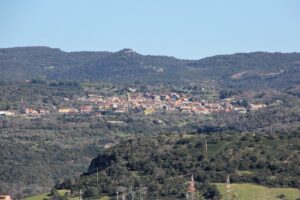
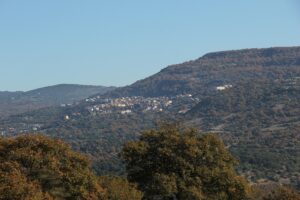
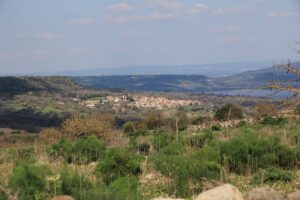
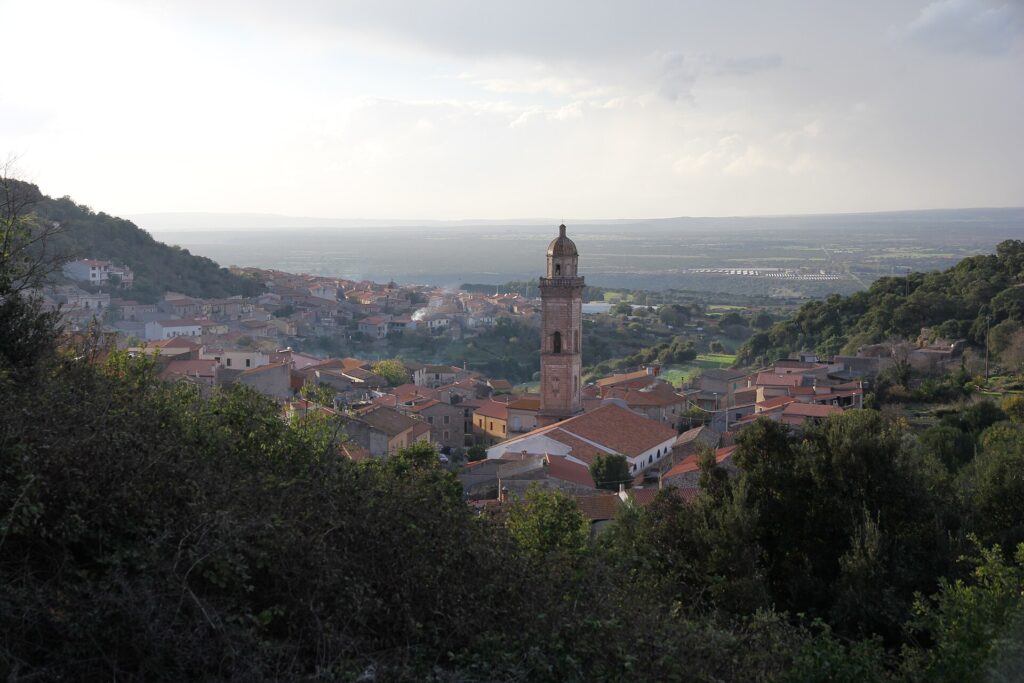
Busachi is a village of about 1,100 people in the Barigadu area, around 40 km from Oristano, built like an amphitheatre above the Tirso valley. Its pink trachyte houses glow red in the sun, and in the Middle Ages it was the area's main town. It's known as the "village of linen" and for one of Sardinia's most elegant traditional costumes, which some women still wear every day. It's perfect if you love authentic Sardinian culture, crafts and archaeology.
What to see in Busachi
Museum of Costume and Linen Work
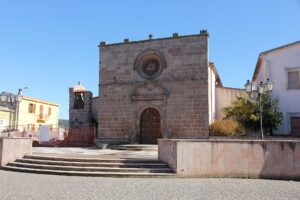
Housed in the former church of San Domenico (1571), one section shows everyday, festive and mourning clothes, the other the processing of linen, with tools and embroidery techniques. In the 19th century Busachi linen was considered the finest on the island.
The two quarters and their churches
The village is split into Busach'e susu, the older upper part around the 17th-century parish church of Sant'Antonio da Padova, with its bell tower of about 48 metres and majolica dome, and Busach'e josso, about 80 metres lower, with the 16th-century church of San Bernardino.
The church of Santa Susanna
A Gothic church consecrated in 1349, linked to the vanished village of Moddaminis and surrounded by cumbessias, pilgrims' lodgings that come to life during the novenas.
Campu Majore necropolis
Twenty-four domus de janas, prehistoric rock-cut tombs, some with traces of red ochre; tomb IV has seven chambers. The area has dozens more domus, several nuraghi and Roman remains.
Things to do in Busachi
Wander the steep lanes, the orrugas, for views over the Tirso valley and the Montiferru hills. Get up close to linen weaving and embroidery, take an archaeological hike among domus and nuraghi, or head to nearby Lake Omodeo for a day outdoors. Below you'll find the experiences offered by local operators: book yours.
History
Inhabited since the Neolithic, the area has rock-cut tombs, nuraghi and Roman traces. In the Middle Ages Busachi belonged to the Giudicato of Arborea and was the administrative centre of the Parte Barigadu district. After 1420 it joined the Marquisate of Oristano, became an Aragonese fief in 1478, was raised to a marquisate in 1790, and its feudal rights were bought back in 1839. In the early 20th century the painter Filippo Figari created his famous "Busachi Wedding" cycle here, now in Cagliari's Palazzo civico.
What to eat and buy
The signature dish is su succu: very thin strands of pasta cooked in meat broth with fresh and aged pecorino and saffron, a recipe handed down for generations and celebrated at a festival where girls in costume carry su presente, an offering of bread and sweets. To take home: linen fabrics and embroidery.
Festivals and traditions
- Sant'Antonio Abate (16 January): traditional bonfires.
- Holy Week: ancient rites including s'iscravamentu, the taking down of Christ from the cross, with sacred chants and a rosary in Sardinian.
- San Bernardino (20 May) and Sant'Antonio da Padova, the patron (13 June).
- Santa Susanna (August): novena and country festival.
Nearby
- Fordongianus: the Roman baths of Forum Traiani and the Casa Aragonese, about 12 km away.
- Ula Tirso: the Santa Chiara dam on Lake Omodeo, about 3 km away.
- Sorradile: the Nuragic sanctuary of Su Monte on the lakeshore.
Getting there and when to go
From Oristano it's about 45 minutes via Fordongianus. The handiest airport is Cagliari-Elmas, about an hour and a half away; Alghero is about an hour and three quarters. The nearest ports are Cagliari, Porto Torres and Olbia. Spring and autumn are ideal for walking; January and Easter bring the traditional rites at their best.
Frequently asked questions
Why is Busachi called the village of linen?
For centuries linen was grown and worked here and was considered Sardinia's finest; the museum and the coat of arms, with two flowering linen plants, keep the memory alive.
Can you still see the traditional costume?
Yes, some women wear it daily, and at festivals you'll see it in all its richness.