Things to do in Buggerru
Buggerru, Sardinia: Cala Domestica, San Nicolò and Portixeddu beaches, Galleria Henry, the Miners' Museum, mining history, hiking and travel tips.
We are gathering the first experiences for this area. Check back soon, or tell us about an operator you know.
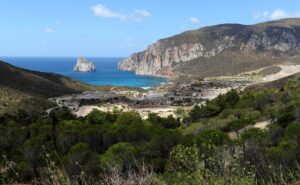
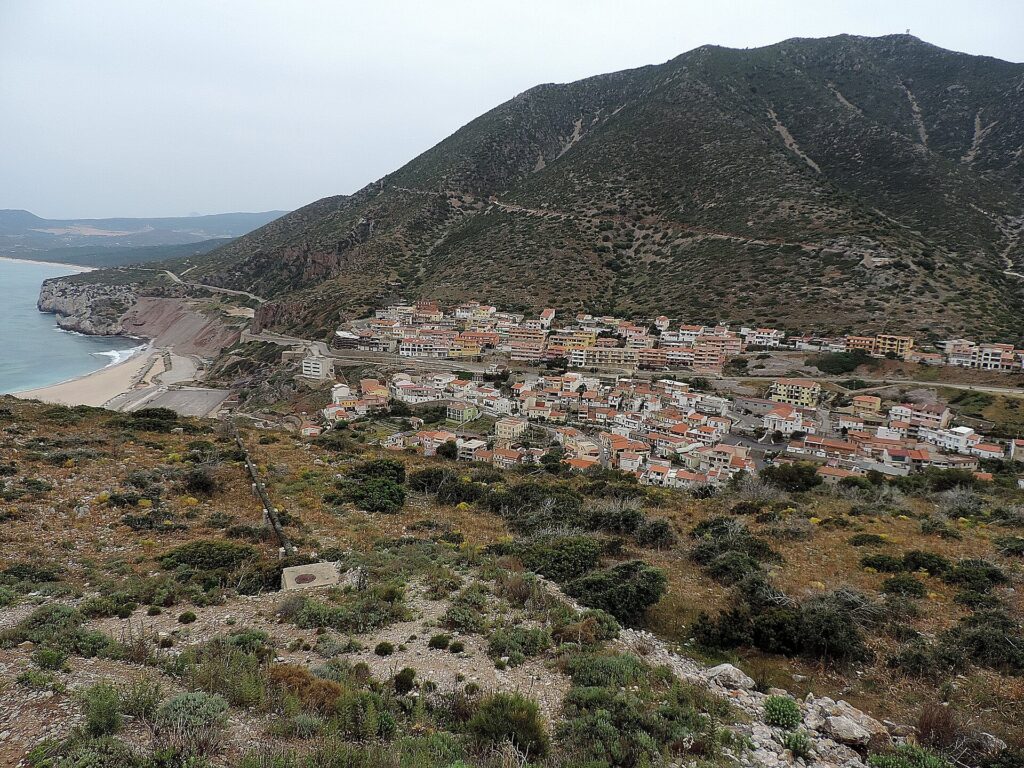
Buggerru is a small village of around a thousand people on Sardinia's west coast, in the Iglesiente region, squeezed between the sea and the walls of the Malfidano valley. Born in the mid-19th century around the mines, it preserves tunnels, plants and a labour history among the most significant in Italy. Its coastline alternates limestone cliffs, dunes and coves such as Cala Domestica, one of the loveliest in the south-west. It is perfect if you are looking for wild sea, scenic hiking and industrial heritage, away from the busiest resorts.
What to see in Buggerru
Galleria Henry
Carved into the rock high above the sea, Galleria Henry once carried a small train hauling ore along the coast. Today it is an open-air museum: on a guided visit you alternate between tunnels and spectacular viewpoints over the cliffs and the little harbour below.
The Miners' Museum and the village
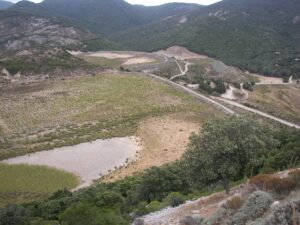
The Museo del Minatore tells the story of underground work with tools, machinery and period photographs. In and around the village you'll find remains of shafts, ore-washing plants, management buildings and mining villages, such as the ruins of Malfidano, which gave the valley its name. In its heyday, thanks to its French managers and engineers, Buggerru was nicknamed "little Paris".
The harbour and seafront
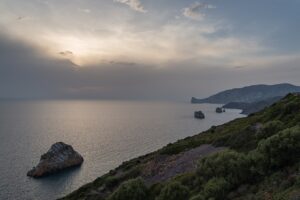
At the foot of Galleria Henry lies the modern marina, with the village beach beside it: a good spot for a sunset stroll, with the sun dropping straight into the open sea.
Things to do in Buggerru
- Coastal hiking: Buggerru is a stage of the Cammino Minerario di Santa Barbara, the long trail linking the mining sites of Sulcis-Iglesiente; the coastal sections offer extraordinary views.
- Boat and RIB trips to Cala Domestica, Capo Pecora and the sea caves along the cliffs.
- Snorkelling and kayaking in the clear water of the rocky coves.
- Mountain biking in the pine wood and among the dunes of San Nicolò.
- Surfing on beaches exposed to the mistral, such as San Nicolò and Portixeddu.
- Guided mine tours through tunnels and disused plants.
To discover the coast and the mines with people who really know them, browse the experiences offered by local operators in Buggerru and the Iglesiente just below.
Beaches of Buggerru
Cala Domestica
A few kilometres south of the village, Cala Domestica is a deep inlet between limestone cliffs, like a small fjord, with a beach of soft pale sand and a Spanish watchtower. A short passage through the rocks leads to the Caletta, an even more secluded little beach. The structures of an old ore depot still stand nearby. It suits families too, but in summer it gets very busy: arrive early.
San Nicolò
North of the village, San Nicolò is a long golden beach backed by dunes and a pine wood. Wide and often windy, it appeals to those seeking space and waves.
Portixeddu
Further north, on the border with Fluminimaggiore near the mouth of the Riu Mannu, Portixeddu closes the coastline with a wide beach and dunes, loved by surfers and families alike.
The village beach
Next to the harbour, Buggerru's small beach is handy for a swim without driving anywhere.
History
The village was founded in 1864 around the mining concessions of the Malfidano valley, rich in lead and zinc, and grew quickly as workers arrived from all over Sardinia and mainland Italy. On 4 September 1904 the miners went on strike against harsh working conditions and low pay: soldiers opened fire, killing three workers and wounding many more. The Buggerru massacre shocked Italy and spurred the country's first national general strike. Long a hamlet of Fluminimaggiore, Buggerru became an independent municipality in 1960; after the mines closed, it turned to the sea and tourism.
Food and shopping
The cooking blends sea and countryside: fresh fish, seafood and simple Iglesiente dishes, alongside pecorino cheese, rustic bread and traditional Sardinian almond sweets. In summer the village holds a fish festival.
Festivals and traditions
Mining memory lies at the heart of village identity: the anniversary of the 4 September massacre is a moment of remembrance for the whole community. Summer festivals bring the harbour and seafront to life with music and seafood.
Nearby
- Masua, Nebida and Pan di Zucchero (Iglesias): cliffs, sea stacks and the mining port of Porto Flavia, about half an hour away.
- The Temple of Antas (Fluminimaggiore): a Punic-Roman sanctuary in a green valley, about 25 minutes away.
- Su Mannau cave (Fluminimaggiore): one of the island's most beautiful caves.
- Piscinas and the Costa Verde (Arbus): huge dunes and wild beaches, about an hour away.
- Iglesias: a medieval old town and a mining art museum, about 40 minutes away.
Getting there and when to go
Buggerru is reached via the SS126 between Iglesias and Fluminimaggiore, then along the coast road. Cagliari airport and port are about an hour and a quarter by car. The roads are scenic but winding. For the beach, June to September is best; spring and autumn are perfect for coastal hiking and mine visits, with mild weather and few people.
Frequently asked questions
How do I get to Cala Domestica?
By car, a few kilometres south of Buggerru along the coast road towards Masua; from the car park it is a short walk down to the beach.
Can I visit Galleria Henry?
Yes, on guided tours that follow the route of the old mining train high above the sea.
Is Buggerru good for families?
Yes: Cala Domestica and Portixeddu are easy beaches, and the mine tours fascinate children too.