Things to do in Piscinas
Visit Piscinas in south-west Sardinia: Villa Bice, the St George mosaic, domus de janas and nuraghi, reed crafts and the ox-drawn Madonna della Neve feast.
We are gathering the first experiences for this area. Check back soon, or tell us about an operator you know.
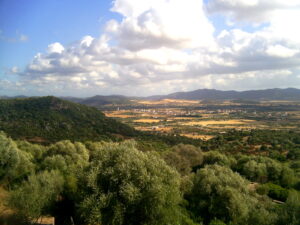
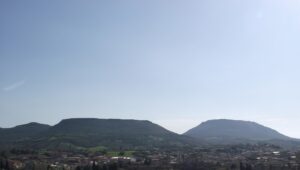
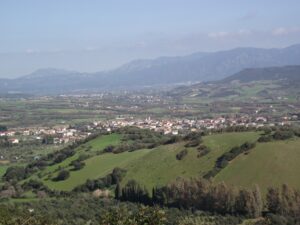
Piscinas is a small rural village in the Lower Sulcis, in south-west Sardinia, spread across a plain ringed by gentle hills. With fewer than eight hundred residents, it moves at a slow pace of vegetable plots, vineyards and countryside dotted with nuraghi. It's a peaceful stop if you love authentic villages and want to explore the archaeology of the Sulcis, with the beaches of Porto Pino and Is Solinas close by.
What to see in Piscinas
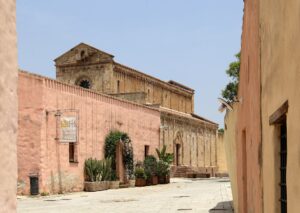
Villa Bice (Villa Salazar) and its park
In the heart of the village stands the 19th-century residence of the Salazar family, designed by engineer Giorgio Asproni junior and bought by the municipality in 2002. Its garden is now a public park.
Piazza San Giorgio and the church of the Madonna della Neve
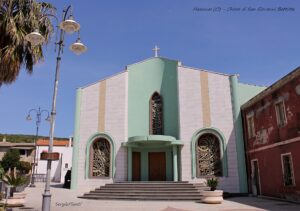
The square is decorated with a large mosaic showing St George fighting the dragon. Next to it is the parish church of Nostra Signora della Neve (Our Lady of the Snows), the centre of village life.
Archaeology in the countryside
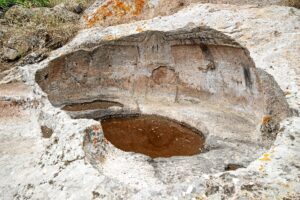
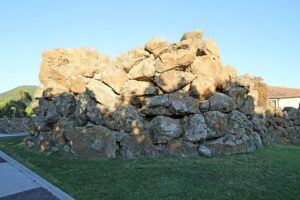
People have lived here since the Neolithic, as shown by the domus de janas (rock-cut tombs) of Tuttui and Monte Medau, the Nuragic fortifications of Monte Murrecci and several nuraghi (Bronze Age stone towers). At Cungiau Sa Tutta, a small Vandal-era cemetery from the 6th century AD has been excavated.
Things to do in Piscinas
Piscinas is ideal for walks and bike rides among fields and hills, looking for nuraghi and old thermal springs such as S'acqua callenti ("hot water"), already known in the 1800s. From here the beaches of the Gulf of Palmas and the major archaeological sites of the Sulcis are easy to reach. Take a look at the experiences offered by local operators: you'll find them below.
History
After the Nuragic, Phoenician-Punic and Roman periods, the area belonged to the medieval Giudicato of Cagliari; from 1258 it came under the Pisan Della Gherardesca family. From 1587 the lands of Piscinas were held by the Salazar family. In the 20th century a provincial road and a railway reached the village, both closed in 1974. Long a hamlet of Giba, Piscinas became an independent municipality in 1988.
What to eat and buy
The countryside produces artichokes, citrus fruit, grapes and sheep's milk products such as pecorino and ricotta. Piscinas is known for a special craft: hand-woven reed mats.
Festivals and traditions
On 5 August the village honours its patron, the Madonna della Neve: after Mass, the procession accompanies the statue of the Virgin, kept in a glass case and drawn by a pair of oxen.
Nearby
- Is Solinas beach (Masainas), with dunes and pine woods, about 15 minutes away.
- Porto Pino (Sant'Anna Arresi), about 20 minutes away.
- Montessu necropolis in Villaperuccio and the Tattinu sacred well in Nuxis.
- Is Zuddas caves in Santadi.
Getting there and when to go
Piscinas is about an hour's drive from Cagliari-Elmas airport via the SS 130 and then the SS 293. Spring and autumn are perfect for exploring the countryside; in summer the village is a quiet base for the Gulf of Palmas beaches, and August brings the patron saint's feast.
FAQ
Is Piscinas on the coast?
No, it's inland, but the beaches of Is Solinas and Porto Pino are about 15–20 minutes by car.
How long do you need for Piscinas?
Half a day is enough for the village; combine it with nearby archaeological sites for a full day.
What is the main festival?
The feast of the Madonna della Neve on 5 August, with its ox-drawn procession.