Things to do in Carbonia
Things to do in Carbonia, Sardinia: Serbariu coal mine and museum, a 1930s planned town, the Phoenician site of Monte Sirai, museums and day trips.
We are gathering the first experiences for this area. Check back soon, or tell us about an operator you know.
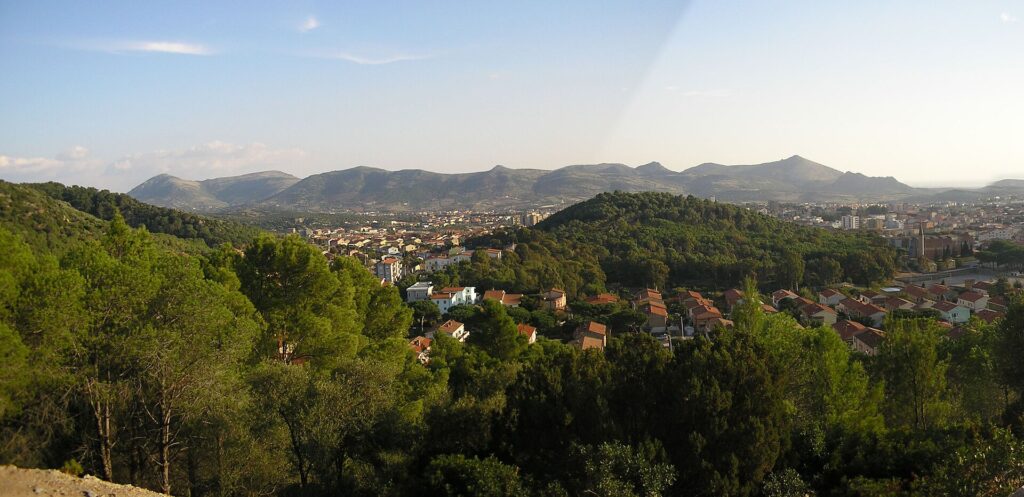
Carbonia is the largest town in the Sulcis, in south-west Sardinia, about an hour's drive from Cagliari. It is a young town, built in a matter of months in the late 1930s for coal miners, yet its land holds one of the most important Phoenician and Punic sites on the island. It is a good choice if you enjoy archaeology, industrial history and 20th-century architecture, and a convenient, uncrowded base for the beaches of the south-west.
What to see in Carbonia
Serbariu Great Mine and the Coal Museum
This is the must-see. Serbariu was the main mine of the Sulcis coalfield and closed in the 1960s; today it houses the Italian Centre for Coal Culture. In the old lamp room you learn about miners' lives, then, helmet on, you go down into an underground gallery to see how coal was extracted.
Museo Martel
The mine's former workshops hold a palaeontology museum named after Édouard-Alfred Martel: fossils and finds covering hundreds of millions of years of geological history, from the Cambrian to the Quaternary. Children love it.
Monte Sirai archaeological park
On a hill a few kilometres from the centre are the remains of a settlement founded by the Phoenicians, later Punic and Roman, on a site already inhabited in the Nuragic age. You can visit the acropolis, houses, a necropolis with chamber tombs and the tophet, a Punic sanctuary. The view stretches to the sea and the islands.
The planned town centre and Villa Sulcis
Piazza Roma, with its civic tower and the trachyte-stone church of San Ponziano, is a rare, almost intact example of a 1930s planned town. Villa Sulcis, the former mine director's residence, hosts the Archaeological Museum with finds from Monte Sirai and the surrounding area.
Nuraghi and rock tombs
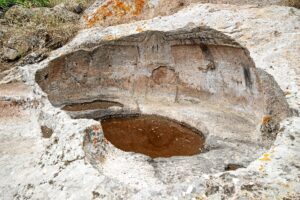
In the countryside you will find several nuraghi, such as Sirai, and the prehistoric necropolis of Cannas di Sotto, with domus de janas, tombs carved into the rock.
Things to do in Carbonia
Carbonia is a great starting point for the less-travelled side of the Sulcis.
- Mining heritage: beyond Serbariu, the area is part of Sardinia's Geomining Park, with mining villages such as Bacu Abis.
- Hiking: the Cammino Minerario di Santa Barbara, a multi-stage trail through mines, woods and coast, passes through the area.
- Cycling: country roads and tracks towards Monte Sirai suit mountain bikes and e-bikes.
- The sea: Portoscuso, Sant'Antioco and Porto Pino are about 20-30 minutes away for a swim or a boat trip.
- Wineries: the Sulcis is Carignano country, and several nearby cellars offer tastings.
Further down this page you will find experiences offered by local operators in and around Carbonia: guided tours, excursions and bike outings you can book in a few clicks.
History
The area was settled in the Neolithic and the Nuragic age; in the 8th century BC the Phoenicians founded Monte Sirai, which became a Punic fortress and was still inhabited under Rome. For centuries the land was dotted with small farming villages such as Serbariu. Everything changed in the 1930s, when the Fascist regime set out to exploit Sulcis coal for national self-sufficiency: the first stone was laid in 1937 and the town was inaugurated on 18 December 1938. Miners came from all over Sardinia and Italy, and after the war the population passed 45,000. As coal declined the mines closed and people left; today Carbonia builds on its industrial memory and archaeology.
Food and local products
Carbonia eats like the rest of the Sulcis, with a touch of the many regions its miners came from. Expect home-style bread, pecorino cheeses, culurgiones (filled pasta) and malloreddus (small gnocchi), roast meats and, towards the coast, fish and tuna. The local wine is Carignano del Sulcis. To take home: wine, cheese, honey and almond sweets.
Festivals and traditions
Town life revolves around the parish of the patron San Ponziano and the mining calendar: the feast of Santa Barbara, patron of miners, in early December, is deeply felt throughout the coalfield. Villages such as Bacu Abis and Cortoghiana hold their own summer feasts, and in summer Piazza Roma hosts events and evening shows.
Nearby
- Iglesias, about 20 km away: medieval old town and the Monteponi mines.
- Portoscuso, with its Spanish tower and the Su Pranu tuna fishery, and the ferry to Carloforte from Portovesme.
- Sant'Antioco and Calasetta, on the island linked by a causeway.
- Porto Pino, with white dunes and shallow water.
- Tratalias, with the Romanesque church of Santa Maria and its old village.
Getting there and when to go
Cagliari-Elmas airport is about an hour's drive along the SS130 and then the roads into the Sulcis; there is also a rail link from Cagliari. The nearest port is Portovesme, with ferries to Carloforte. Spring and autumn are ideal for museums, archaeology and hiking in mild weather; in summer Carbonia is a quiet base close to the sea.
Frequently asked questions
How long do you need in Carbonia?
A full day covers Serbariu, Museo Martel, Monte Sirai and the centre; add a few days to combine it with the coast and nearby towns.
Does Carbonia have a beach?
The town is not on the coast, but the beaches of Portoscuso, Sant'Antioco and Porto Pino are about 20-30 minutes by car.
Is the Serbariu mine good for children?
Yes, the underground tour is short and engaging, and the fossils at Museo Martel next door are a hit with young visitors.