Things to do in Portoscuso
Things to do in Portoscuso, Sardinia: the Spanish tower, Su Pranu tuna fishery, Portopaglietto beach, tuna cuisine and ferries to Carloforte.
We are gathering the first experiences for this area. Check back soon, or tell us about an operator you know.
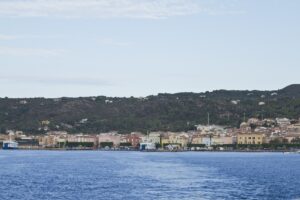
Portoscuso is a seaside village of about 4,800 people on Sardinia's south-west coast, facing San Pietro island. Its name probably comes from the Catalan Puerto Escús, "hidden port", and its history has been tied to tuna fishing for centuries. The compact old town around the Spanish tower, small beaches and seafood cooking make it a pleasant stop for couples and families, and a handy departure point for ferries to Carloforte.
What to see in Portoscuso
The Spanish Tower
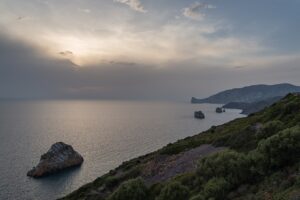
The village's symbol, this 16th-century coastal tower watches over the little harbour from a rocky headland. Built to spot Barbary pirate ships, it is now the best viewpoint over the sea and San Pietro island, especially at sunset.
Su Pranu tuna fishery
Active since the mid-16th century, the tonnara is one of the most important in the Mediterranean. Bought by the town in 2006 and partly restored, it holds the buildings where tuna was processed and the little church of Sant'Antonio da Padova, considered the oldest in the village. Walking through it reveals how deeply Portoscuso is bound to the sea.
The old town and Santa Maria d'Itria
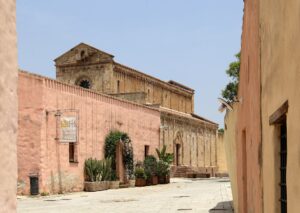
The lanes of the centre, lined with low fishermen's houses, climb to the church of Santa Maria d'Itria, built around 1655 and rebuilt in 1956. The seafront makes a pleasant stroll to the harbour.
Punta Niedda and Capo Altano
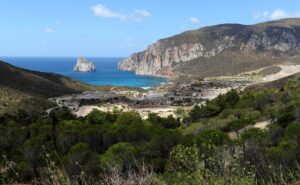
North of the village the coast rises into the Crobetana cliffs, over a hundred metres high, up to Capo Altano, with 1930s fortifications and a wide view over San Pietro and the open sea.
Things to do in Portoscuso
- Day trip to Carloforte: from the port of Portovesme, within the municipality, ferries reach San Pietro island in about 35-40 minutes.
- Boat trips: between Portoscuso and San Pietro you sail past coves, cliffs and islets, with stops to swim.
- Snorkelling and diving: the rocky seabed towards Capo Altano is full of fish.
- Sport fishing and tuna culture: a way into the village's seafaring traditions.
- Coastal hiking and cycling: paths towards Punta Niedda and Capo Altano offer spectacular views.
Below you will find boat trips and other experiences offered by local operators in Portoscuso: choose yours and book directly.
Beaches in Portoscuso
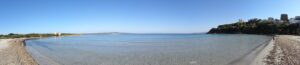
- Portopaglietto: the best-known beach, north of the village, pale sand between two headlands, clear water and a gently sloping seabed; good for families.
- La Caletta: a small inlet near the centre, handy for a swim without the car.
- Punta Niedda rocks: for those who prefer rocks and deep water.
For bigger beaches, Fontanamare and Plag'e Mesu to the north and Porto Pino to the south are a short drive away.
History
The area was inhabited from the Neolithic, as rock-cut tombs, megalithic circles, nuraghi and Phoenician, Punic and Roman cemeteries show. In the Middle Ages it belonged to the Judicate of Cagliari and then to the counts of Donoratico. The modern village grew up in the 16th century around the tuna fishery, with fishermen from Sardinia, Sicily and Ponza and coral fishers from Marseille and Majorca. In the 17th century it suffered pirate raids, including an attack on the fishery in 1660. It became an independent municipality in 1853. After the war the Portovesme industrial zone changed the economy and boosted the population, but the old town and the tonnara remain the village's heart.
Food and local products
Bluefin tuna rules the table here, in every cut: belly, tuna roe bottarga, musciame (dried fillet) and pasta sauces. There is also fresh fish, lobster and shellfish. Pair it with Carignano del Sulcis or a white Vermentino. To take home: preserved tuna, bottarga and a bottle of Carignano.
Festivals and traditions
The main feast is Santa Maria d'Itria, on the Tuesday after Pentecost, with a procession and events in the square. June brings St Anthony of Padua around mid-month and St John the Baptist, with traditional eve rites. The tuna season, from spring to early summer, remains a defining moment for the whole community.
Nearby
- Carloforte on San Pietro island, by ferry from Portovesme.
- Carbonia, about 15 minutes away: the Serbariu Coal Museum and Monte Sirai.
- Sant'Antioco and Calasetta, with Punic archaeology and island beaches.
- Gonnesa, with the long Plag'e Mesu beach and the Seruci nuraghe.
- Iglesias, Nebida and Masua for mines, the old town and the Pan di Zucchero.
Getting there and when to go
Cagliari-Elmas airport is about an hour and a quarter by car, via the SS130 and then the roads towards Carbonia. Portovesme port has year-round ferries to Carloforte. The sea is at its best from May to October; June and September combine warm water with fewer people, while spring is tuna season.
Frequently asked questions
Can you get to Carloforte from Portoscuso?
Yes, ferries leave from Portovesme and the crossing takes about 35-40 minutes.
Is Portoscuso good for families?
Yes: Portopaglietto has shallow water and sand, the village is quiet and distances are short.
What should you eat in Portoscuso?
Tuna in all its forms, especially belly, tuna bottarga and musciame.