Things to do in Iglesias
Things to do in Iglesias, Sardinia: medieval old town, Holy Week, Monteponi mine, Porto Flavia, the Pan di Zucchero stack, Nebida and Masua.
We are gathering the first experiences for this area. Check back soon, or tell us about an operator you know.
Iglesias is the main town of the Iglesiente, in south-west Sardinia, less than an hour from Cagliari. Founded in the Middle Ages by the Pisans as Villa di Chiesa, it has a compact old town of walls and Gothic churches, and a territory that runs from old silver mines to the cliffs of Nebida and Masua, facing the Pan di Zucchero sea stack. It is perfect if you love history, industrial heritage and dramatic coastline, and suits couples, families and curious travellers.
What to see in Iglesias
The medieval old town
Between Piazza Sella, Piazza Lamarmora and Piazza del Municipio wind paved lanes, palazzi with wrought-iron balconies and stretches of the old Pisan walls with their towers. Above the town rises Salvaterra castle, built by the Pisans and reworked by the Aragonese.
Santa Chiara cathedral and the Gothic churches
Overlooking Piazza del Municipio, the cathedral of Santa Chiara dates from the late 13th century and blends Romanesque and Gothic features. Don't miss the church of San Francesco, in Catalan Gothic style, and the sanctuary of Nostra Signora di Valverde just outside the centre, with its fine Pisan façade. The Diocesan Museum is in the cathedral's basement.
Monteponi and the Mining Art Museum
On the edge of town, the Monteponi mine was for centuries one of Europe's most important sources of lead, zinc and silver; you can visit its tunnels and historic buildings. In town, the Museo dell'Arte Mineraria, in the Mining Technical Institute, displays tools, minerals and a reconstructed gallery.
Porto Flavia and the Pan di Zucchero
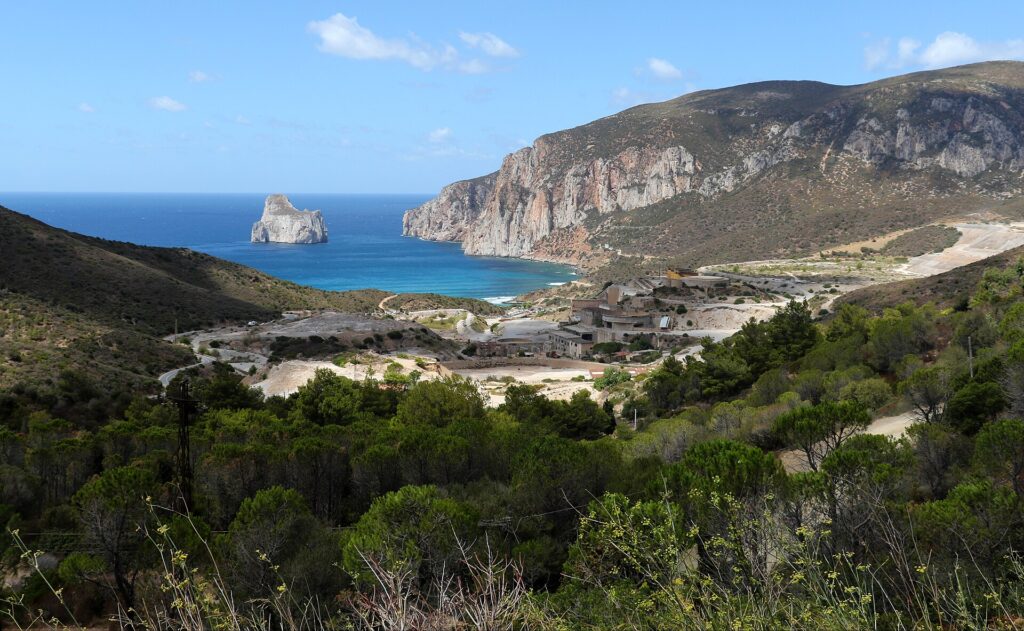
At Masua is Porto Flavia, a 1920s feat of mining engineering: tunnels cut into the cliff high above the sea, from which ore was loaded straight onto ships. The view of the Pan di Zucchero, a limestone stack about 133 metres high, is one of Sardinia's finest.
Nebida and Santa Barbara cave
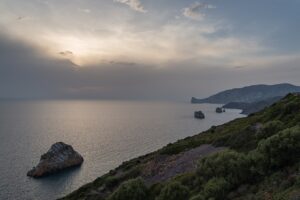
The village of Nebida has a breathtaking viewpoint over the coast and the ruins of the Lamarmora washing plant, clinging to the rock above the sea. At Bindua, Santa Barbara cave, discovered inside a mine, has walls covered in barite crystals.
Things to do in Iglesias
- Mining heritage: Porto Flavia, Monteponi and Santa Barbara can be visited with a guide and make a unique route through the Geomining Park.
- Boat and kayak trips: along the Nebida and Masua coast, among caves, rock arches and turquoise water around the Pan di Zucchero.
- Snorkelling and diving: the seabed below the stacks is crystal clear.
- Hiking: coastal paths and stages of the Cammino Minerario di Santa Barbara between mining villages and sea; inland, the Marganai forest.
Just below you will find boat trips, hikes and other experiences offered by local operators in Iglesias: choose the one that inspires you and book.
Beaches in Iglesias
- Masua: sand and pebbles facing the Pan di Zucchero, with crystal-clear water; perfect for a swim after Porto Flavia.
- The Nebida coves: small inlets among the cliffs, reached on foot or by boat, for those seeking wild corners.
- Fontanamare and Plag'e Mesu: just south, in neighbouring Gonnesa, the long beach locals love, great for families and surfing.
History
The area was inhabited in the Nuragic age, and the Romans mined lead and silver here. The town was born in the second half of the 13th century at the will of the Pisan count Ugolino della Gherardesca, under the name Villa di Chiesa: its silver mines made it so rich that it minted its own coins. Its laws were collected in the Breve di Villa di Chiesa, a code in Tuscan vernacular preserved in a 1327 copy. In 1324 it was conquered by Aragon, which made it a royal city; from then on it took the Spanish name Iglesias ("churches"). In the 19th and 20th centuries it was again Sardinia's mining capital, until the mines closed at the end of the last century.
Food and local products
The cooking is Sulcis-Iglesiente: homemade bread, pecorino, culurgiones and malloreddus, roast meats and, towards the coast, fish and tuna. At Easter people make pardulas, little cheese and saffron pastries, and almond sweets all year round. To take home: Carignano del Sulcis, cheese, honey and crafts.
Festivals and traditions
Holy Week is the most intense time of year: Spanish-style rites, night processions and hooded brothers, the baballottis, make the old town solemn and moving. In mid-August the town celebrates Santa Maria with a medieval pageant and the procession of the Candelieri, large votive structures carried through the streets. Santa Barbara, patron of miners, is celebrated in early December.
Nearby
- Buggerru and Cala Domestica, with the Galleria Henry and one of the south-west's loveliest beaches.
- Fluminimaggiore, with the Temple of Antas and the Su Mannau caves.
- Domusnovas, with San Giovanni cave and the Oridda valley.
- Carbonia, with the Coal Museum and Monte Sirai.
- Carloforte on San Pietro island, by ferry from Portovesme.
Getting there and when to go
From Cagliari-Elmas it is about 50 minutes along the SS130; there is also a train from Cagliari. The nearest port is Portovesme. Spring and autumn are ideal for the old town, mines and hiking; from June to September the Nebida and Masua coast is at its best. Holy Week and mid-August are the most evocative times to experience local traditions.
Frequently asked questions
How many days do you need in Iglesias?
Two or three days let you see the old town, Monteponi, Porto Flavia, Nebida and a beach without rushing.
Can you visit Porto Flavia freely?
No, the inside is visited on guided tours that need booking; the viewpoint over the Pan di Zucchero is always open.
Is Iglesias good for families?
Yes: the mines and Santa Barbara cave fascinate kids, and nearby beaches are easy with children.