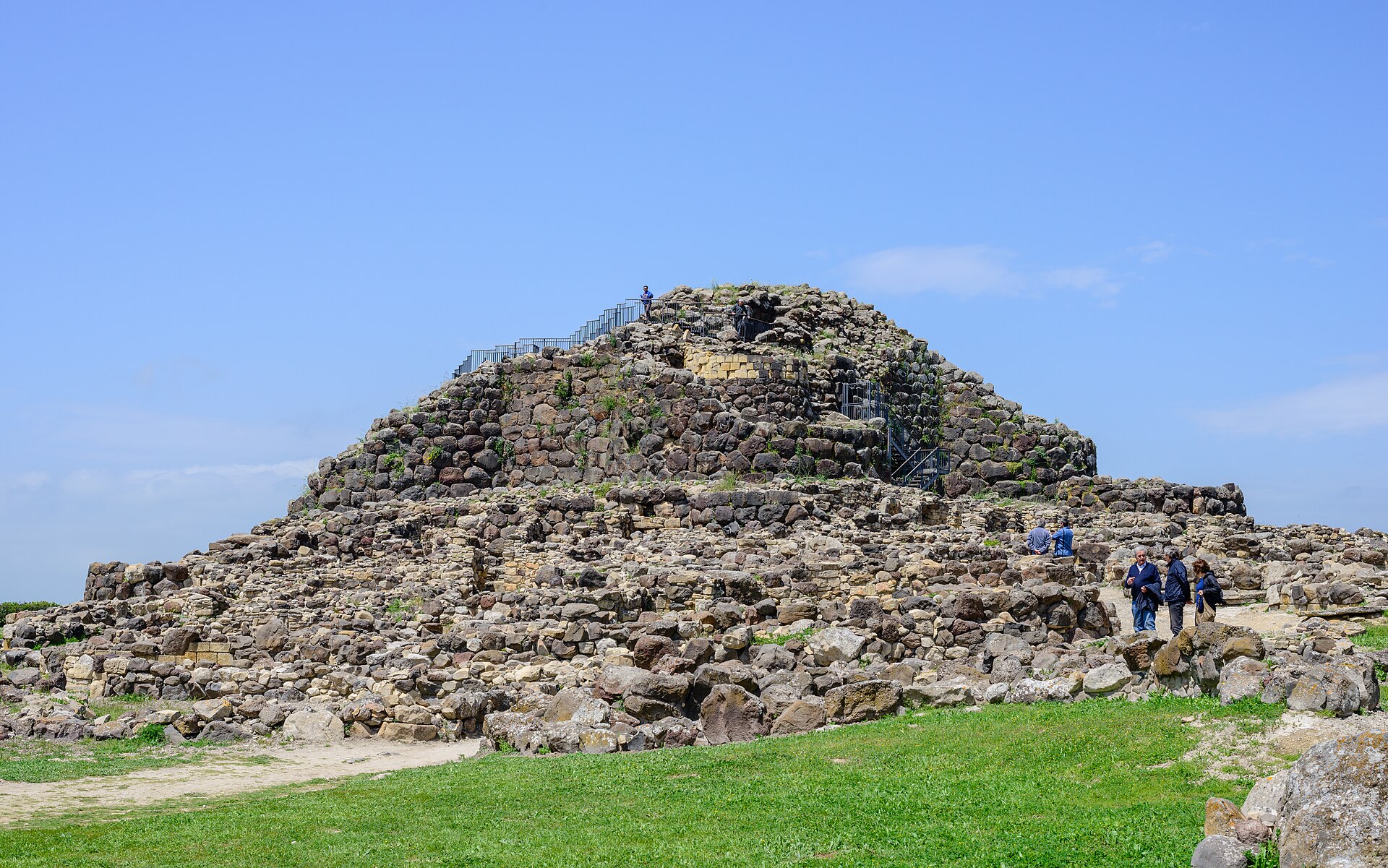
Which are the best nuraghi in Sardinia and how do you visit them? More than seven thousand survive on the island: stone towers built without mortar over three thousand years ago, rising from wheat fields, on hilltops and above the sea. Some are simple isolated towers, others real fortresses with bastions, courtyards and villages of huts.
We have picked 15 nuraghi to see at least once, from Su Nuraxi in Barumini, a UNESCO World Heritage Site, to the nuraghi of Gallura and Ogliastra. For each one you will find where it is, what makes it special and how to plan your visit, with links to the towns and experiences on Ajò Sardegna.
Contents
…lost between Europe and Africa and belonging to nowhere. Belonging to nowhere, never having belonged to anywhere.
D. H. Lawrence, Sea and Sardinia (1921)
What are the nuraghi of Sardinia
The nuraghi of Sardinia are the iconic buildings of the Nuragic civilisation, which flourished in Sardinia in the Bronze Age, roughly between 1700 and 900 BC. They are towers shaped like truncated cones, made of large stone blocks laid dry, with one or more chambers roofed by a corbelled dome, the tholos.
We do not know for certain what they were used for: they were probably chiefs’ residences, fortresses, storehouses and lookout points all at once. Villages of round huts grew up around the largest nuraghi, and the Nuragic landscape also includes sacred wells, giants’ tombs and sanctuaries.
- Single tower: one tower, the simplest and most common type.
- Complex nuraghi: a central tower, the keep, surrounded by a bastion with three, four or five towers.
- Proto-nuraghi: the oldest, low and massive, crossed by corridors.
How Sardinian nuraghi were built
Sardinian nuraghi are built using the cyclopean technique: large blocks of basalt, granite or limestone, roughly shaped and stacked without mortar. The biggest stones are at the bottom, the smaller ones towards the top, and the walls narrow as they rise: this is what gives the tower its truncated-cone shape and its stability.
The inner chambers are roofed with a false dome: each ring of stones juts slightly inwards from the one below, until the top is closed with a slab. Inside the thickness of the walls, spiral staircases lead to the upper floors and the terrace, which has almost always collapsed.
How Bronze Age people lifted blocks weighing several tonnes remains partly a mystery. Archaeologists think of earth ramps, levers and wooden sledges, and the organised work of whole communities. Visiting the nuraghi of Sardinia also means seeing this technical skill up close.
1. Su Nuraxi in Barumini, UNESCO World Heritage
The most famous of the nuraghi of Sardinia is in Barumini, in the Marmilla. Since 1997 the Su Nuraxi complex has been on the UNESCO World Heritage List. At its centre stands a basalt tower over 18 metres (59 feet) high, surrounded by four corner towers joined by a bastion; all around spreads the village of round huts, inhabited until the 6th century BC.
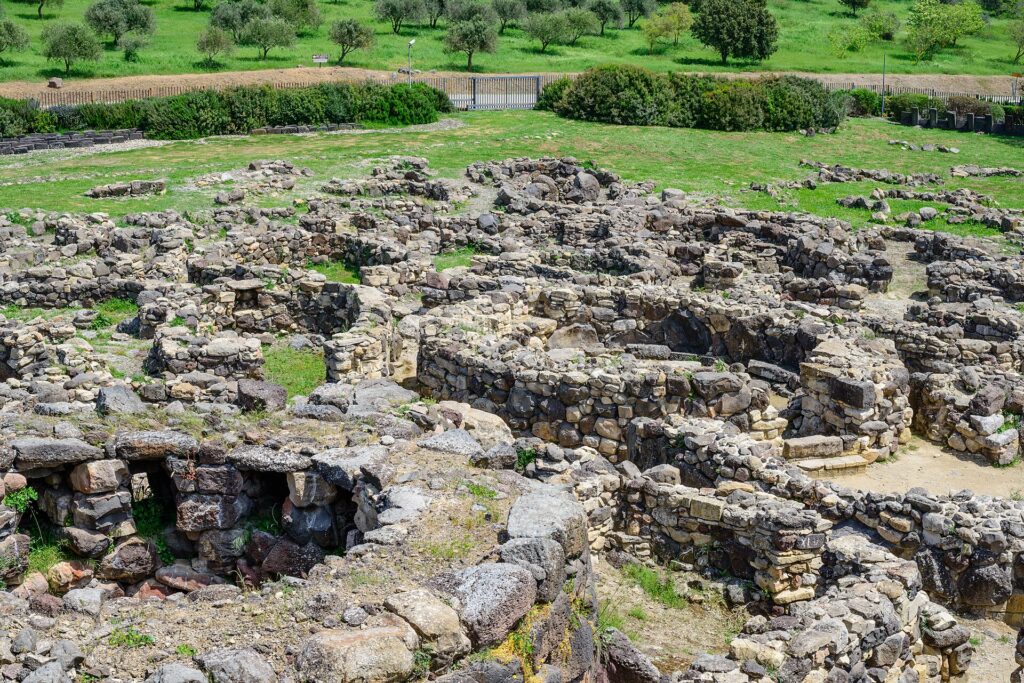
Visits are guided only and last about an hour; on busy days it is best to book. In the village, the Casa Zapata museum complex, built on top of another nuraghe, is also worth a visit. Information and opening times are on the Barumini Foundation website.
2. Santu Antine, the king’s house
In Torralba, in the Valley of the Nuraghi in the Meilogu, stands what Sardinians call sa domo de su re, the king’s house. The keep of Santu Antine was originally over 25 metres tall; today it measures about 17.5 metres and is one of the tallest in Sardinia. The three towers of the bastion form a triangle, linked by inner corridors with arrow slits.
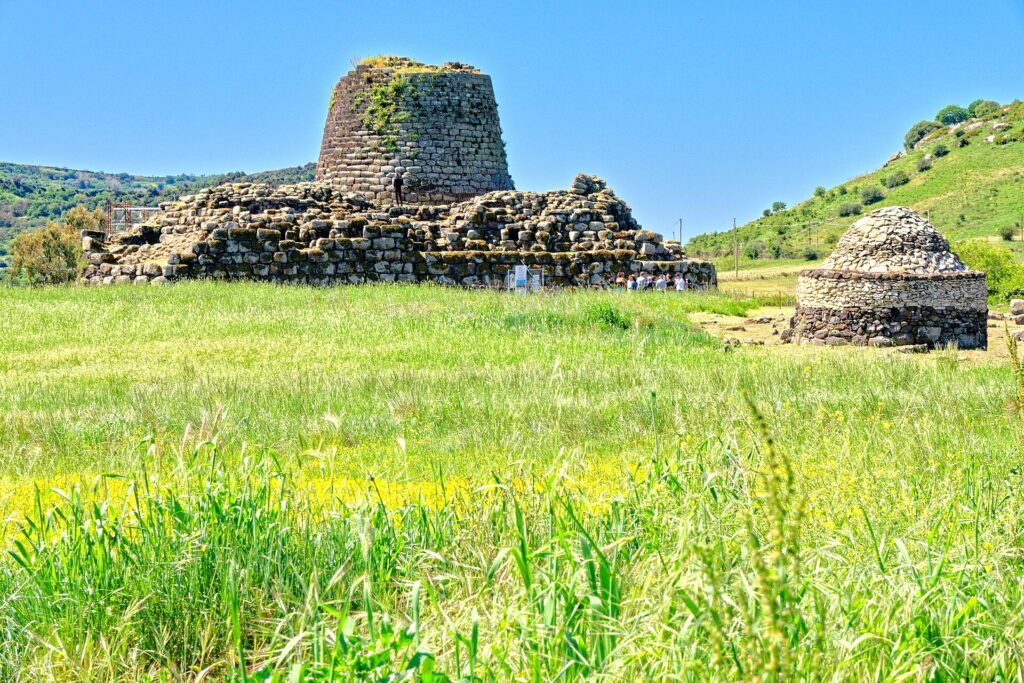
The Cabu Abbas plain around the nuraghe has more than thirty Sardinian nuraghi: that is why it is called the Valley of the Nuraghi. Combine your visit with the Valley of the Nuraghi Museum in Torralba and, if you have time, the Romanesque churches of nearby Borutta and Bonorva, which also has the Sant’Andrea Priu necropolis.
3. Nuraghe Losa, in Abbasanta
You can see it from the SS131 highway, at the turn-off for Nuoro: the Losa nuraghe, in Abbasanta, is one of the easiest to reach. It has a central keep with a three-lobed bastion, all in basalt, surrounded by an outer wall and an enclosure that also takes in the village.
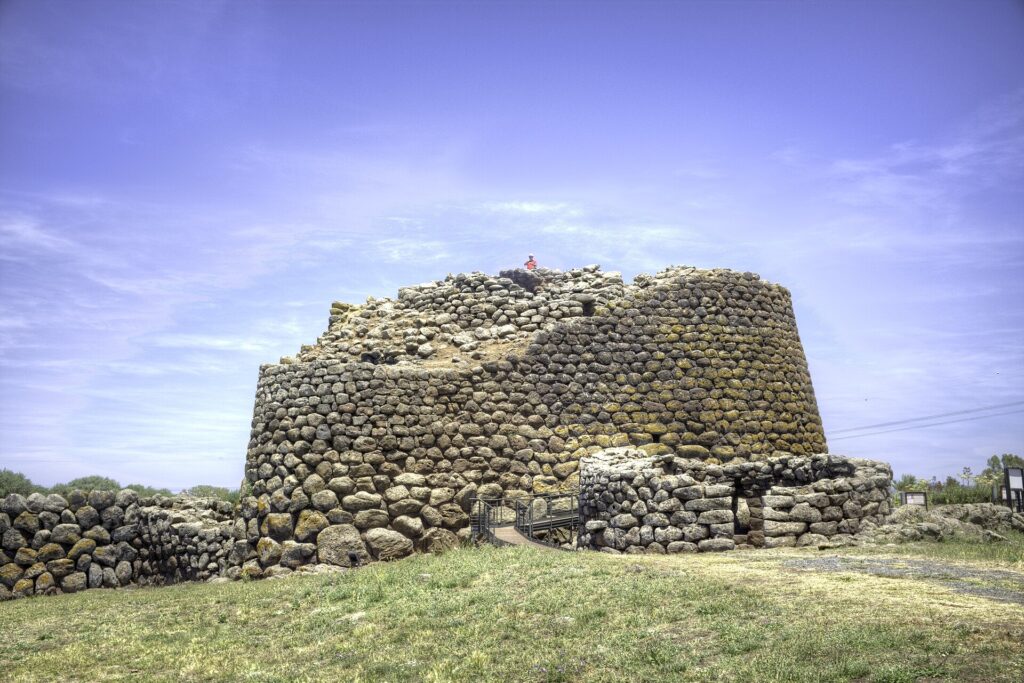
Among the best nuraghi in Sardinia, it is the ideal stop if you are travelling between Cagliari and Sassari. A few kilometres away is Sedilo, where in July S’Ardia of San Costantino is run, one of the most spectacular horseback festivals on the island.
4. Nuraghe Arrubiu, the red giant of Orroli
In Orroli, on the Sarcidano plateau, the Arrubiu nuraghe is considered the largest and most complex in Sardinia: a central tower, a five-tower bastion and outer walls, making twenty-one towers in all. Its name, which means “red” in Sardinian, comes from the colour of the basalt and the lichens covering it.
The keep must have been over 25 metres tall. In Roman times part of the complex was turned into a farm, with two small installations for making wine. The view over the Flumendosa valley alone is worth the trip.
5. Santa Cristina and the sacred well of Paulilatino
In Paulilatino, the single-tower Santa Cristina nuraghe is only part of the archaeological park: the real wonder is the sacred well, a water temple with a staircase of perfectly squared blocks descending to the spring, beneath a tholos dome.
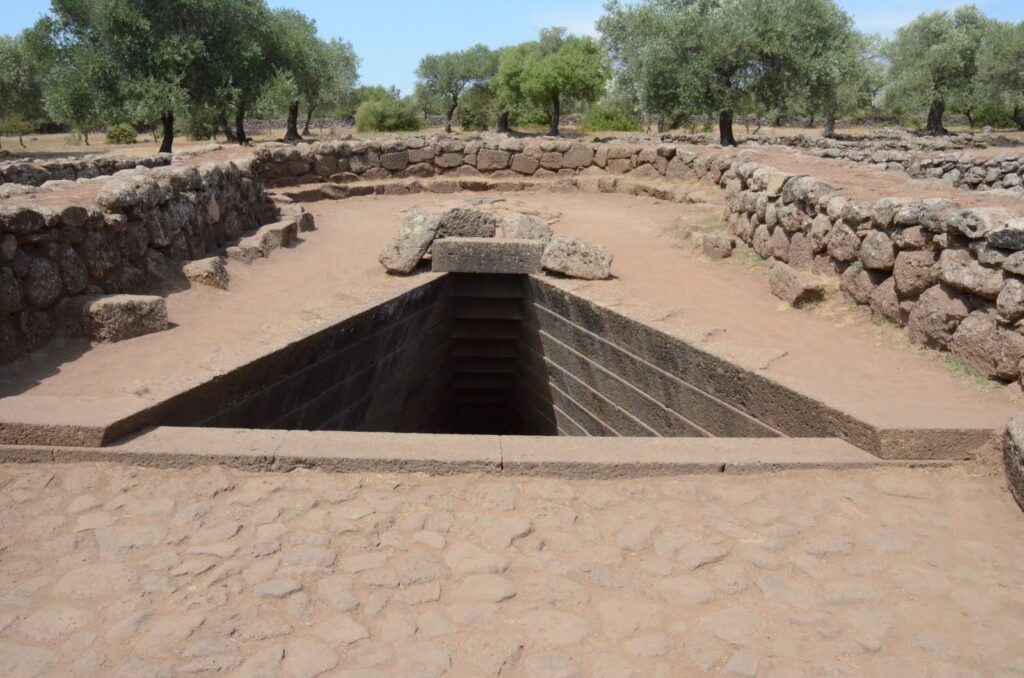
According to some scholars, the well was aligned to follow the lunar cycle. Next to it are the little country church of Santa Cristina and the pilgrims’ cottages, the muristenes. From here Oristano is half an hour away: in February it hosts the Sartiglia.
6. Palmavera, the nuraghe of Alghero
A few kilometres outside Alghero, towards Porto Conte, the Palmavera complex has a two-tower nuraghe and a village of huts. The most interesting is the meeting hut, with a circular bench running along its walls: this is probably where the village chiefs gathered.
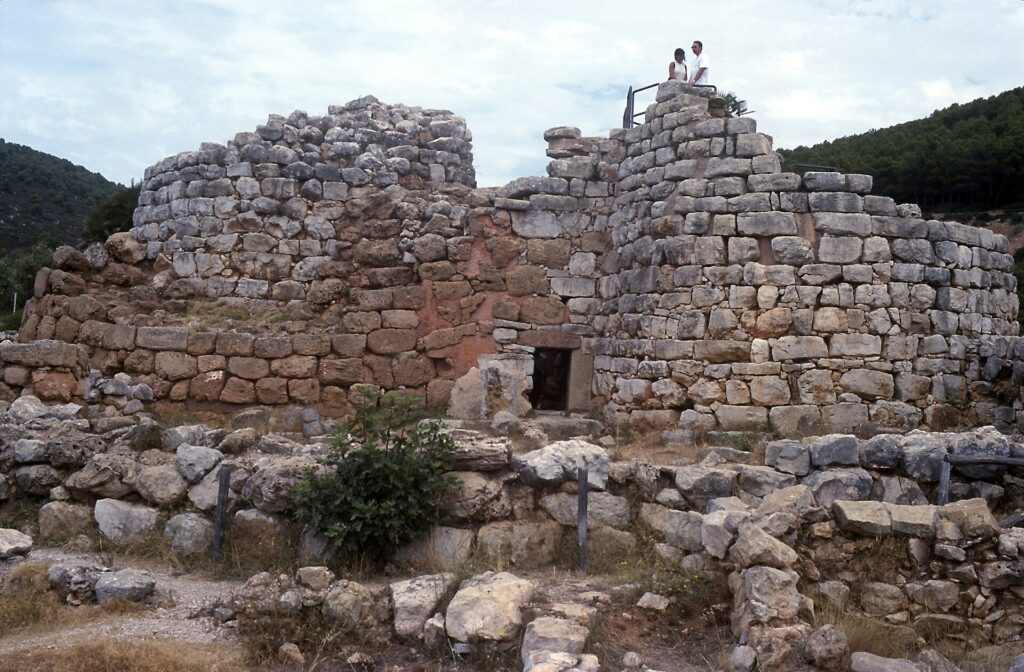
Palmavera combines well with a day at sea. From Alghero you can take a half-day boat trip with Sea Stories, while from Bosa local skippers sail towards Capo Caccia and Alghero: see the sailing experiences.
7. Is Paras, the tallest dome
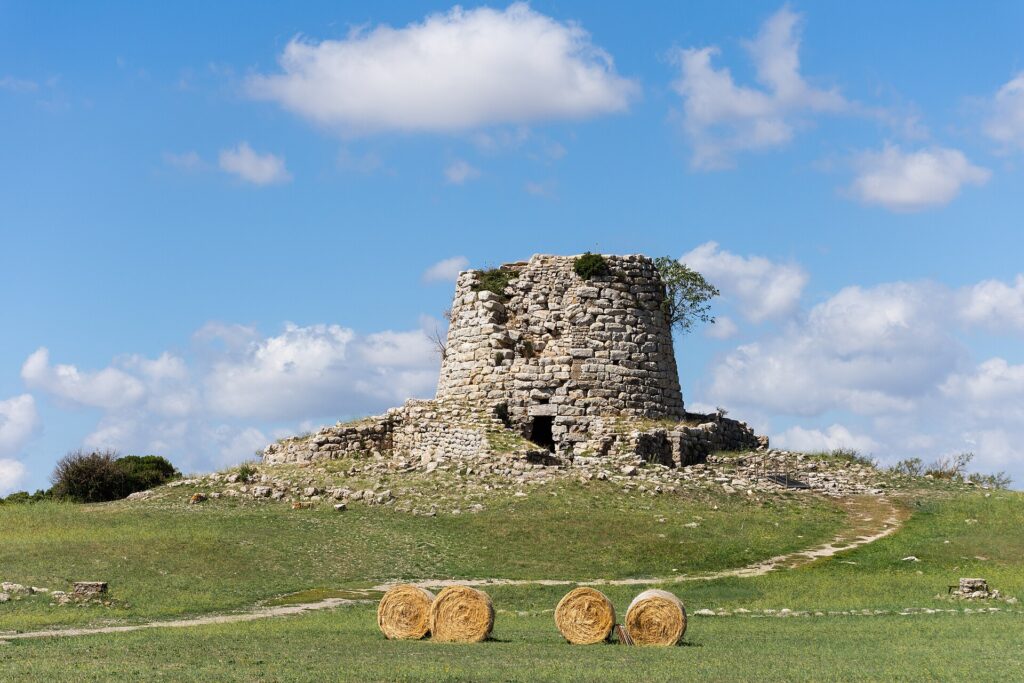
In Isili, the white limestone Is Paras nuraghe hides a record: its tholos is 11.80 metres (38.7 feet) high, the tallest in all of Nuragic Sardinia. Stepping inside and looking up at the dome, built with ever-narrowing rings of stone, is something you will never forget.
8 more of the best nuraghi not to miss
Here are the other eight names on our list of the best nuraghi in Sardinia, spread across the island: less famous than the first ones, but often quieter and surrounded by nature. Many can be visited with local guides and are close to other archaeological sites.
8. Nuraghe Mannu, Dorgali. On a plateau high above the Gulf of Orosei, over Cala Gonone, it is perhaps the nuraghe with the finest view. The remains of the village lie around it. See the experiences in Dorgali.
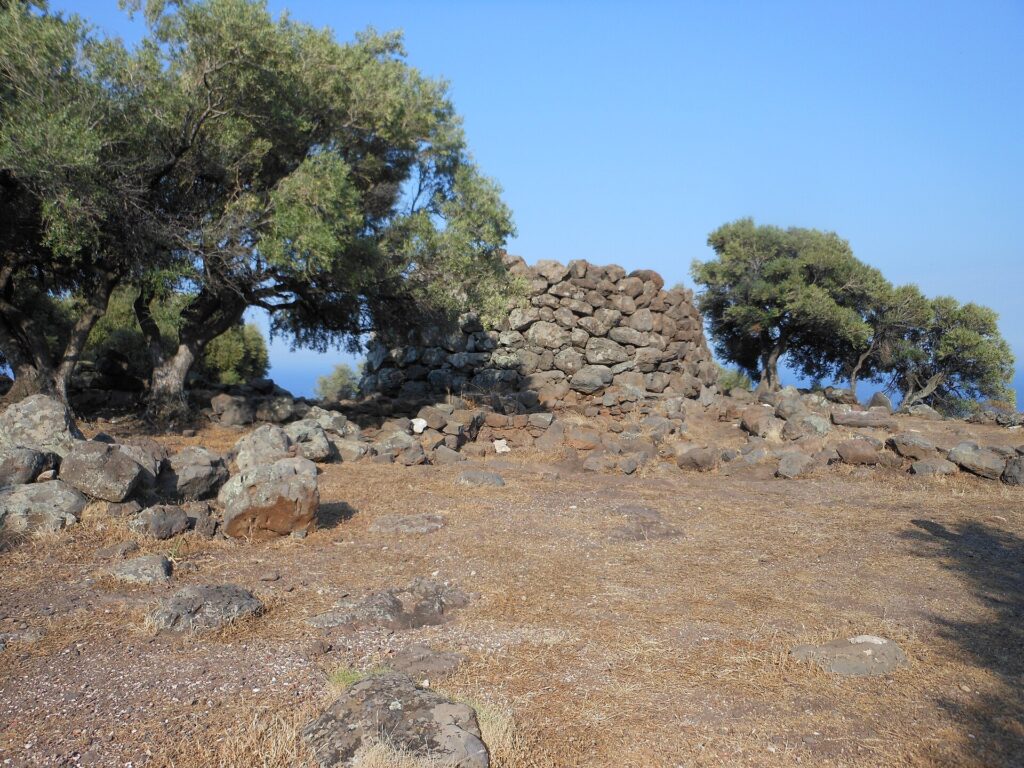
9. Nuraghe Santa Sabina, Silanus. An isolated tower next to a little Byzantine church: two eras at a single glance, in the countryside of Silanus.
10. Genna Maria, Villanovaforru. On a hilltop, with views over the whole Marmilla. In the village, Villanovaforru, the archaeological museum displays finds from the excavations.
11. Su Mulinu, Villanovafranca. Inside is a rare altar shaped like a nuraghe. Villanovafranca is also the village of the Saffron Roads festival in November.
12. La Prisgiona, Arzachena. In the Capichera valley, a few minutes from the Costa Smeralda, with a large village of huts around it. Nearby are the Coddu Vecchiu giants’ tomb and the Albucciu nuraghe, all in the territory of Arzachena.
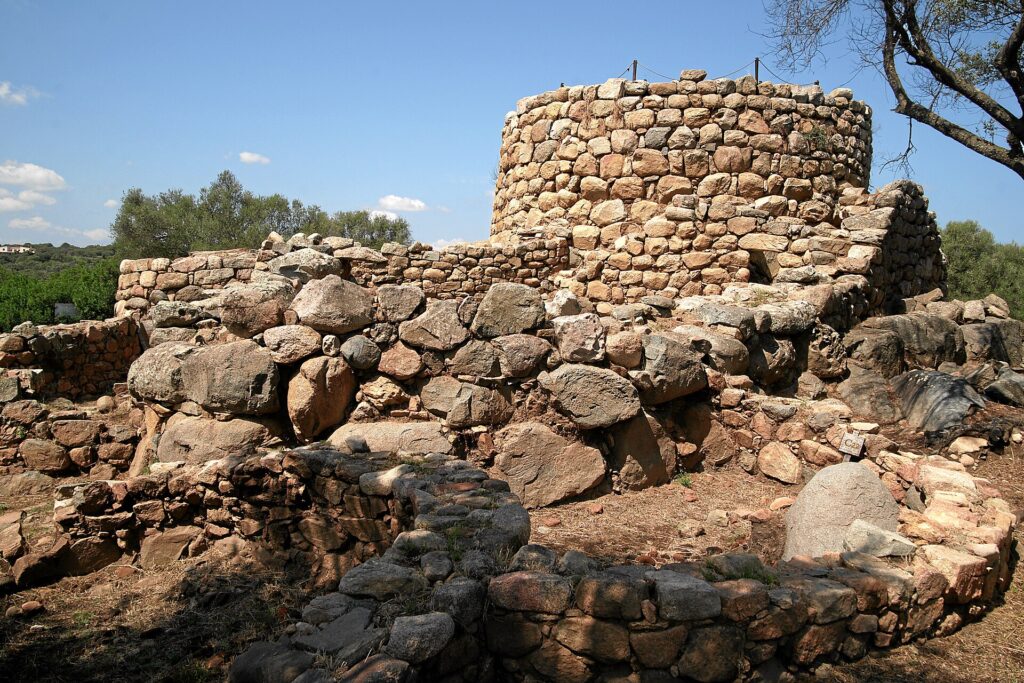
13. Nuraghe Albucciu, Arzachena. Low and massive, built against a granite outcrop, it is considered a mixed-type nuraghe, with corridors, unlike the classic tholos type.
14. Serbissi, Osini. In Ogliastra, on a limestone tacco, with a cave beneath the nuraghe that may have been used as a storeroom. One of the best nuraghi in Ogliastra, in a wild spot near Osini and Ulassai.
15. Seruci, Gonnesa. In the Sulcis, near Gonnesa, a complex nuraghe with one of the largest villages in south-western Sardinia. The sea at Iglesias and Buggerru is close by.
Not just nuraghi: sacred wells, giants’ tombs and villages
Around the best nuraghi you often find other monuments of the same civilisation, well worth adding to your plans. Sacred wells, like the one at Santa Cristina, were temples dedicated to the worship of water. Giants’ tombs were collective burials, with a large central stele and a semicircular forecourt in front of the entrance.
Then there are the sanctuary villages, such as Su Romanzesu in Bitti or Serra Orrios in Dorgali, where communities gathered for religious festivals. And the domus de janas, the “fairy houses”, tombs carved into the rock and even older than the nuraghi. Many local guides offer itineraries that combine all these Sardinian nuraghi sites in a single day.
How to visit the best nuraghi in Sardinia: practical tips
- Opening times: the main sites are open all year, with shorter hours in winter. Always check the times on the site manager’s website before setting off.
- Tickets: the large complexes charge admission, often with a guided tour included; many smaller nuraghi are free.
- Shoes: Sardinian nuraghi have high steps, dark corridors and slippery stones: you need closed shoes and a small torch.
- Heat: in summer visit the nuraghi early in the morning or late in the afternoon; many are in full sun.
- Respect: do not climb on the walls or take stones away: every block is a piece of history.
To understand the nuraghi of Sardinia better, go with a guide. On Ajò Sardegna you will find archaeological sites and nuraghi with organised visits, experiences in culture and traditions and guided hikes that take in villages and giants’ tombs. The regional portal Sardegna Turismo publishes pages on the main sites.
A 3-day itinerary through the nuraghi of Sardinia
This itinerary lines up the best nuraghi of central and northern Sardinia, with short drives and a relaxed pace.
- Day 1, Marmilla and Sarcidano: Su Nuraxi in Barumini in the morning, Genna Maria in Villanovaforru, then Is Paras in Isili or Arrubiu in Orroli in the afternoon.
- Day 2, central Sardinia: the sacred well of Santa Cristina in Paulilatino, the Losa nuraghe in Abbasanta and Santa Sabina in Silanus.
- Day 3, Meilogu and the North-West: Santu Antine and the Valley of the Nuraghi in Torralba, then Palmavera and sunset in Alghero.
With a week, add Gallura, with La Prisgiona and Albucciu, and the east coast with the Mannu nuraghe and the village of Tiscali in the Supramonte. To complete the picture, the civic museum in Cabras holds the Giants of Mont’e Prama, great Nuragic stone statues.
In the Sinis you can then end the day at sea: a sunset sail off Tharros is a lovely way to travel from prehistory to the Phoenician-Punic city. Look at the boat trips on the portal.
Nuraghi with children
Sardinian nuraghi are a history playground: spiral staircases inside the walls, secret chambers, arrow slits to peek through. For children, a visit to Su Nuraxi or Santu Antine is an adventure. Choose sites with a short guided tour and bring water and a hat.
Many archaeological museums linked to the Sardinian nuraghi run family workshops, with mock digs, pottery and reconstructions. You will find more ideas in the families and kids section and among the activities for kids on the portal.
When to visit Sardinian nuraghi
For the nuraghi of Sardinia, spring and autumn are the ideal seasons: mild temperatures, green or golden fields, soft light for photos. In winter the sites are quiet and the Marmilla landscape is beautiful, but the days are short. In summer the Sardinian nuraghi are a great alternative to the beach on mistral days.
If you come in autumn, combine the nuraghi with the village festivals: browse the traditional festivals on Ajò Sardegna and the Cortes Apertas of Autunno in Barbagia, such as Fonni in December.
FAQ about the best nuraghi in Sardinia
Which is the most beautiful nuraghe in Sardinia?
The most famous is Su Nuraxi in Barumini, the only nuraghe on the UNESCO World Heritage List. Many consider Santu Antine in Torralba, the Losa nuraghe in Abbasanta and Arrubiu in Orroli, the largest Nuragic complex on the island, just as spectacular.
How many nuraghi are there in Sardinia?
More than seven thousand, spread across the whole island. Some are just ruins, others well-preserved complexes with bastions and villages, which can be visited with guides.
How much does it cost to visit a nuraghe?
The large complexes such as Su Nuraxi, Santu Antine or Losa charge admission, often with a guided tour included. Prices vary from site to site: check them on the site manager’s website. Many smaller nuraghi are free.
How old is a nuraghe?
The nuraghi were built in the Bronze Age, roughly between 1700 and 900 BC. The central towers of the largest complexes, such as Su Nuraxi, date back to the middle of the 2nd millennium BC.
Discover the nuraghi with local guides
From Su Nuraxi to the Valley of the Nuraghi, from Gallura to Ogliastra, the best nuraghi in Sardinia tell the story of a civilisation unique in the world. On Ajò Sardegna you will find experiences in culture and traditions, local operators and festivals that combine history, food and celebrations, in areas such as Marmilla and Sarcidano, all to contact directly with no commission. For a tailor-made itinerary, ask Lia, the portal’s virtual assistant. Ajò!
