Things to do in Villanovaforru
Things to do in Villanovaforru, Sardinia: Genna Maria nuraghe, the archaeological museum, Marmilla hills, local festivals and Barumini nearby.
We are gathering the first experiences for this area. Check back soon, or tell us about an operator you know.
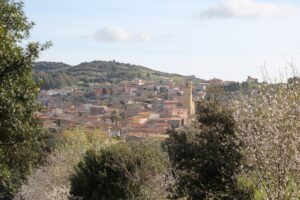
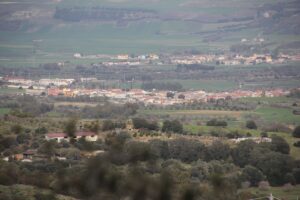
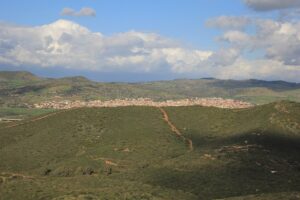
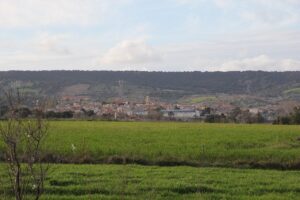
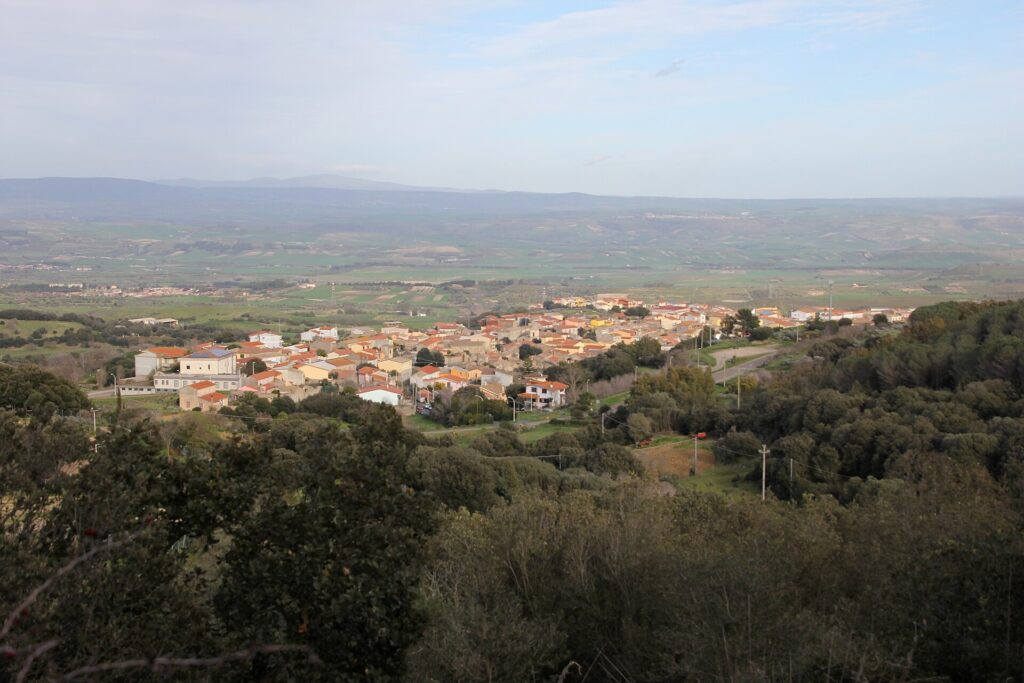
Villanovaforru is a small village in the Marmilla, the gentle hill country of south-central Sardinia, about an hour's drive from Cagliari. It has little more than 800 residents, yet it is known across the island for its archaeology: the Genna Maria nuraghe and one of Sardinia's best-kept town museums are here. It suits travellers who love Nuragic Sardinia, farm landscapes and a slow pace, and it pairs perfectly with a visit to Barumini and the Giara plateau.
What to see in Villanovaforru
Genna Maria nuraghe
On a hilltop just outside the village stands the Nuragic complex of Genna Maria (nuraghi are the Bronze Age stone towers typical of Sardinia). It includes a central tower, a bastion with side towers and the remains of a village of round huts. The site was used long after the Nuragic age, and many Punic and Roman votive offerings were found among the ruins. From the top you look out over the whole Marmilla, as far as the Giara di Gesturi, so it is worth the climb for the view alone, ideally in the late afternoon.
Genna Maria Archaeological Museum
The town museum, opened in 1982, fills an elegant 19th-century building that once housed the Monte di soccorso, a body that lent grain to farmers. It mainly displays Nuragic finds from Genna Maria and other local sites such as Collinas, Lunamatrona, Siddi and Gesturi, plus Punic and Roman material. It is compact and clear, a good way to understand the context before or after visiting the area's nuraghi.
The village and its churches
The village is tidy and compact, with houses of stone and ladiri (mud and straw bricks) typical of the Marmilla. The parish church of San Francesco faces Piazza Costituzione, while the little church of Santa Marina, also shown on the town's coat of arms, is linked to the village's most heartfelt festival.
Things to do in Villanovaforru
Villanovaforru makes a great base for an archaeological and rural itinerary in the heart of the island. The experiences that best suit the area are:
- Guided visits to Nuragic sites: Genna Maria, the museum and, a short drive away, the UNESCO-listed Su Nuraxi at Barumini.
- Walking and cycling along country lanes through wheat fields and Marmilla viewpoints.
- The Giara: an outing on the plateau to see the wild horses, cork oaks and the seasonal ponds called paulis.
- Food experiences with produce from inland Sardinia: bread, cheese, olive oil and local wine.
Further down this page you will find the experiences offered by local operators: pick the one that suits you and book directly.
History
The area was densely settled in the Nuragic age, as the many nuraghi on the hills show, and later in Punic and Roman times. In the Middle Ages the village belonged to the Judicate of Arborea, one of Sardinia's four medieval kingdoms. After its fall it became part of the Marquisate of Oristano and, following the battle of Macomer in 1478, passed to Aragonese rule within the County of Quirra, held by noble families until feudalism was abolished in 1839. In recent times the village has become a cultural reference point: in 1977 it hosted one of the first modern masses celebrated in the Sardinian language. Its Sardinian name is Biddanòa 'e Forru.
Food and local products
The cooking is Marmilla farmhouse fare: semolina bread from wood-fired ovens, fresh pasta such as malloreddus and cheese ravioli, roast lamb and suckling pig, sheep's cheeses and sweets made with almonds and sapa (cooked grape must). To take home: extra virgin olive oil, honey, cheese and goods from small local workshops. A symbol of the village is basil, carefully grown by local women for the feast of Santa Marina.
Festivals and traditions
- Santa Marina: on the Monday and Tuesday after Easter and again in mid-July, with a procession, an ox-drawn cart, religious songs in Sardinian and blessed basil handed out to the faithful. The film Is frabbicas de Santa Marina is devoted to this custom.
- Sant'Isidoro: in mid-May, the farmers' feast with a procession of tractors.
- San Francesco, the patron saint: in early October.
- San Sebastiano: in late January.
Nearby
- Barumini (about 15 minutes): UNESCO-listed Su Nuraxi and the Casa Zapata museum.
- Giara di Gesturi: a basalt plateau with wild horses.
- Las Plassas: the Marmilla castle on a cone-shaped hill above the plain.
- Sardara: the sacred well of Santa Anastasia and the Santa Maria de is Aquas spa.
- Sanluri: the medieval castle linked to the battle of 1409.
Getting there and when to go
The nearest airport is Cagliari-Elmas, about an hour's drive away; Cagliari's ferry port is a similar distance. Take the SS131 Carlo Felice highway to the Sanluri exit and head north into the Marmilla. A car is essential. The best seasons are spring, when the hills are green and in bloom, and autumn; summer is hot, but early morning and sunset visits are still pleasant.
Frequently asked questions
How much time do you need for Villanovaforru?
Half a day is enough for Genna Maria and the museum. With a full day you can add Barumini or the Giara.
Is Villanovaforru good for families?
Yes: the museum is compact, the nuraghe is easy to visit and the nearby Giara, with its wild horses, is a big hit with children.
Is Villanovaforru near the sea?
No, it is inland. The nearest beaches are on the Costa Verde and the Gulf of Oristano, about an hour's drive away.
Can I combine it with Barumini?
Yes, it is the ideal pairing: the two villages are a few kilometres apart and together give a complete picture of the Nuragic civilisation.