Things to do in Bonorva
What to see in Bonorva, Sardinia: Sant'Andrea Priu rock tombs, the medieval hamlet of Rebeccu, Su Lumarzu sacred spring, su zichi bread and festivals.
We are gathering the first experiences for this area. Check back soon, or tell us about an operator you know.
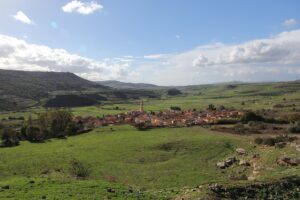
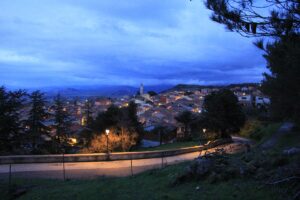
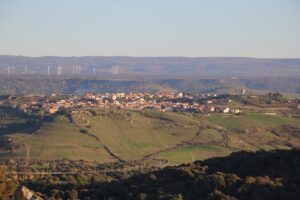
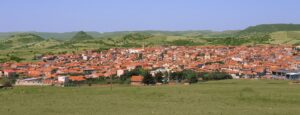
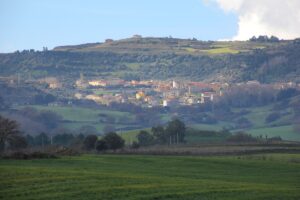
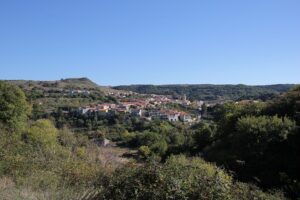
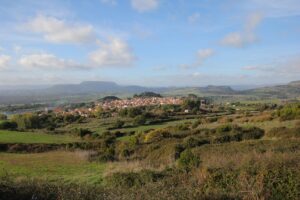
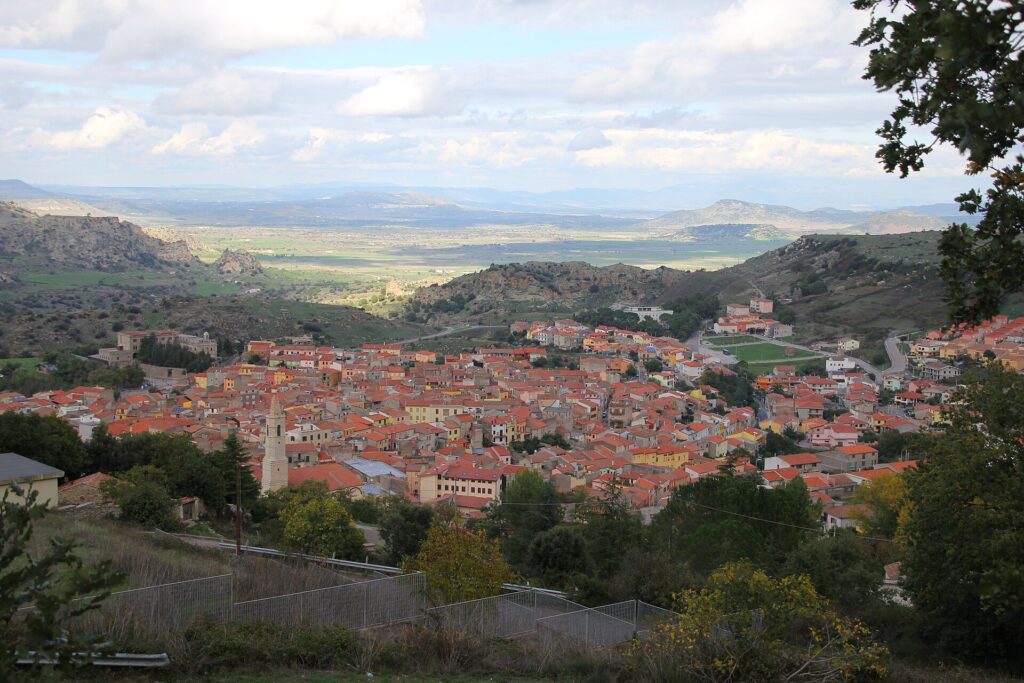
Bonorva is a village in the Meilogu area of Logudoro, clinging to a slope about 500 metres up on the northern edge of the Campeda plateau, roughly 50 km from Sassari. Its territory holds one of Sardinia's most extraordinary archaeological sites, the Sant'Andrea Priu necropolis, as well as the almost abandoned medieval hamlet of Rebeccu and a prehistoric sacred spring. It's the place for lovers of archaeology, wide inland landscapes, bread and farming traditions.
What to see in Bonorva
The Sant'Andrea Priu necropolis
About 10 km from the village, a trachyte cliff holds around twenty domus de janas ("fairy houses"), tombs carved into the rock in the 4th–3rd millennium BC by the Ozieri culture. The most famous is the Tomba del Capo (Chieftain's Tomb), with 18 rooms over about 250 square metres, one of the largest in the Mediterranean. In Roman and Byzantine times it became a rock church dedicated to Saint Andrew, and early Christian and medieval frescoes with New Testament scenes survive inside. Above the tombs rises a monolith known as "the Bell Tower" or "the Bull" because of its shape.
Rebeccu
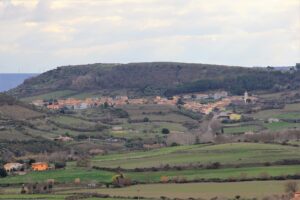
About 6 km from the village, on the side of a rocky ridge, Rebeccu is Bonorva's only hamlet. In the Middle Ages it was an important centre of the Meilogu; today it's an almost deserted village of stone houses with a quiet charm. It has the 12th-century churches of San Lorenzo and Santa Giulia, and a local legend tells of a curse that doomed the village to stay small forever.
The Su Lumarzu sacred spring
A few hundred metres from Rebeccu, Su Lumarzu is a small, well-preserved prehistoric water sanctuary, closed by a stone dome and with side seats for ceremonies.
The village and the archaeological museum
In Bonorva itself, see the late-Gothic parish church of the Natività di Maria and the Civic Archaeological Museum in the former convent of Sant'Antonio, with local finds arranged by period. Nearby are the church of San Giovanni Battista and the Puttu de Inza and Monte Donna nuraghi.
Things to do in Bonorva
- Guided archaeological tours of Sant'Andrea Priu and Su Lumarzu, to understand Sardinian prehistory.
- Walking, cycling or horse riding on the Campeda plateau and the Santa Lucia plain, among wheat fields, cork oaks and dry-stone walls.
- A stroll through Rebeccu, to photograph a village frozen in time.
- Crafts: carpets and tapestries woven on horizontal looms, and embroidery.
Below you'll find the excursions and tours offered by local operators: choose yours and book.
History
The area was densely settled in pre-Nuragic and Nuragic times, as necropolises, sacred springs and nuraghi show. A Roman consular road crossed it. In the Middle Ages it belonged to the Giudicato (medieval kingdom) of Torres, with Rebeccu as a key centre; in 1388 local representatives met there to approve the peace between Eleonora of Arborea and the King of Aragon. After the Doria family and then the Aragonese, the fief stayed with the Amat family until feudalism was abolished in 1839. The fertile Santa Lucia plain earned Bonorva the nickname "granary of Sardinia".
What to eat and what to buy
Bonorva's symbol is su zichi, an ancient durum-wheat bread that even has its own monument, by sculptor Giuseppe Carta. It goes with sheep's cheese, roast meats and traditional Logudoro sweets. Take home bread, cheese and hand-woven carpets.
Festivals and traditions
The calendar is full: the Santa Lucia country festival on 1 May, San Giovanni Battista on 24 June, the Sagra de su zichi (bread festival) in August, with a market and local sweets, and the patron saint's feast in September. Bonorva's Carnival is famous across Logudoro for its floats and masquerades. The village also has a choral singing tradition.
Nearby
- Torralba and Nuraghe Santu Antine (about 20 minutes): one of Sardinia's most impressive nuraghi, in the Valley of the Nuraghi.
- Ozieri (about 40 minutes): San Michele cave and archaeological museum.
- Macomer (about 20 minutes): gateway to central Sardinia.
- Sassari (about 45 minutes): the provincial capital and its old town.
Getting there and when to go
Bonorva lies on the SS131 Carlo Felice highway, about 45 minutes' drive from Sassari; the nearest airports are Alghero (about an hour) and Olbia (about an hour and a half). Spring and autumn are ideal for the archaeological sites and plateau walks; August brings the bread festival and February the Carnival.
Frequently asked questions
How long do you need for Sant'Andrea Priu?
Allow about an hour and a half for the necropolis; add Rebeccu and Su Lumarzu for a pleasant full day.
Is Bonorva good for families?
Yes: children love the "fairy houses" and distances are short. Just bring comfortable shoes.
Is Bonorva near the sea?
No, it's an inland village: the nearest beaches, on the Bosa and Alghero coast, are about an hour away.