Things to do in Siris
Things to do in Siris, Sardinia: the Inus nuraghe, a thousand-year-old olive tree, Monte Arci walks, quince and cheese festivals.
We are gathering the first experiences for this area. Check back soon, or tell us about an operator you know.
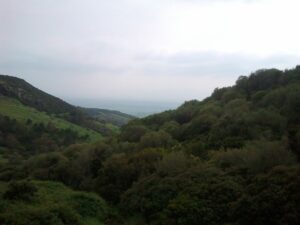
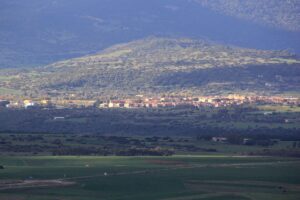
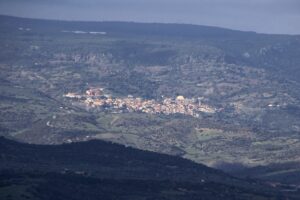
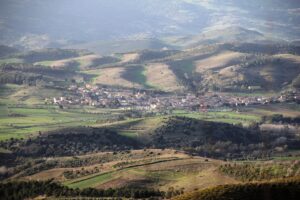
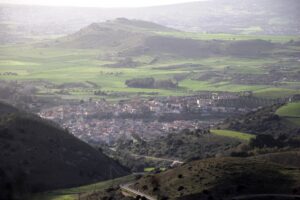
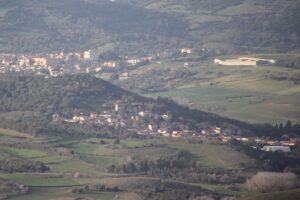
Siris is a tiny village of just over two hundred people in the province of Oristano, set in a green valley at the foot of Monte Arci on the edge of Alta Marmilla. Its name is a palindrome, a quirk it shares with only a handful of Italian towns. Come here for silence, countryside and archaeology: its highlight is the Inus nuraghe, looking out over the valley from the rim of a small plateau.
What to see in Siris
Nuraghe de Inus
Also known as Pranu Nuracci, this Bronze Age stone fortress stands at about 440 metres on the edge of the small Tanca Manna giara (a basalt tableland), around 3 km from the village. It is a complex basalt nuraghe with a central tower and three linked towers, with the remains of a village nearby. The view over the valley rewards the climb.
Church of San Vincenzo and the ancient olive tree
The little church of San Vincenzo, with a central plan and an all-wooden roof, was reconsecrated in 2000 after long neglect. Next to it grows a thousand-year-old olive tree, the village's symbol: legend says the saint's treasure lies hidden among its roots, meant only for the pure of heart.
Church of San Sebastiano
The parish church in the village centre keeps statues of saints, some of them very old.
Things to do in Siris
Part of Monte Arci lies within Siris: trachyte cliffs, caves, springs and woods of holm oak, oak and cork oak frame walks and mountain-bike rides. On the massif you'll also find domus de janas, prehistoric tombs cut into the rock, and traces of the obsidian worked here in prehistory. Combine Inus with other nuraghi nearby, such as Pranu Forru and Su Sensu. Have a look below at the experiences offered by local operators.
History
The many nuraghi show the area was densely settled in the Bronze Age, and Roman remains have been found nearby. In the Middle Ages Siris belonged to the Judicate of Arborea; it then passed to the Aragonese and, from 1603, to the marquisate of Quirra, until it bought its freedom in 1839. In 1927 it was merged with Masullas and Pompu, becoming independent again in 1961.
What to eat and buy
Siris is a shepherds' village and its pastures produce excellent cheese. Its most distinctive product, though, is the quince, which grows wild here and goes into traditional sweets and preserves.
Festivals and traditions
- San Sebastiano, in January, with a procession and a big bonfire on the eve.
- Cheese festival, in spring, featuring a quirky cheese-wheel throwing contest.
- San Vincenzo, between late August and early September, in the square by the old olive tree; on 1 November the saint's statue returns in procession to the parish church.
- Quince festival, in November.
Nearby
- Masullas, minutes away: San Leonardo church and the GeoMuseo Monte Arci.
- Pompu, with the Santu Miali nuraghe.
- Morgongiori, with the Sa Scaba 'e Cresia site.
- Simala, the village of portals.
Getting there and when to go
Leave the SS 131 Carlo Felice towards Uras and continue via Masullas. Oristano is about half an hour by car; Cagliari airport and port just over an hour. Spring, with its flowering meadows, and autumn are ideal for walking; November combines mild weather with the quince festival.
Frequently asked questions
How much time do I need for Siris?
A couple of hours for the village and the Inus nuraghe; pair it with Masullas and Pompu for a full day.
Is Siris good for families?
Yes, if your kids like walking: the nuraghe and the Monte Arci trails make a fun outdoor adventure.
Why is the name Siris special?
It reads the same both ways: it's one of very few Italian municipalities with a palindromic name.