Things to do in Pompu
Things to do in Pompu, Sardinia: the Santu Miali nuraghe, Prabanta plateau, old mills, Monte Arci walks, traditional breads and festivals.
We are gathering the first experiences for this area. Check back soon, or tell us about an operator you know.
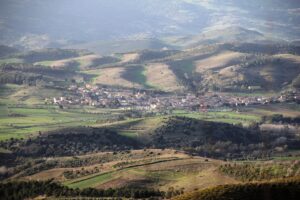
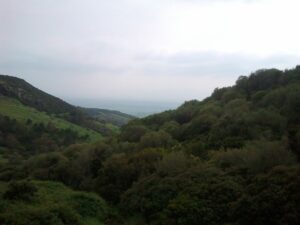
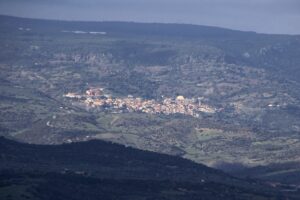
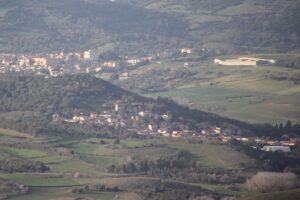
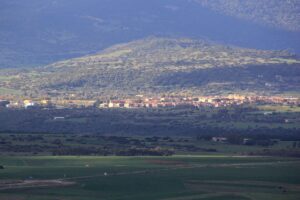
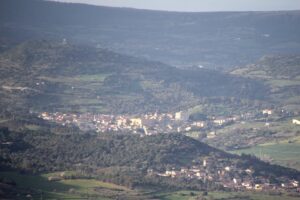
Pompu is one of the smallest villages in Marmilla, home to just over two hundred people in the Laccus valley, among woods of holm oak, oak and cork oak, about 40 minutes' drive from Oristano. Sardinians say «a casin'e Pompu» to mean somewhere remote and out of the way – but that very quietness is its charm. Come for one of the area's most interesting nuraghi, for traces of the old grain-growing culture and for walks towards Monte Arci.
What to see in Pompu
Nuraghe Santu Miali
About 1.5 km from the village stands Santu Miali, a Bronze Age complex with a central tower and a four-lobed bastion around an inner courtyard. It was surrounded by a village of round huts and stayed inhabited for a long time, into the early Middle Ages, as coins and oil lamps found in excavations show.
Prabanta plateau
On the border with Morgongiori, the Prabanta plateau holds prehistoric remains such as a standing stone about three and a half metres tall and several domus de janas – rock-cut tombs that Sardinian folklore calls «fairy houses».
Churches
The parish church of San Sebastiano keeps 18th-century statues of the patron saint and of Saint George slaying the dragon. The sanctuary of Santa Maria di Monserrato is an old pilgrimage site, linked to the procession that, according to tradition, gave the village its name.
Mills and olive presses
In the 1800s four mills turned along the Pompu stream, and many houses still have their stone grain millstones. One old home preserves an olive press from the early 19th century.
Things to do in Pompu
Pompu is a good base for walks and bike rides through wooded hills and towards Monte Arci, the extinct volcano famous for obsidian: ancient workshops where the black stone was shaped have been found nearby, and the massif also yields agate and other minerals. Pair Santu Miali with other local sites such as the Su Sensu nuraghe. Discover the experiences offered by local operators further down this page.
History
The area was used in pre-Nuragic, Nuragic and Roman times. The name probably comes from Latin pompa, «procession»: villagers were the keepers of the sanctuary and organisers of its procession. In the Middle Ages Pompu belonged to the Judicate of Arborea, in the Parte Montis district; then came the Aragonese and, from 1603, the marquisate of Quirra, until the village bought its freedom in 1839. Merged with Masullas and Siris in 1927, it regained independence in 1961.
What to eat and buy
Pompu is wheat country, and you can taste it in traditional breads: civraxiu, coccoi, lada and the decorated pani pintau. Sweets include amaretti, gueffus, pabassinos and pardulas. The village also has a weaving tradition.
Festivals and traditions
- San Sebastiano, the patron saint, on 20 January, with a big bonfire.
- Feast of the Madonna, in early September, with a procession of her statue.
- Bread and wheat festival, celebrating the village's grain-growing heritage.
Nearby
- Masullas, about 2 km away: San Leonardo church and the GeoMuseo Monte Arci.
- Siris, with the Inus nuraghe.
- Morgongiori, with Sa Scaba 'e Cresia.
- Simala and Curcuris, small Marmilla villages.
Getting there and when to go
Leave the SS 131 Carlo Felice towards Uras and continue to Masullas, a few minutes from Pompu. Cagliari airport and port are about an hour and a quarter away. Spring and autumn are best for hiking; in January the San Sebastiano bonfire is a good reason to return.
Frequently asked questions
How much time do I need for Pompu?
Half a day for the village and Santu Miali; combine it with Masullas and Siris for a full day.
Is Pompu good for families?
Yes: the nuraghe is close to the village and the surrounding countryside is peaceful and great for easy walks.
What does «a casin'e Pompu» mean?
It's a Sardinian saying for somewhere very far away – locals today take it with a smile.