Things to do in Ploaghe
Things to do in Ploaghe, Sardinia: the old cathedral, the Spano picture gallery, San Michele di Salvennor, nuraghi, weaving and local festivals.
We are gathering the first experiences for this area. Check back soon, or tell us about an operator you know.
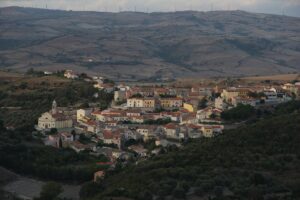
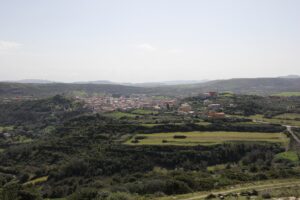
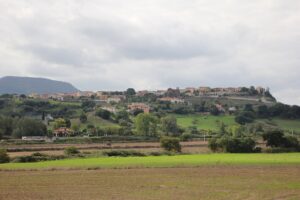
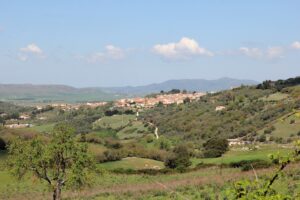
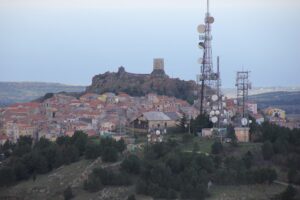
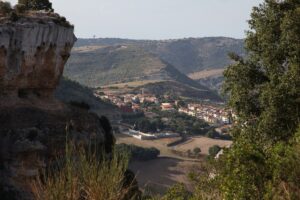
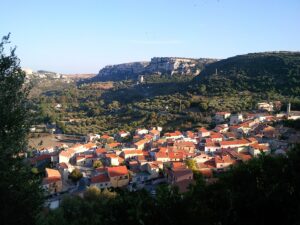
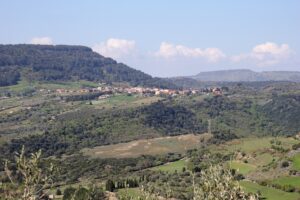
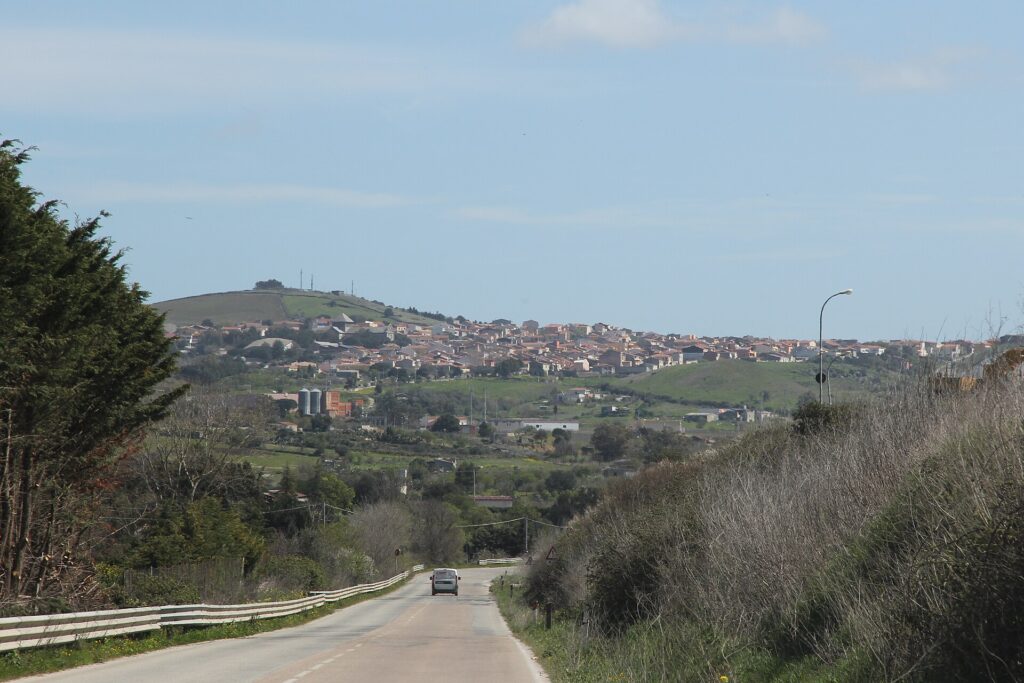
Ploaghe is a farming town in Logudoro of about 4,000 people, set at over 400 metres on the slopes of Monte San Matteo, an extinct volcano, about 25 km from Sassari. For centuries it was a bishop's seat, and today it keeps a surprising number of churches, a fine picture gallery and dozens of Nuragic sites. It's the birthplace of canon Giovanni Spano, the father of Sardinian archaeology. A destination for lovers of art, history and the volcanic countryside of northern Sardinia.
What to see in Ploaghe
Piazza San Pietro and the old cathedral
The heart of town is the square with the town hall, once a grain bank, and the parish complex: the church of San Pietro, the former cathedral, remodelled over the centuries, and the oratories of Santa Croce and the Rosario. Next door is the monumental cemetery, with gravestones written in Logudorese Sardinian, a rarity on the island.
The Spano picture collection
The parish house holds the gallery gathered by Giovanni Spano in the 19th century: paintings from the 14th to the 19th century by Sardinian artists such as Michele Cavaro and Giovanni Marghinotti, as well as Italian, Flemish and Spanish schools.
San Michele di Salvennor
About 2 km from town stands the Romanesque church of San Michele di Salvennor, linked to a medieval abbey and built in pale limestone and dark basalt, in the style of nearby Saccargia.
Nuraghi and archaeology
The area has over seventy Nuragic sites. Highlights include the Don Michele nuraghe, the Fiorosu giants' tomb with a corridor about 16 metres long, and the Frades Mareos sacred well, whose round chamber encloses the spring.
Things to do in Ploaghe
Ploaghe is perfect for a route combining sacred art and archaeology: a guided visit to the gallery, then a hike among nuraghi, giants' tombs and country churches, on foot or by bike along rural lanes between the volcanic hills. It's also an easy base for a tour of the Romanesque churches of Logudoro. Scroll down to find experiences from local operators that you can book right away.
History
Inhabited since prehistory and densely settled in the Nuragic age, the area gained importance in the Middle Ages: Ploaghe was a diocese from the 11th century to 1503 and belonged to the Judicate of Torres. After 1259 it passed to the Malaspina family, then to the Aragonese, who created the barony of Ploaghe. It joined the anti-feudal uprisings of 1795 and was freed from feudal rule in 1839.
Food and shopping
Cooking is the pastoral fare of Logudoro: mutton and lamb, cheese and traditional bread. The best-known craft is weaving rugs and tapestries on horizontal looms, using the technique known as «a punto».
Festivals and traditions
In mid-January the Sant'Antonio abate bonfires are lit; then come Holy Week rites, Sant'Antonio da Padova in June and the Vergine Addolorata in September, with processions in traditional dress and Sardinian music. Around 15 August there's the sheep festival (sagra della pecora).
Nearby
- Santissima Trinità di Saccargia (Codrongianos).
- Ardara and the basilica of Santa Maria del Regno.
- Florinas and its necropolises.
- Chiaramonti and Osilo, with their medieval castles.
Getting there and when to go
Ploaghe has several exits on the SS 131 and is close to the road to Olbia; it also has a railway station on the Chilivani–Porto Torres line. The nearest airports are Alghero, about 50 minutes away, and Olbia, about an hour; the nearest port is Porto Torres. The beaches of the Sassari coast are about 40 minutes away. Spring and autumn are the best seasons.
FAQ
How long do you need in Ploaghe?
Half a day for the centre and the gallery; a full day with Salvennor and the Nuragic sites.
Can you reach Ploaghe by train?
Yes, the station is just outside town on the Chilivani–Porto Torres line.
Who was Giovanni Spano?
A priest and scholar born in Ploaghe in the 19th century, regarded as the founder of Sardinian archaeology and linguistics.