Things to do in Florinas
Things to do in Florinas, Sardinia: Campu Lontanu giants' tomb, Corvos nuraghe, domus de janas, historic churches and the Figulinas Festival.
We are gathering the first experiences for this area. Check back soon, or tell us about an operator you know.
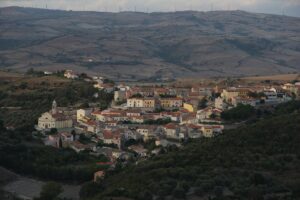
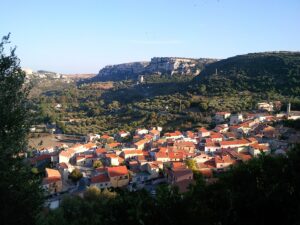
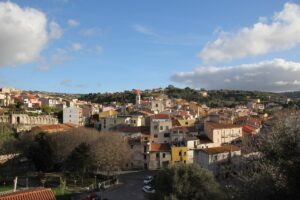
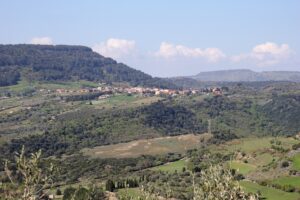
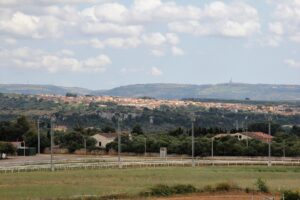
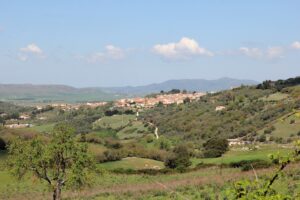
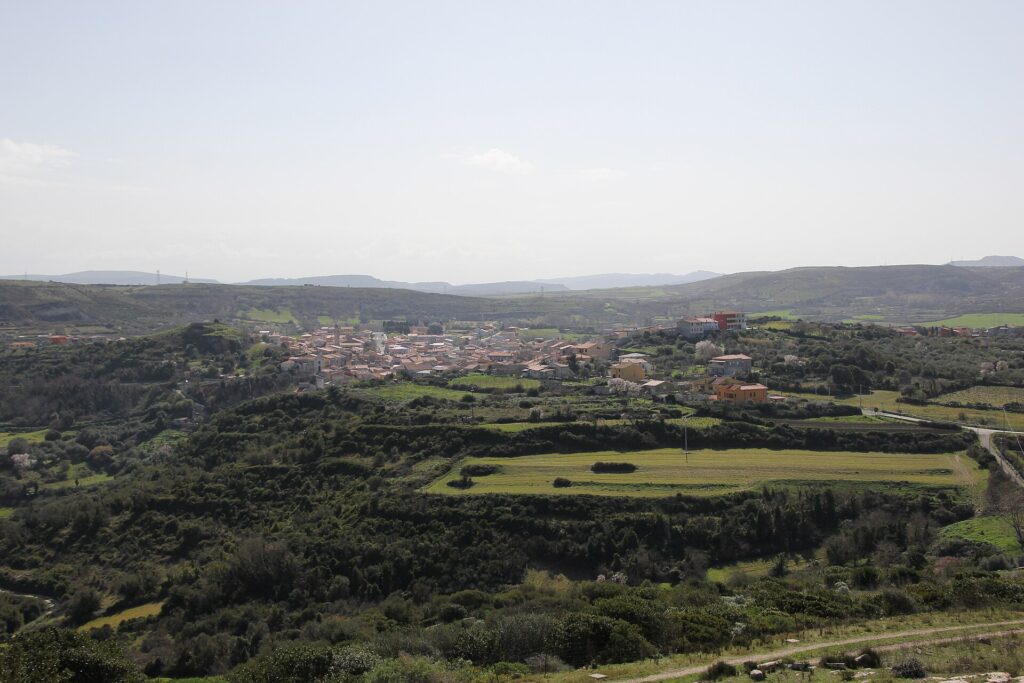
Florinas is a village of about 1,500 people set on the hills between the Sassari area and Logudoro, roughly 20 minutes' drive south of Sassari. Its name probably comes from the Latin Figulinas, «the potters' place», a reminder of an old ceramic-making tradition. The countryside is a small open-air museum of prehistory, with domus de janas, nuraghi and a giants' tomb. It suits travellers looking for archaeology away from the crowds and a quiet base close to Sassari.
What to see in Florinas
Old town and churches
The village centre has several churches. The parish church of Santa Maria Assunta, from the 1700s, has a single barrel-vaulted nave and side chapels with wooden altars. Santa Croce, of 17th-century origin, holds a wooden retablo with canvases by the Florentine painter Baccio Gorini, one of them signed and dated 1619. San Francesco and the Rosario church complete the picture.
Campu Lontanu giants' tomb
One of the most striking prehistoric monuments in northern Sardinia: a Bronze Age collective tomb with a large arched stele almost four metres high, which once carried three small betyls (sacred stones) on top.
Corvos nuraghe
A well-preserved complex nuraghe, with a main tower, a curtain wall and further towers.
Pedras Serradas necropolis
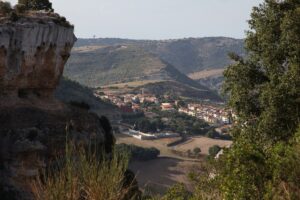
Five domus de janas (prehistoric rock-cut tombs, literally «fairy houses») carved into limestone above a valley; the necropolis of s'Elighe Entosu is close by.
Things to do in Florinas
The best way to discover Florinas is an archaeology hike across the hills: with a guide you can link giants' tombs, nuraghi and domus de janas in half a day on foot or by bike. The quiet back roads of the valley are also lovely for cycling and sunset photos. Just below you'll find the experiences offered by local operators: pick the one that suits you and book.
History
The area was settled in the Neolithic and in Nuragic times; under Rome it was a place of some importance, as finds show, including a bronze figure that appears on the coat of arms. In the Middle Ages it was the head of a district of the Judicate of Torres; after 1259 it passed to the Doria and Malaspina families, then to the Aragonese, who joined it to the barony of Ploaghe. It took part in the anti-feudal uprisings of the late 1700s and was freed from feudal rule in 1839.
Food and shopping
Local cooking is the rural fare of Logudoro and Sassari: sheep's cheese, lamb and pork, homemade bread and almond sweets. Look for products from local farms.
Festivals and traditions
The main religious feasts are the Madonna di Pompei in May, Sant'Antonio in June and San Francesco in October. In summer the village hosts the Figulinas Festival, an international folklore event with groups from all over the world, and Florinas in Giallo, a festival of crime and noir fiction.
Nearby
- Santissima Trinità di Saccargia (Codrongianos), the famous black-and-white striped Romanesque basilica, minutes away.
- Ploaghe and the church of San Michele di Salvennor.
- The Mesu 'e Montes necropolis in Ossi.
- Sassari, with its old town and museums.
Getting there and when to go
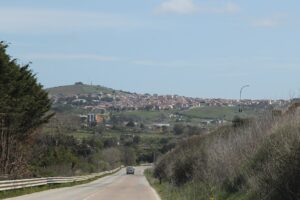
Take the SS 131 and exit for Codrongianos and Florinas. The nearest airport is Alghero, about 40 minutes away; the nearest port is Porto Torres, about half an hour away. The closest beaches, on the Sassari coast, are about 40 minutes away. Spring and autumn are ideal for hiking; August for the folklore festival.
FAQ
How long do you need in Florinas?
Half a day for the village and the main sites; a full day if you add Saccargia.
Are the archaeological sites easy to reach?
They lie in the countryside, so a guided hike or asking in the village before you set off is a good idea.
Is Florinas good for families?
Yes, for short walks among nature and prehistory in a peaceful setting.