Things to do in Albagiara
Things to do in Albagiara, Marmilla: stone village, San Sebastiano church, five nuraghi, the su Padenti oak wood, the Giara and almond sweets.
We are gathering the first experiences for this area. Check back soon, or tell us about an operator you know.
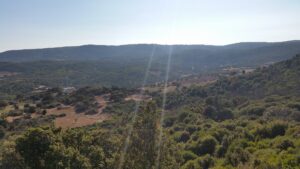
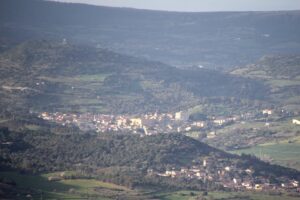
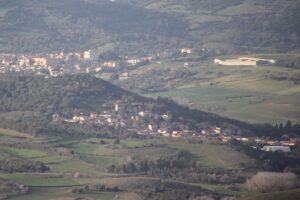
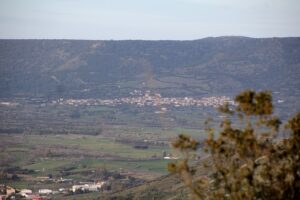
Albagiara (Ollasta in Sardinian) is one of Sardinia's smallest municipalities: just over two hundred people at the foot of the Giara plateau, in the upper Marmilla. Its very name describes the landscape, with dawn ("alba") rising over the edge of the plateau. It's a quiet village of stone houses and old doorways, surrounded by olive groves and a lovely oak wood. A stop for slow travellers, nature lovers and anyone keen to discover the Marmilla's hidden villages.
What to see in Albagiara
The stone village
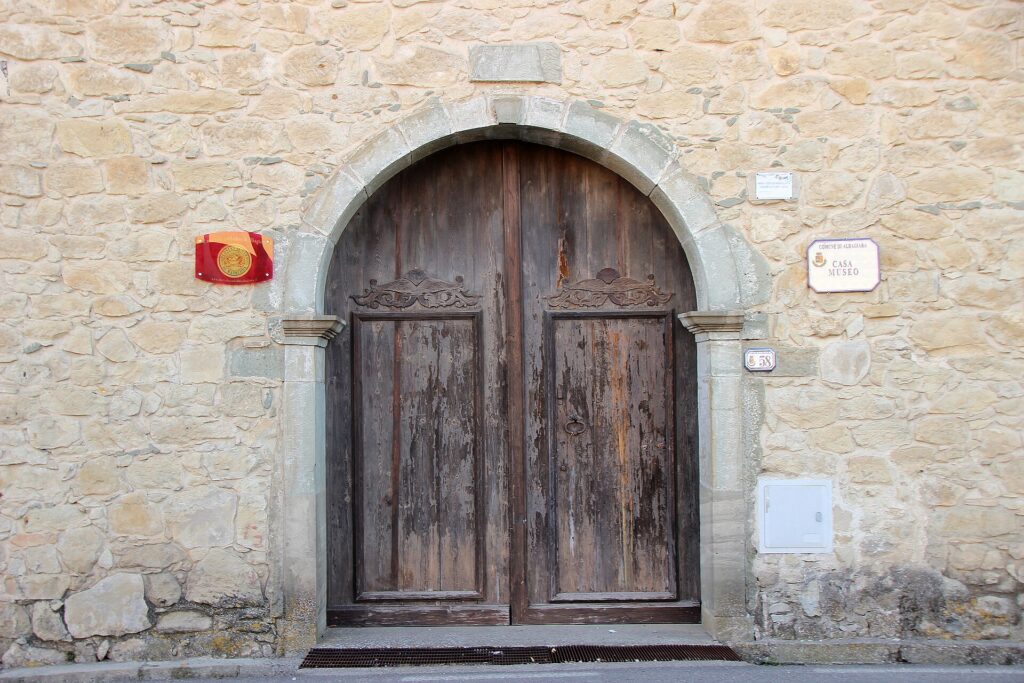
The village has four quarters, San Pietro, Planu-Ibba, Pinna Fiscura and su Forraxi, with stone houses and old portals. A short stroll is enough to soak up the rural atmosphere.
The parish church of San Sebastiano
Probably built on a medieval plan and rebuilt in the 17th and 18th centuries, it has a curved façade topped by an arch and side chapels added over time.
The nuraghi
The territory holds five nuraghi (Bronze Age stone towers): Bingias, Furisinu, Lea, Lussorio and Porcili, along with Roman remains.
Things to do in Albagiara
The su Padenti wood, with holm oaks, downy oaks and cork oaks, offers shade and cool air even in summer and is perfect for a walk. A few minutes away you can climb onto the Giara, the plateau where small wild horses roam free, to explore on foot, by bike or on horseback. Have a look at the experiences offered by local operators, listed just below.
History
The area was inhabited in Nuragic and Roman times; nearby stood Uselis, a Roman colony mentioned by the geographer Ptolemy. The village, recorded from 1341 as Ollastra Usellus, belonged to the Giudicato of Arborea (one of Sardinia's medieval kingdoms). A municipality from 1861, it was merged with Usellus in 1927, regained independence in 1959 as Ollasta and has been called Albagiara since 1964.
Food and local products
The olive groves yield a full-flavoured oil, while almonds are the base of traditional sweets: amaretti, gateau (almond brittle) and gueffus, little balls of almond paste. The village also has a woodworking tradition.
Festivals and traditions
As throughout the Marmilla, religious feasts are when the community comes together and the traditional almond sweets are made.
Nearby
- Gonnosnò: the San Salvatore sacred well.
- Usellus: the church of Santa Reparata and the parish church of San Bartolomeo.
- Ales: the cathedral and the Museum of Traditional Toys.
- Giara di Gesturi: the wild horses.
Getting there and when to go
From the SS131 take the Uras exit and continue towards Ales: Oristano is about 40 minutes away, Cagliari-Elmas airport about an hour and a quarter. Spring and autumn are best for walks in the wood and on the Giara; in summer, su Padenti offers shelter from the heat.
FAQ
Why is it called Albagiara?
The name, chosen in 1964, refers to the dawn rising over the edge of the Giara.
How long do I need?
An hour for the village, half a day with the su Padenti wood and the Giara.
Is Albagiara good for families?
Yes, the wood is ideal for a picnic and children love the Giara horses.