Things to do in Villa Sant'Antonio
Things to do in Villa Sant'Antonio, Sardinia: the Monte Corru Tundu menhir, Is Forrus rock-cut tombs, nuraghi and archaeological trails.
We are gathering the first experiences for this area. Check back soon, or tell us about an operator you know.
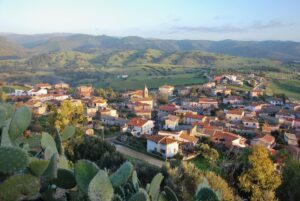
Villa Sant'Antonio (Sant'Antoni Arruìnas in Sardinian) is a small village in the Upper Marmilla, in the province of Oristano, with the Giara of Assolo to the south, the Imbessu river to the east and Monte Grighine to the north. It is a true open-air museum of prehistory: menhirs as tall as a house, dozens of rock-cut tombs and around ten nuraghi (Bronze Age stone towers). For archaeology lovers and walkers who enjoy hills full of springs, it is a surprising find.
What to see in Villa Sant'Antonio
Monte Corru Tundu menhir
Almost six metres tall, it is one of the most impressive menhirs in Sardinia. The local perdas fittas (“standing stones”) date from around 3300–2500 BC; besides Monte Corru Tundu you can see the menhirs of Carabassa and Cardixeddu, shaped to hint at a human figure, and those of Tuttiricchiu.
Is Forrus rock-cut tombs
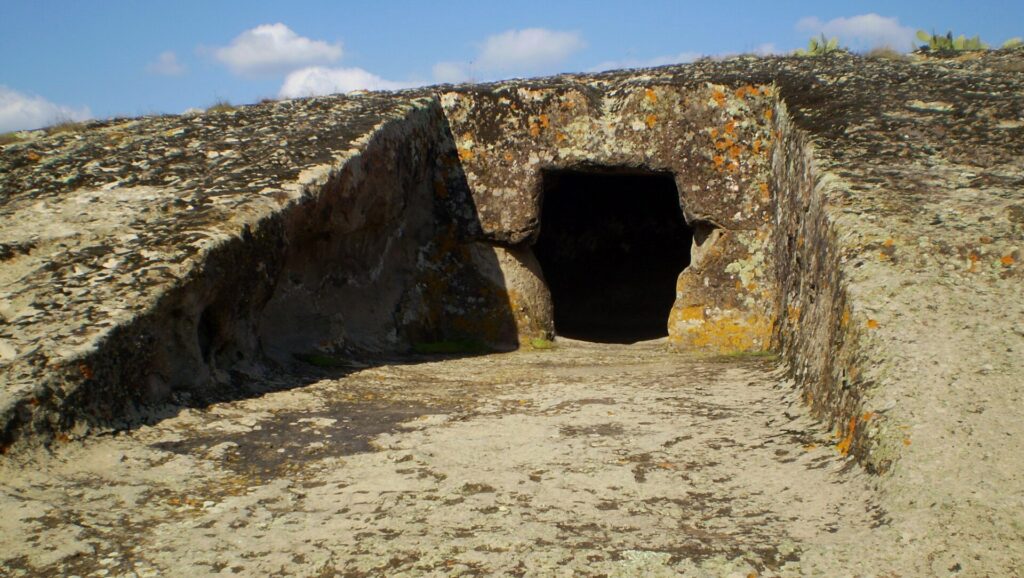
The area has about sixty domus de janas, Neolithic tombs carved into rock whose name means “fairy houses”. At Is Forrus you can recognise both the older shaft type and the later corridor type; others are at Genna Salixi and Maccettu.
Nuraghi
Among the area's ten nuraghi, the two-storey Spei nuraghe stands out as one of the oldest; Crannaiou and Genna sa Pira are slightly later.
Churches
In the village centre stands the church of Sant'Antonio Abate, built where the saint's statue was found; there is also the church of San Giorgio, of ancient origin.
Things to do in Villa Sant'Antonio
The best way to experience the village is an archaeological trail on foot or by bike among menhirs, rock-cut tombs and nuraghi, ideally with a guide who can read the signs of prehistory. The hills are covered in Mediterranean scrub, holm oaks and cork oaks, while alders, willows and tamarisks grow along the Imbessu valley. About 2 km from the village, the Monte Padrillonis plateau preserves traces of pre-Nuragic settlements. Discover the tours and walks offered by local operators below.
History
The area was densely inhabited in the Neolithic and Copper Age, when the menhirs were raised and the tombs carved, then in Nuragic and Roman times, with several scattered settlements. The present village, however, is recent: it grew up in the early 18th century around the church of Sant'Antonio Abate, and in 1720 it joined the barony of Senis under the Nin Zatrillas, until it was freed in 1839. Its current name has been in use since 1985.
Food and local products
The village lives off farming and livestock: expect rustic bread, sheep's cheeses, ricotta and local meats, in the Marmilla tradition.
Festivals and traditions
The community is devoted to Sant'Antonio Abate, the saint who gives the village its name and who in Sardinia is traditionally celebrated in January with bonfires.
Nearby
- Assolo and the Giara, with trails up to the plateau of the wild ponies.
- Usellus, with Santa Reparata and traces of Roman Uselis.
- Senis, with its medieval tower and baronial palace.
- Fordongianus and its Roman baths, about half an hour away.
Getting there and when to go
Villa Sant'Antonio is about 50 minutes by car from Oristano, reached via the SS131 highway. The nearest airports are Cagliari-Elmas, about an hour and a quarter away, and Alghero. Spring and autumn are perfect for exploring the outdoor sites; in summer, visit the menhirs in the morning or at sunset, when the light is best.
FAQ
How long do I need to see the archaeological sites?
Half a day covers Monte Corru Tundu, Is Forrus and a nuraghe; a full day for a complete trail.
What are domus de janas?
They are rock-cut tombs from the Neolithic; folk tradition imagined them as homes of tiny fairies, the janas.
Is Villa Sant'Antonio good for kids?
Yes, giant menhirs and “fairy houses” fire children's imagination; just bring comfortable shoes.