Things to do in Villanova Tulo
Things to do in Villanova Tulo: the Adoni nuraghe, Benvenuto Lobina murals, Lake Flumendosa, the Trenino Verde railway and the June cherry festival.
We are gathering the first experiences for this area. Check back soon, or tell us about an operator you know.
Villanova Tulo is a Sarcidano village of about a thousand people, sitting some 570 metres up on a hill overlooking the Flumendosa valley and its lake. Its highlights are the Adoni nuraghe, one of the most interesting Nuragic complexes in the area, murals inspired by writer Benvenuto Lobina, and cherries, the stars of the June festival. It suits lovers of archaeology, lake views, vintage trains and inland villages.
What to see in Villanova Tulo
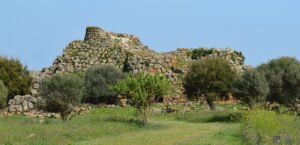
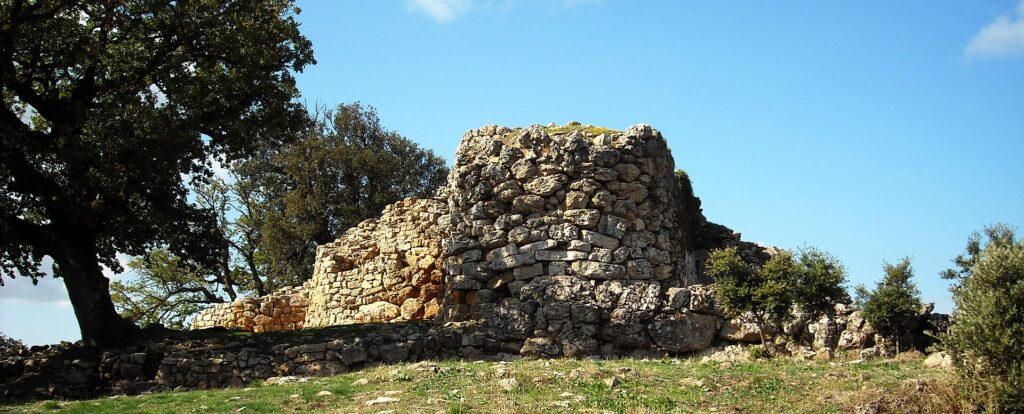
The Adoni nuraghe
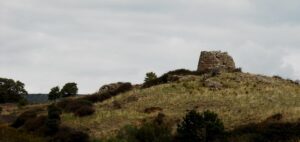
On a hill near the village, the Adoni nuraghe (a Bronze Age stone fortress) has a central tower, a bastion with towers, an outer wall and the huts of its village. Excavations turned up bronze objects and pottery from 1350–1150 BC, plus a fragment of a jug of a type common in Etruria; the complex was reused as late as the 6th century AD.
The old village and murals
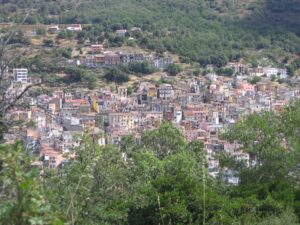
Among the stone houses stand murals by sculptor Pinuccio Sciola, inspired by the work of Benvenuto Lobina (1914–1993), the village's most famous son and author of the Sardinian-language novel Po cantu Biddanoa. A bronze statue honours the writer.
The churches
The parish church of San Giuliano was rebuilt in 1663 in Gothic-Aragonese style on an earlier building. On San Sebastiano hill, above the village, a small country chapel offers lovely views.
Things to do in Villanova Tulo
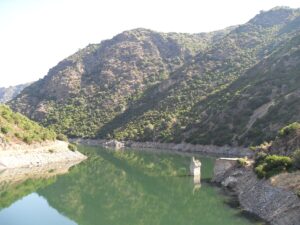
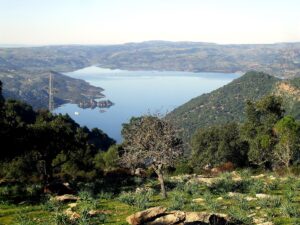
Lake Flumendosa is right there: stroll along its shores or enjoy the view from the village. From the Trenino Verde station, about 3 km away, you can ride the historic Mandas–Arbatax line, which crosses the Flumendosa right where the river enters the lake. For shady walks there's the Pantaleo forest with its ancient trees; prehistory fans can seek out the is Janas and Frumosa caves, used as tombs in the Early Bronze Age. Discover the experiences offered by local operators, just below.
History
The area was frequented in the Nuragic age. In the Middle Ages Villanova and Tulo were two separate villages in the Giudicato of Cagliari (one of Sardinia's medieval kingdoms). Between 1365 and 1409, during the war between Arborea and Aragon, the area changed hands several times and the villages declined; the present village arose in the mid-14th century from the union of the two. From 1604 it was part of the fief, later duchy, of Mandas, until it was bought back in 1839.
Food and local products
This is farming and herding country: good cheeses, cereals, vegetables and fruit. Above all there are the cherries, the village's pride, which you can taste fresh at the June festival.
Festivals and traditions
In mid-June the feast of San Giuliano martire, the patron saint, joins the cherry festival: tastings, stalls of craftspeople and producers from all over the island, processions with folk groups, riders and musicians. There's also a staging of Su Illu, an old betrothal ritual, and a Sardinian-language poetry prize named after Benvenuto Lobina.
Nearby
- Sadali: the San Valentino waterfall and caves.
- Esterzili: the Nuragic temple of Sa Domu de Orgia.
- Nurri and the Flumendosa dam.
- Seulo: the Sa Stiddiosa waterfall.
- Nurallao: the Funtana is Arinus park.
Getting there and when to go
Cagliari-Elmas airport is about an hour and twenty minutes by car, via Mandas and Nurri. June is ideal, with ripe cherries and the patron's feast; spring and early autumn are also great for walking. In summer the Trenino Verde runs almost daily; snow is possible between December and February.
FAQ
When is the cherry festival?
Traditionally in mid-June, together with the feast of San Giuliano.
Can I visit the Adoni nuraghe?
Yes, it stands on a hill near the village; ask locally about guided tours.
Is Villanova Tulo good for families?
Yes: children love the Trenino Verde ride and the nuraghe.