Things to do in Simala
Things to do in Simala, Sardinia's village of portals: stone gateways, San Nicola church, a giants' tomb, a Roman villa and autumn feasts.
We are gathering the first experiences for this area. Check back soon, or tell us about an operator you know.
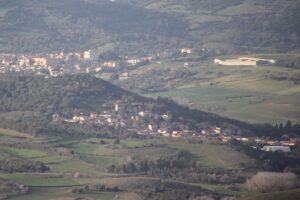
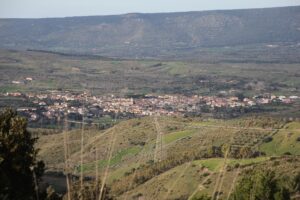
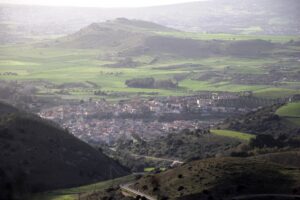
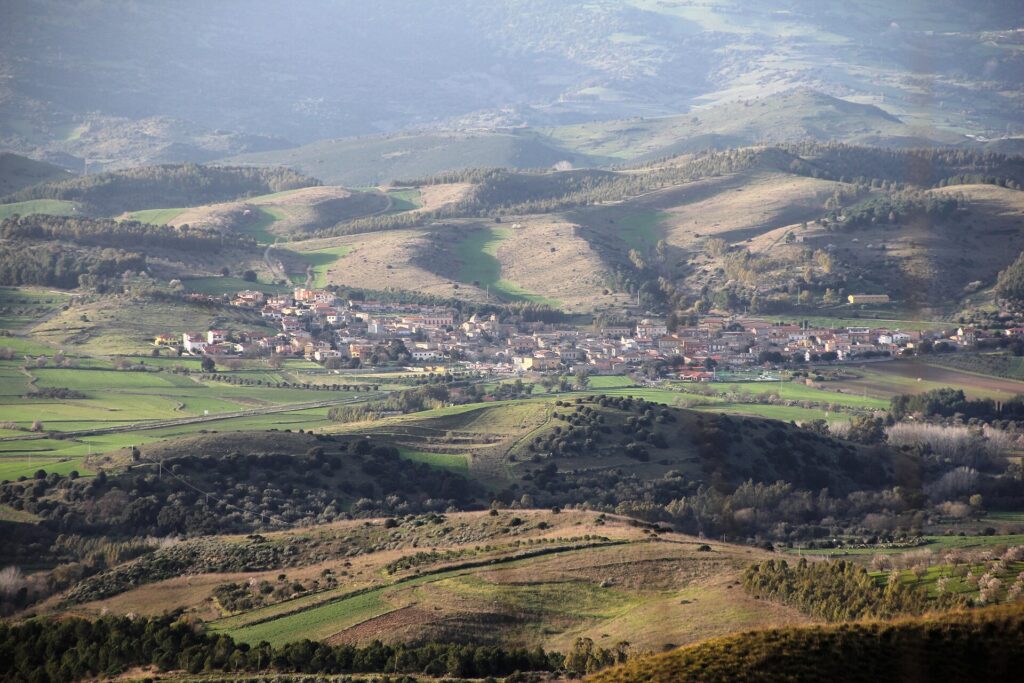
Simala is a small farming village of about three hundred people in Alta Marmilla, province of Oristano, set in a fertile valley crossed by the Rio Mannu, roughly 45 minutes' drive from Oristano. It's known as the «village of portals»: the old centre has around sixty of them, grand stone gateways that tell the story of traditional farmhouses. It's a lovely stop if you enjoy authentic villages, rural architecture and little-known archaeology.
What to see in Simala
The old centre and its portals
Wander the streets to find courtyard houses with loggias and cobbled yards. The portals have stone arches, wooden lintels and often a small dovecote above or beside the entrance. Notable old buildings include the former monte granatico, the communal grain store, and a few small mansions – the oldest, the Monserrat Deana house, dates from 1554.
Church of San Nicola
The 18th-century parish church, recognisable by its dome, holds marble and wooden altars, silverware from the 15th to the 19th century and 18th-century vestments.
Church of Santa Vitalia
A small country church dedicated to the saint and the destination of the autumn procession.
Archaeology
The area is remarkably rich: a pre-Nuragic sacred site with a standing stone linked to a water cult along the Rio Mannu, the Bronze Age giants' tomb of Piscina Craba, about ten nuraghi, the remains of the Roman farm villa of Gemussi with baths and mosaics, traces of the Roman road between Neapolis and Uselis, and the early Christian cemetery of Santu Sadurru.
Things to do in Simala
Simala is best explored slowly on foot: a stroll past the portals and courtyards, then out into the countryside towards the archaeological sites along the Rio Mannu valley. The Monte Arci nature park, with its woods and obsidian deposits, is a short drive away and perfect for hiking and mountain biking. Below you'll find the experiences offered by local operators.
History
Tombs, nuraghi and the Roman villa show the valley has been lived in for millennia. In the Middle Ages Simala was part of the Judicate of Arborea, in the Parte Montis district; after Arborea fell it passed to the Aragonese and, from 1603, to the marquisate of Quirra, until it was freed from feudal rule in 1839.
What to eat and buy
Simala's countryside produces cereals, pulses, fruit, wine and olive oil. In winter, around the San Nicola bonfire, you can taste chestnuts and new wine. The village also has a tradition of hand-woven rugs.
Festivals and traditions
- Santa Vitalia, in early October, with a procession in traditional dress.
- San Nicola, in early December, with a bonfire, chestnuts and new wine.
Nearby
- Masullas: the GeoMuseo Monte Arci and San Leonardo church.
- Pompu, with the Santu Miali nuraghe.
- Gonnostramatza, with the Turcus e Morus multimedia museum.
- Curcuris, with its stone loggia.
- Baressa, the village of almond trees.
Getting there and when to go
Leave the SS 131 Carlo Felice towards Uras and drive through Masullas or Mogoro. Cagliari airport and port are about an hour and a quarter by car. Spring is perfect for the blossoming countryside, autumn for the Santa Vitalia and San Nicola feasts; summer is hot, so visit in the morning or around sunset.
Frequently asked questions
How much time do I need for Simala?
A couple of hours for the centre and its portals; a full day with the archaeological sites and Monte Arci.
Why is Simala called the «village of portals»?
Because the old centre preserves around sixty monumental stone gateways leading into traditional courtyard houses.
Is Simala good for families?
Yes: it's quiet, safe and compact – ideal for an unhurried walk with children.