Things to do in Mogorella
Things to do in Mogorella, Sardinia: the Friarosu proto-nuraghe, Nuraghe Mannu, Grighine and Monte Arci trails, local food and festivals.
We are gathering the first experiences for this area. Check back soon, or tell us about an operator you know.
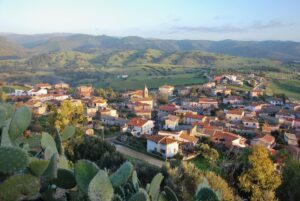
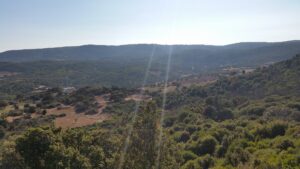
Mogorella (Mogorèdda in Sardinian, meaning “little hill”) is a small village in the Upper Marmilla, in the province of Oristano, at the foot of Monte Grighine and on the edge of the Monte Arci Nature Park. Its land, covered in Mediterranean scrub, downy oaks and cork oaks, holds a handful of nuraghi (Bronze Age stone towers), including one of the most interesting proto-nuraghi in the area. It is a quiet destination for anyone after archaeology, trails and the simple life of inland villages.
What to see in Mogorella
Friarosu proto-nuraghe
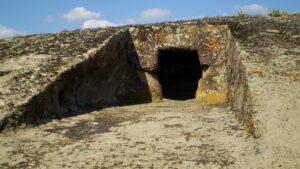
Near the village entrance, on a limestone plateau at about 400 metres, stands the Friarosu proto-nuraghe: a corridor building from the Early-Middle Bronze Age, about five metres tall, regarded as a link between archaic nuraghi and later ones with the classic corbelled dome.
Nuraghe Mannu and other nuraghi
Nuraghe Mannu is the best preserved in the area. Also of interest are Bau Tentu, with two circular structures joined by a corridor, Luas and Cuccuru, about a kilometre from the village. A large village probably stood around the Fenugu nuraghe.
The “Mogorella gladiator”
A Roman-era bronze statuette, about 8 centimetres tall, was found here and is now kept in the National Archaeological Museum in Cagliari.
Things to do in Mogorella
The slopes of Grighine and Monte Arci offer trails among rockrose, strawberry trees, holm oaks, mastic and myrtle, perfect for hiking and mountain biking. A tour of the village's nuraghi lets you trace the evolution of Nuragic architecture within a few kilometres. Wildlife is plentiful and the countryside is dotted with pastures. Find the experiences offered by local operators below and plan your outing.
History
The area was densely inhabited in the Nuragic age, as its seven known sites show, and later in Roman times. In the Middle Ages it belonged to the Judicate of Arborea; after its fall it came under Aragonese rule and the feudal system, until feudalism was abolished in the 19th century. The village name is officially recorded in 1546.
Food and local products
The tradition is pastoral: mutton takes centre stage, served with local wine, alongside rustic bread, cheeses and ricotta from the area.
Festivals and traditions
- August: feast of the patron San Lorenzo, with religious rites, a procession, folk groups and horse riders.
- Mutton festival: a celebration of mutton paired with local wine.
Nearby
- Villa Sant'Antonio, with the Monte Corru Tundu menhir and rock-cut tombs.
- Usellus, with the church of Santa Reparata.
- Samugheo, with the Castello di Medusa and its weaving tradition.
- Fordongianus and its Roman baths.
Getting there and when to go
Mogorella is about 40 minutes by car from Oristano, reached via the SS131 highway. The nearest airports are Cagliari-Elmas, about an hour and a quarter away, and Alghero. Spring and autumn are ideal for walking; in August the village comes alive for its patron saint's feast.
FAQ
How long do I need for Mogorella?
Half a day covers Friarosu, Nuraghe Mannu and the village; pair it with Villa Sant'Antonio or Usellus.
What is a proto-nuraghe?
One of the oldest forms of nuraghe, with internal corridors instead of the large domed chamber typical of later nuraghi.
Is Mogorella good for families?
Yes, it is a quiet village, and Friarosu, close to the houses, is easy to reach with children.