Things to do in Ruinas
Things to do in Ruinas, Sardinia: red-stone old town, Santu Teru country church, nuraghi, Monte Grighine hikes and the August feast of San Giorgio.
We are gathering the first experiences for this area. Check back soon, or tell us about an operator you know.
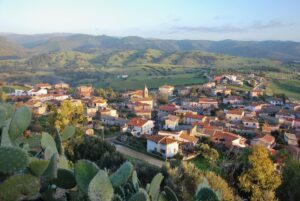
Ruinas (Arruinas in Sardinian) is a village of about 600 people in upper Marmilla, province of Oristano, at around 350 metres on a plateau of pink trachyte. It belongs to the historic Brabaxiana area, the “gateway to Barbagia”, and the Araxisi river separates it from Samugheo. It is worth a visit for its red-stone houses, a country church of Byzantine origin and quiet countryside between Monte Grighine and the river valley. Ideal for nature, walking and authentic traditions.
What to see in Ruinas
The old town
Irregular lanes are lined with red-stone houses and carved doorways; lintels and jambs recall the Aragonese period.
San Giorgio church
The parish church of San Giorgio Martire stands on San Michele hill above the village. Born as a chapel with Romanesque motifs, it was enlarged in the 17th–18th centuries and completed in the 19th.
Santu Teru and Ghentiana
A few kilometres from the centre is the country church of Santu Teru (St Theodore), of Byzantine origin and restored several times. Nearby lie the remains of the Roman station of Ghentiana, with traces of a necropolis and road.
Nuraghi, domus and menhirs
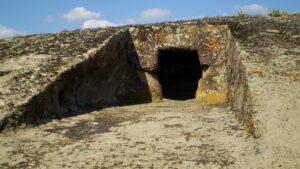
The area holds the nuraghi (Bronze Age stone towers) Nurachi, de Pirena and Nurampei, domus de janas (rock-cut tombs) and a Copper Age statue-menhir.
Things to do in Ruinas
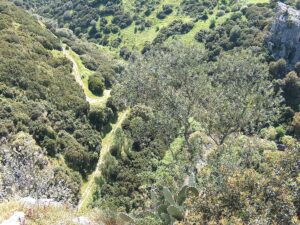
Monte Grighine, rising to almost 700 metres west of the village, is the obvious goal for hiking or mountain biking. The Araxisi valley, with tamarisks, rock walls and small pools, is perfect for walks and nature photography; springs such as Santu Teru and Abbadda flow nearby. You can also join archaeological visits or meet people who work trachyte, cork and the loom. Discover the experiences offered by local operators just below.
History
The area was inhabited in pre-Nuragic, Nuragic and Roman times; the name itself, meaning “ruins”, may recall Ghentiana. In the Middle Ages Ruinas belonged to the Giudicato (medieval kingdom) of Arborea, then to the marquisate of Oristano and, after 1478, to the Aragonese as a fief. Feudalism ended here in 1839.
Food and shopping
Sheep farming provides honest cheeses and meats. Ruinas is known for its traditional breads, for everyday and festive use: crivaxiu, coccoi, fogazza and ladighedda de scetti. Weaving and cork work are still handed down.
Festivals and traditions
In mid-May the village celebrates Santu Teru, with a procession from the parish church to the country church. From mid to late August comes the patron feast of San Giorgio, with a parade of costumes, riders and carts, accompanied by launeddas (the ancient triple-reed pipe) and the liturgical songs is goccius.
Nearby
- Samugheo: about 5 km, the weaving capital with the MURATS museum and Medusa Castle.
- Asuni: rock tombs, holm oak woods and marble.
- Villa Sant'Antonio: the menhir of Monte Corru Tundu.
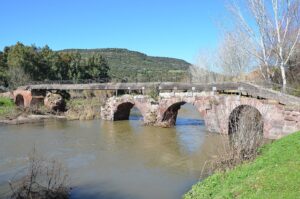
- Allai: the Roman bridge.
- Laconi: the menhir museum and Genna Corte nuraghe.
Getting there and when to go
Ruinas is less than 40 km from Oristano; the nearest airport is Cagliari-Elmas, about an hour and a half by car, and the handiest ports are Oristano and Cagliari. You will need a car. Spring and autumn are best for hiking; May and August bring the most heartfelt festivals.
FAQ
How much time do I need for Ruinas?
Half a day for the village and Santu Teru, a full day with a hike on Monte Grighine.
Is Ruinas good for families?
Yes: children enjoy the summer festivals and the valley walks.
When is the best time to visit Ruinas?
May, for the Santu Teru feast and the spring flowers, or August for San Giorgio.