Things to do in Gonnosnò
Things to do in Gonnosnò, Marmilla: San Salvatore sacred well, giants' tombs, the Nieddiu nuraghe on the Giara and the churches of Sant'Elena and Figu.
We are gathering the first experiences for this area. Check back soon, or tell us about an operator you know.
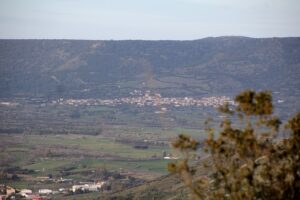
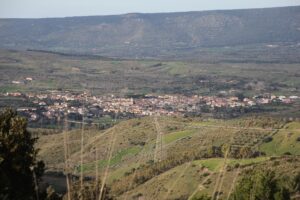
Gonnosnò is a village of about seven hundred people in the upper Marmilla, around 200 metres up at the foot of the Giara plateau, with the small hamlet of Figu. Its name recalls the heights (gon-) above it. Come for the San Salvatore Nuragic sacred well, the giants' tombs and the Nieddiu nuraghe looking out from the edge of the plateau. It's a destination for archaeology lovers, walkers and anyone who enjoys farming villages with heartfelt feasts.
What to see in Gonnosnò
The San Salvatore sacred well
The Nuragic well temple of San Salvatore is built of finely dressed stone blocks, a short distance from the spring. Sacred wells were places of water worship and among the most refined monuments of the Nuragic civilisation.
The giants' tombs of is Lapideddas
Four Bronze Age collective tombs, called "giants' tombs" because of their great size.
The Nieddiu nuraghe
The most important nuraghe (Bronze Age stone tower) in the area stands on a spur of the Giara, built of rough-hewn basalt, about 11 metres across. The countryside also has around ten single-tower nuraghi and, on the Giara, a paved stone enclosure.
The churches
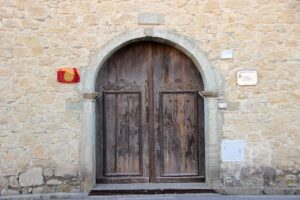
The parish church of Sant'Elena imperatrice has a bell tower from 1645, once covered in coloured tiles; inside are two chapels from 1690, a 17th-century font and a high altar with a polychrome marble frontal. In Figu, on a hill, the church of the Natività di Maria, from 1624, has a single nave with a wooden roof.
Things to do in Gonnosnò
From the village you can climb onto the Giara, the basalt plateau of wild horses, cork oaks and seasonal ponds: perfect for hiking, cycling or riding. The surrounding hills, among olive groves and fields, invite long walks from one archaeological site to the next. Discover the hikes and guided tours offered by local operators, just below.
History
The area was inhabited in pre-Nuragic, Nuragic, Punic and Roman times. In the Middle Ages it belonged to the Giudicato of Arborea; then to the Marquisate of Oristano and, from 1478, to the Aragonese as a fief of the Carroz, later part of the Marquisate of Quirra. In 1678 a monte granatico, a "grain bank" lending seed to farmers, was founded in Figu, one of the first in Sardinia. Bought back in 1839, the village was merged with Baressa in 1928; in 1947 the municipality of Figu-Gonnosnò was created, renamed Gonnosnò in 1964.
Food and local products
This is farming and herding country: olive oil, sheep's cheese and homemade bread are the local staples, as the coat of arms with its olive branch and sheep suggests. The village also has a craft tradition.
Festivals and traditions
- Mid-January: bonfires for Sant'Antonio Abate; San Sebastiano on 20 January.
- Tuesday after Easter Monday: the feast of San Salvatore.
- May: San Bernardino da Siena and San Priamo.
- Mid-August: Sant'Elena, the patron saint.
- Early October: Santa Vitalia.
Nearby
- Giara di Gesturi: the wild horses.
- Albagiara and Usellus: the su Padenti wood and the church of Santa Reparata.
- Ales: the cathedral and the Museum of Traditional Toys.
- Barumini: Su Nuraxi, a UNESCO site, about half an hour away.
Getting there and when to go
Cagliari-Elmas airport is about an hour and a quarter away via the SS131, exiting towards Uras and continuing towards Ales; Oristano is about 45 minutes away. Spring and autumn are the best times for archaeological sites and walks on the Giara.
FAQ
What can I see in Gonnosnò in a short time?
The San Salvatore sacred well and the Sant'Elena parish church; with half a day, add the Nieddiu nuraghe on the Giara.
Is Gonnosnò good for families?
Yes, with easy walks and the Giara horses just a few minutes' drive away.
What is the monte granatico of Figu?
An institution founded in 1678 that lent seed grain to farmers: one of the first in Sardinia.