Things to do in Escolca
Escolca, Sardinia: the abandoned hamlet of San Simone and its feast, Santa Cecilia church, nuraghi, olive oil and woven straw baskets.
We are gathering the first experiences for this area. Check back soon, or tell us about an operator you know.
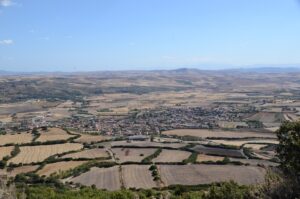
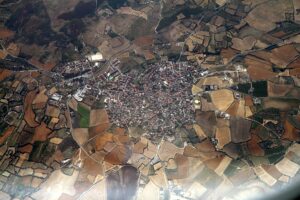
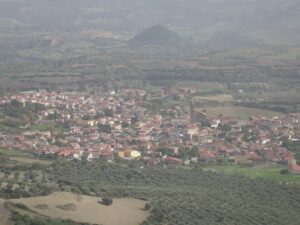
Escolca, Iscroca in Sardinian, is a small village of around five hundred people at the foot of the Giara di Serri plateau, in the Sarcidano on the edge of the Trexenta, just over an hour's drive from Cagliari. Olives, cereals and vines grow around it, and local artisans keep old looms and straw weaving alive. Its treasure is the abandoned hamlet of San Simone, setting for one of the most evocative feasts in the area. It suits lovers of legends, traditions and peaceful inland landscapes.
What to see in Escolca
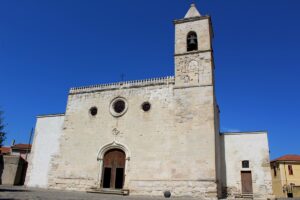
The church of Santa Cecilia
The late Gothic parish church is the heart of the village.
The hamlet of San Simone
On a detached plot of the municipality stands the uninhabited hamlet of San Simone: around the saint's little church cluster some fifty small houses, opened up during the feast. Beneath the church foundations lie the remains of the Su Nuraxi Mannu nuraghe. A legend surrounds the place: after a plague, the survivors took refuge in Escolca; Mandas disputed who should get the land, and the quarrel was settled by placing the saint's statue on an ox yoke, and the oxen headed for Escolca. As compensation, the procession was granted a route through Mandas.
Mogurus nuraghe
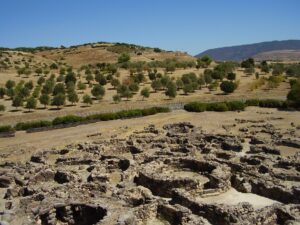
A single-tower nuraghe built of basalt, it is one of the Nuragic remains in an area inhabited since the Nuragic age and later in Roman times.
Things to do in Escolca
The countryside of olive groves and wheat fields invites walks and bike rides, with the Giara di Serri as a backdrop. You can see artisans weaving straw baskets and working at the loom, and plan trips to the Nuragic sites nearby. Take a look at the experiences offered by local operators just below.
History
The area was inhabited in pre-Nuragic and Nuragic times and later by the Romans, who left burials. According to tradition, the name refers either to a group of small villages or to a lookout post over the fields. In the Middle Ages Escolca was part of the Siurgus district in the Judicate of Cagliari; after 1258 it passed to Pisa and then to the Aragonese, as a fief of the Carroz. It was later tied to the marquisate, then dukedom, of Mandas, until the fief was bought out in 1839.
Food and local products
Olives are the main crop, alongside cereals and vines, so olive oil is the product to look for. The most authentic souvenirs are hand-woven straw baskets and fabrics made on traditional looms.
Festivals and traditions
The feast of San Simone is held in the abandoned hamlet, usually on the weekend after Pentecost. The little houses come back to life, and the procession still passes through Mandas under the old agreement. The feast has been repeated almost unchanged for generations.
Nearby
- Serri and the Nuragic sanctuary of Santa Vittoria on its plateau.
- Mandas, with San Giacomo church and the Trenino Verde.
- Gergei, the olive oil village, a few minutes away.
- Isili, with the Is Paras nuraghe and Lake San Sebastiano.
- Nurallao and the Aiodda giants' tomb.
Getting there and when to go
The nearest airport and port are in Cagliari, just over an hour away: head north through the Trexenta to Mandas, then on to Escolca. Late spring is the best time, when the San Simone feast takes place and the countryside is still green; autumn is pleasant too.
Frequently asked questions
When is the feast of San Simone?
Usually on the weekend after Pentecost, so between May and June.
Can I visit San Simone all year?
The site is in open countryside and can be reached, but the hamlet only really comes alive during the feast.
How long do I need for Escolca?
Half a day covers the village and San Simone; add Serri or Mandas for a full day.