Things to do in Gonnoscodina
Gonnoscodina, Sardinia: the domed church of San Daniele, San Sebastiano parish church, an old bridge, nuraghi and walks on the giare.
We are gathering the first experiences for this area. Check back soon, or tell us about an operator you know.
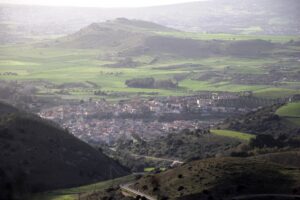
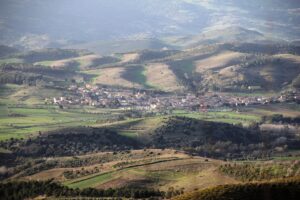
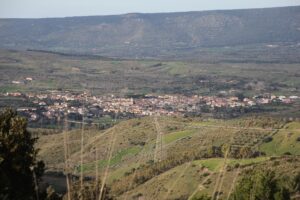
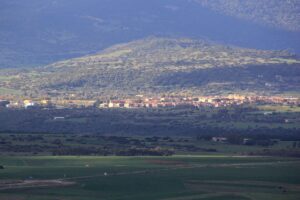
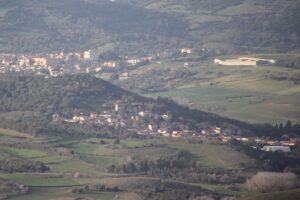
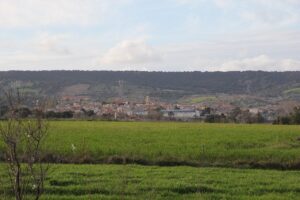
Gonnoscodina is a small village of about four hundred people in the upper Marmilla, in the province of Oristano, on a fertile hillside between the Giara di Gesturi, the Giara di Siddi and Monte Arci. The name says it all: gonnos means hill and codina rock, the stony hill. It is a quiet place to explore slowly, with a domed church that is the village's symbol and countryside crossed by the Rio Mogoro and Rio Isca. It suits slow travellers looking for authentic rural Sardinia.
What to see in Gonnoscodina
The church of San Daniele
At the entrance to the village, set in a park of Mediterranean scrub, stands the church of San Daniele, built in the first half of the 19th century. It has a central plan crowned by a large dome and, inside, an altar of Parian marble. It is Gonnoscodina's symbol.
The parish church of San Sebastiano
Built on a Greek-cross plan in classical style, it replaced the old parish church of San Bartolomeo, of which two round arches survive in a park. It keeps a relic of the Holy Cross and a fine antique chalice.
The bridge and the nuraghi
In the old centre there is an old bridge over the Rio Isca, rebuilt in the 18th century on a base that tradition says is Roman. In the countryside you will find the Nuratzou nuraghe and the Gotzua nuraghe.
Things to do in Gonnoscodina
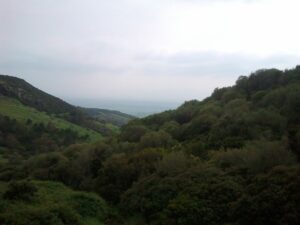
The village is a handy base for hikes on the two giare plateaus and on Monte Arci, famous for its obsidian, as well as for walks and bike rides among fields and hills. Local craftspeople still work wood and ceramics. Take a look at the experiences offered by local operators just below.
History
The area was inhabited in the Nuragic age and frequented by the Romans, who left a small burial ground and a hoard of coins. The village grew up in the Middle Ages, in the Parte Montis district of the Judicate of Arborea. In 1420 it joined the Marquisate of Oristano and in 1478 passed to the Aragonese as a fief of the Carroz, then the Centelles and Osorio families, until it was bought out in 1839. From 1927 to 1946 it was merged with Gonnostramatza.
Food and local products
The economy is mainly farming, thanks to fertile land. At the table you will find Marmilla flavours: homemade bread, cheese, olive oil and local wine. To take home, a wooden or ceramic piece made by local artisans.
Festivals and traditions
- San Sebastiano, the patron saint, 20 January, with a bonfire lit on the eve.
- San Daniele, celebrated several times a year, between May and November.
- San Bartolomeo, 24 August, in the park around the remains of his church.
Nearby
- Gonnostramatza, with the Turcus e Morus museum, one kilometre away.
- Siddi and the Sa Domu 'e s'Orku giants' tomb.
- Mogoro and the Cuccurada nuraghe.
- Masullas and the Monte Arci GeoMuseum.
Getting there and when to go
Leave the SS131 highway near Mogoro: Oristano is about half an hour away, Cagliari, with its airport and port, about an hour. Spring and autumn are the best seasons for walking in the countryside and on the plateaus; summer is very hot.
Frequently asked questions
How long do I need for Gonnoscodina?
An hour or two for the churches and centre; pair it with Gonnostramatza and Mogoro.
What does the name Gonnoscodina mean?
It comes from gonnos, hill, and codina, rock: the stony hill.
Is Gonnoscodina near the sea?
No, it is inland; the beaches of the Gulf of Oristano are about an hour's drive away.