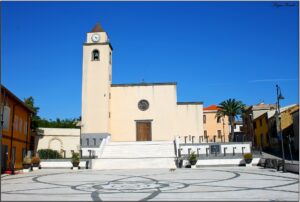
Things to do in Guamaggiore
Things to do in Guamaggiore, Sardinia: medieval churches, Nuraghe Barru, wheat-country food, festivals and how to get there.
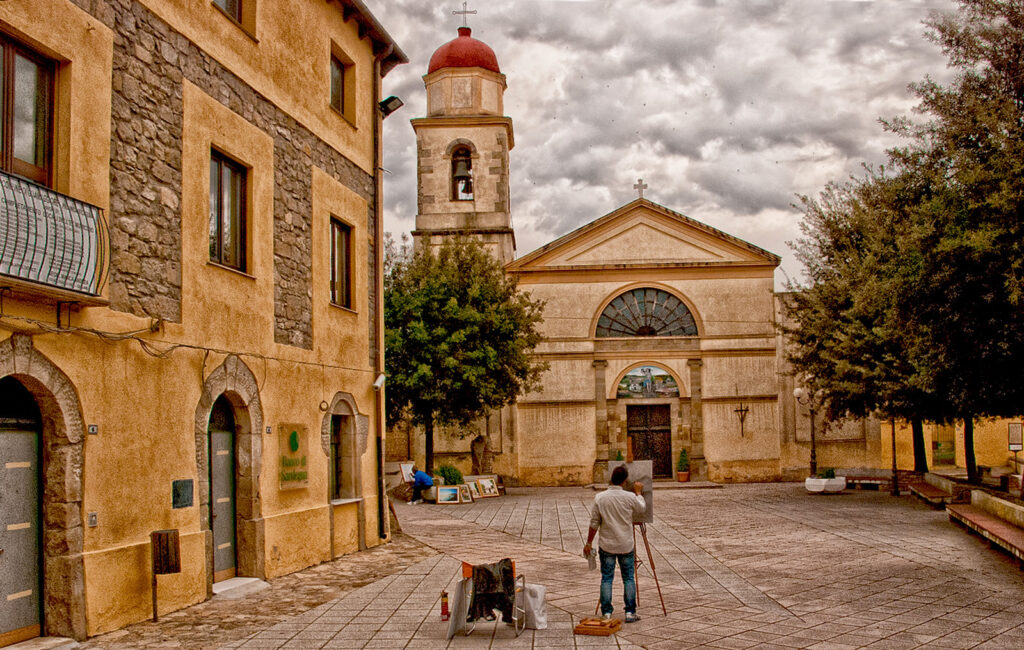
We are gathering the first experiences for this area. Check back soon, or tell us about an operator you know.
Guamaggiore (Gomajòri in Sardinian) is a small farming village in the Trexenta, set between the wheat-covered hills of southern Sardinia and the slopes of Monte Saturno and Monte San Giovanni, about an hour's drive from Cagliari. For a place of under a thousand people it holds a surprising heritage: three historic churches and one of the most important Nuragic “royal palaces” in the area. Come here for archaeology, sacred art and country cooking in a genuinely local setting.
What to see in Guamaggiore
Church of Santa Maria Maddalena
Built from 1219 on a hill south-west of the village, it reuses stones from a nuraghe (a prehistoric stone tower) that no longer exists. It has a porch in front of the entrance, a simple bell gable and a single nave under a timber roof.
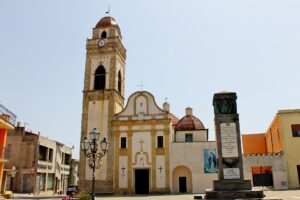
Church of San Pietro
At the village entrance as you arrive from Guasila, at the top of a flight of steps, stands this late 13th- to 14th-century church, blending Romanesque and Gothic: a single nave, a pointed-arch doorway and a holy-water stoup dated 1675, carved with a child's face.
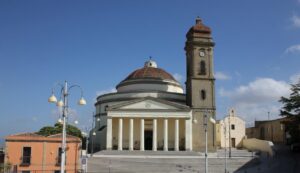
Parish church of San Sebastiano
Built in the 17th century as a vow after a plague epidemic. Inside are side chapels with polychrome marble, wooden statues and, in the choir, a pipe organ made in 1772 by the Lombard craftsman Giuseppe Lazzari.
Nuraghe Barru
On the border with Guasila lies the “Nuragic palace” of Barru, a three-lobed nuraghe (three towers around a central one) with an inner well, excavated since 2010. The remains of around 25 nuraghi dot the countryside.
Things to do in Guamaggiore
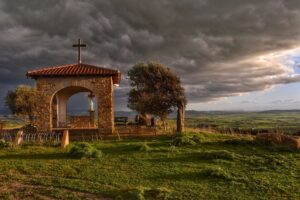
Life moves slowly here: walks and bike rides through wheat fields and hills, visits to Nuragic sites, sunset photos from country churches. In spring the Trexenta is green and full of flowers; in summer the fields turn gold. It's also a good base for an archaeology trip across Trexenta and Marmilla. Discover the experiences offered by local operators below and book yours.
History
Human presence dates back to the 4th millennium BC, followed by Nuragic, Punic and Roman settlement. In the Middle Ages the village belonged to the Judicate of Cagliari, district of Trexenta; after 1258 it passed to Pisa and in 1324 to Aragon, then into the county (later marquisate) of Villasor. The plagues of 1651–1655 and 1681 emptied the old village, and survivors moved north to today's site. Feudal rule ended in 1839; from 1928 to 1946 the village was merged with Selegas.
Food and local products
Guamaggiore has always lived on wheat: durum-wheat flour and handmade fresh pasta are its pride. Local cooking features broad beans, snails prepared the traditional way and rabbit a su chittu, cooked with vinegar and herbs. For dessert, almond amarettus, gateau (almond brittle) and cheese-filled pardulas.
Festivals and traditions
- 20 January: San Sebastiano, the patron saint, with a big bonfire.
- Early May: festival for San Sebastiano known as is carrus a monti.
- Late July: feast of Santa Maria Maddalena in the square in front of the church.
Nearby
- Guasila, a few kilometres away, with its neoclassical parish church.
- Selegas and Ortacesus, with churches and small rural museums.
- Senorbì: Sa Domu Nosta museum and the Monte Luna necropolis.
- Barumini and UNESCO-listed Su Nuraxi, about half an hour away.
Getting there and when to go
The nearest airport and port are in Cagliari, about 55 km away. Take the SS131 to Monastir, then the SS128 towards Senorbì and the Trexenta's local roads. You'll need a car. Spring and autumn are ideal for weather and colours; in winter it's worth coming for the San Sebastiano bonfire.
FAQ
How long do I need for Guamaggiore?
Two or three hours cover the churches and Nuraghe Barru; pair it with Guasila and Senorbì for a full day.
Is Guamaggiore near the sea?
No, it's inland. The nearest beaches are around Cagliari, about an hour's drive.
Can I visit with children?
Yes: short distances, open countryside and a nuraghe to explore appeal to younger travellers too.