Things to do in Gonnostramatza
Gonnostramatza, Sardinia: San Michele church and its retable, the Turcus e Morus pirate museum, San Paolo di Serzela and the almond brittle feast.
We are gathering the first experiences for this area. Check back soon, or tell us about an operator you know.
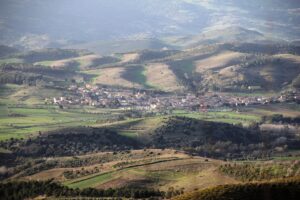
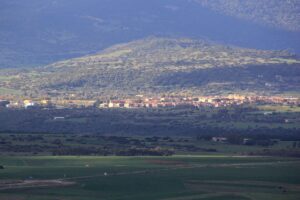
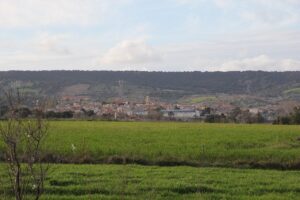
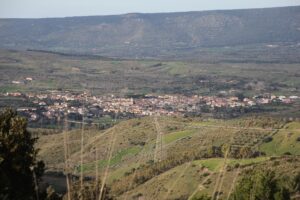
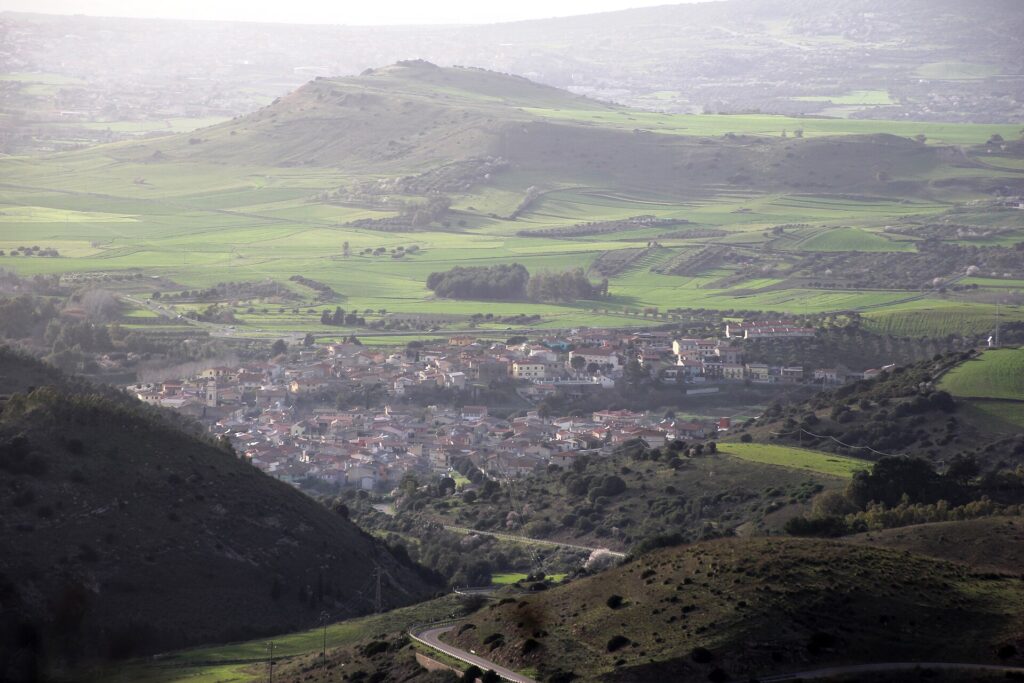
Gonnostramatza is a farming village of around eight hundred people in the upper Marmilla, in the province of Oristano, set in a fertile valley of vineyards, olive groves and almond orchards. In the Middle Ages it was the chief village of the Parte Montis district and long one of the most important places in the area. Today it is worth a visit for its parish church and 16th-century altarpiece, a quirky museum on Barbary pirate raids and countryside dotted with archaeological sites. It suits history lovers and anyone who enjoys quiet inland villages.
What to see in Gonnostramatza
The church of San Michele Arcangelo
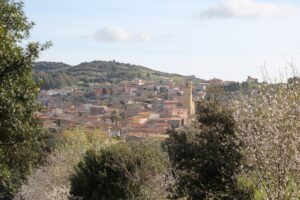
The parish church was rebuilt in the late 17th and early 18th centuries over an older Aragonese Gothic church, whose rib-vaulted apse and part of the sacristy survive. The square bell tower is topped by a dome covered in coloured tiles. In the apse is the retable of the Annunciation, from the early 1500s, attributed to Lorenzo Cavaro, founder of the Stampace school of painting in Cagliari.
Turcus e Morus museum
Set in a restored old grain store on the main square, this multimedia museum is devoted to Barbary raids on the Sardinian coast, with models of coastal towers and sailing ships, battle dioramas and panels telling of centuries of raids and defences.
Smaller churches and the centre
The little church of Sant'Antonio Abate stands on the main street. Out in the fields, the church of San Paolo was the parish of the vanished village of Serzela: founded in the 13th century and rebuilt in the 17th, it is the goal of a summer procession. The old centre keeps Campidano-style houses.
Archaeology
The countryside holds nuraghi, burial grounds and ancient settlements. In the Copper Age tomb of Bingia 'e Monti, archaeologists found the oldest gold jewel in Sardinia, a prehistoric necklace.
Things to do in Gonnostramatza
Country lanes among vines and almond trees are ideal for walks and bike rides, especially in late winter when the almonds are in blossom. The village is a good base for exploring the Marmilla and Monte Arci. Take a look at the experiences offered by local operators just below.
History
The area was inhabited in Nuragic and Roman times; a five-arched Roman bridge crossed the Rio Mogoro until it was demolished in 1928. In the Middle Ages the village belonged to the Judicate of Arborea as the main centre of Parte Montis. After the judicate fell it joined the Marquisate of Oristano and then, from 1478, the Aragonese holdings of the Carroz family and the county of Quirra, until the fief was bought out in 1839.
Food and local products
Almonds are the village's symbol and even appear on its coat of arms. They go into su gattou, a crunchy almond and sugar brittle that has its own festival. Also try the local wine, olive oil and Marmilla bread.
Festivals and traditions
- Sant'Antonio Abate, 17 January, with the blessing of the bonfire.
- Holy Week, with traditional Easter rites.
- 1 May, an arts and crafts show and the su gattou festival.
- San Paolo, 29 June, with a procession to the church at Serzela.
- San Michele Arcangelo and Santa Teresina, 29–30 September.
Nearby
- Mogoro, with the Cuccurada nuraghe and the crafts fair.
- Masullas and the Monte Arci GeoMuseum.
- Siddi and the Sa Domu 'e s'Orku giants' tomb.
- Lunamatrona and the Sa Corona Arrubia museum.
Getting there and when to go
Leave the SS131 highway near Mogoro: Oristano is about half an hour away, and Cagliari, with its airport and port, about an hour. Spring is the best time, with green fields and the May festival; autumn is pleasant too.
Frequently asked questions
How long do I need for Gonnostramatza?
Two or three hours cover the church and museum; pair it with Mogoro or Siddi.
Will kids enjoy the Turcus e Morus museum?
Yes: models, dioramas and pirate stories make it an engaging visit for the whole family.
What is su gattou?
A traditional Sardinian almond brittle, celebrated in the village on 1 May.