Things to do in San Nicolò Gerrei
San Nicolò Gerrei, Sardinia: Santu Iaci and the trilingual column, nuraghi, sacred springs, local food, festivals and travel tips.
We are gathering the first experiences for this area. Check back soon, or tell us about an operator you know.
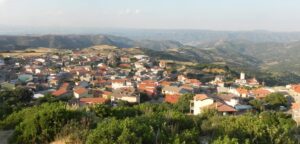
San Nicolò Gerrei is a farming village of about 700 people in the Gerrei, the hilly area south of the Flumendosa river, roughly an hour's drive from Cagliari. Its Sardinian name is Pauli Gerrei: until 1863 it was simply called Pauli, «marsh», as it lies in a basin rich in springs. Archaeologists know it for the trilingual column of Santu Iaci, one of the most important ancient inscriptions in Sardinia. Come here for archaeology, quiet and countryside off the beaten track.
What to see in San Nicolò Gerrei
Santu Iaci and the trilingual column
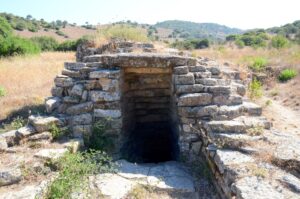
About 4 km from the village lies Su Putzu de Santu Iacci, where a spring was once channelled into a Nuragic sacred well. Today you'll find ruins and pottery fragments spanning the Nuragic to the Roman era. In 1861 a bronze column base was found here, inscribed in Latin, Greek and Punic around the mid-2nd century BC: a thank-you for a healing, dedicated to the god Eshmun, the Greeks' Asclepius. The original isn't in the village, but the site shows how much this land was a crossroads of cultures.
Nuraghi and sacred springs
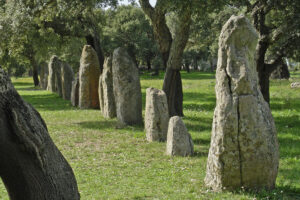
The area holds the Monti Taccu and Su Nuraxi nuraghi (Bronze Age stone towers), the Nuragic sacred hut of Forreddus, the megalithic circle of Mont'Ixi and three sacred springs, including the well-preserved Su Musuleu.
The village
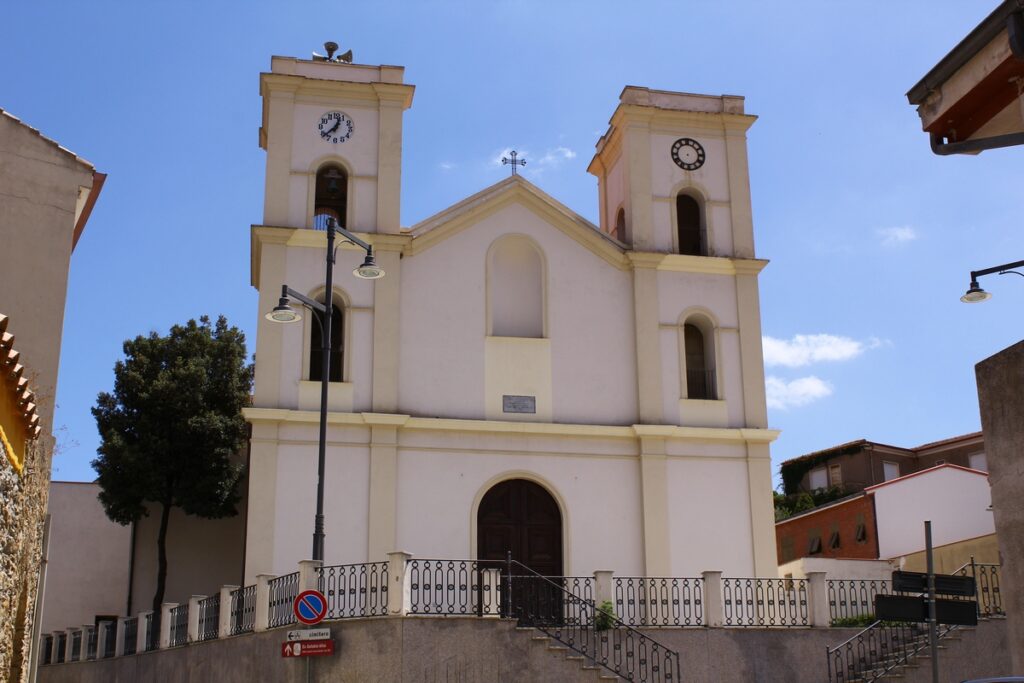
In the centre stands the church of San Nicola, the patron saint who gives the village its name.
Things to do in San Nicolò Gerrei
The rolling landscape of plateaus, springs and pastures is ideal for walks and for bike or horseback routes linking the archaeological sites. Monte Ixi, on the border with Silius, is the highest peak around. From here the Flumendosa river and the Sette Fratelli park are easy to reach. Scroll down to discover the experiences offered by local operators.
History
The area has been inhabited since the Neolithic and is rich in Nuragic remains; in Punic and Roman times there was already a settlement here, as shown by a hoard of Roman coins and a marble sarcophagus with Apollo and the Muses, now far from Sardinia. In the Middle Ages, as Pauli Gerrei, it was the capital of the Gerrei district in the Judicate of Cagliari. It then passed to Pisa and, around 1324, to Aragon. In 1681 it became part of the county of Villasalto, then the marquisate of Villaclara, and was redeemed in 1839 when feudalism ended.
Food and shopping
Cooking follows the shepherding tradition of the Gerrei: sheep's and goat's cheeses, lamb and mutton, home-baked bread and Sardinian sweets made with almonds and honey. Cereals and vines are grown in the surrounding fields.
Festivals and traditions
The patron saint, San Nicola, is celebrated twice a year: in mid-May and in early December, with religious rites and village festivities.
Nearby
- Silius: the ruins of Sassai castle.
- Villasalto: the Su Suergiu antimony mine.
- Armungia: a nuraghe in the square and Emilio Lussu's house.
- Goni: the Pranu Muttedu menhir park.
Getting there and when to go
The nearest airport and port are in Cagliari, about an hour away by car along the SS387 via Dolianova. Spring, when the fields are green, and autumn are the best seasons; in summer, visit the sites early in the morning.
FAQ
Where is the trilingual column?
It was found at Santu Iaci, in the village's territory, but the original is kept outside Sardinia, in Turin.
How long do I need in San Nicolò Gerrei?
Half a day covers the village and one archaeological site; combine it with Silius or Villasalto for a full day in the Gerrei.
Is it worth it if I'm not into archaeology?
Yes, if you're after peace, nature and country cooking: it's a great base for exploring the Flumendosa valley.