Things to do in Selegas
Things to do in Selegas, Trexenta, Sardinia: Sant'Anna church, Seuni and Santa Vittoria, Nuraghe Nuritzi, murals, festivals and travel tips.
We are gathering the first experiences for this area. Check back soon, or tell us about an operator you know.
Selegas (Sèligas in Sardinian) is a farming village in the Trexenta, the gently rolling wheat country of southern Sardinia, about 50 minutes' drive from Cagliari. It stretches between two small valleys at the foot of Monte Nuritzi, with low houses and walls painted with murals. It's a quiet stop for anyone who loves archaeology, country churches and rural Sardinia away from the crowds, and it pairs easily with a beach holiday in the south.
What to see in Selegas
Church of Sant'Anna and the old centre
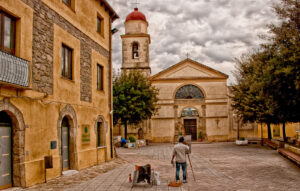
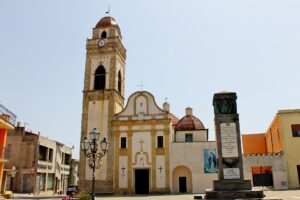
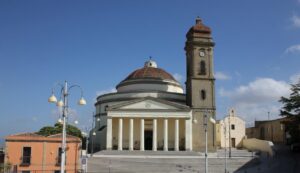
The parish church of Sant'Anna is the heart of the village: medieval in origin, with a marble altar and a bell tower holding four bells, the oldest cast in 1608 and inscribed with the village's old name, Seligas. Next to it are a small collection of religious art and a Lourdes grotto. Wander the lanes to find the 16th-century Oratory of the Rosary, the little church of Santa Vitalia at the top of the village and Sant'Elia, built in 1810. Keep an eye on the walls: many houses are decorated with murals.
Seuni and the sanctuary of Santa Vittoria
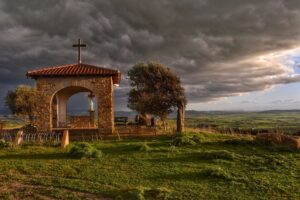
About 2 km away lies the hamlet of Seuni, with the sanctuary of Santa Vittoria, documented since 1581 and rebuilt in the mid-20th century. A stretch of Roman road surfaces nearby.
Nuraghi and archaeology
People have lived here for thousands of years. On the hill of the same name, part of the central tower of the Bronze Age Nuraghe Nuritzi still stands (a nuraghe is a prehistoric stone tower, the symbol of Sardinia). At Turriga, in the village's countryside, a famous stone female figurine, a pre-Nuragic “mother goddess”, was found; it's now in the National Archaeological Museum in Cagliari.
Things to do in Selegas
Selegas is made for slow travel: walks and bike rides among wheat fields, olive groves and low hills, especially in spring when the Trexenta turns green and full of flowers. Climb to Nuraghe Nuritzi for the view, hunt for murals in the village and build an archaeology loop with the sites of neighbouring villages. Scroll down to discover the experiences offered by local operators and pick the one that suits you.
History
The hills around the village were inhabited from prehistory through Nuragic and Roman times, when the road linking Cagliari with the interior ran through here. In the Middle Ages Selegas belonged to the Judicate of Cagliari, in the district of Trexenta. After the judicate fell in 1258 it passed to Pisa and in 1324 to the Crown of Aragon, then became part of the Alagón family's fief of Villasor until feudalism ended in 1839. Between 1928 and 1946 the villages of Ortacesus and Guamaggiore were merged into it.
Food and local products
The Trexenta has always been grain country, and the village coat of arms shows five ears of wheat. Local cooking revolves around durum-wheat bread and fresh pasta, sheep's cheese, pulses and almond sweets such as pardulas. To take home: olive oil, wine and baked goods from the area.
Festivals and traditions
- May: feast of Santa Vittoria in Seuni and feast of Sant'Isidoro, patron saint of farmers.
- Late July: patron saint's feast with a procession, traditional dress, music, dancing and improvised poetry contests in Sardinian.
- Early October: feast of Santa Vitalia.
Nearby
- Senorbì, a few kilometres away: the Sa Domu Nosta archaeological museum and the Punic necropolis of Monte Luna.
- Guamaggiore and Guasila, with medieval churches and Nuraghe Barru.
- Gesico, the “village of seven churches”.
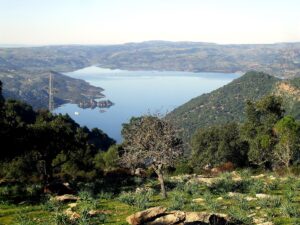
- Lake Mulargia, for kayaking and cycling.
- Barumini and the UNESCO-listed Su Nuraxi, about 30 minutes away.
Getting there and when to go
The nearest airport and ferry port are in Cagliari, about 50 km away. Take the SS131 to Monastir, then the SS128 towards Senorbì. You'll need a car. Spring and autumn are the best seasons: mild weather, green or freshly ploughed fields and village festivals. Summer is hot, but you can combine a visit with the beaches of southern Sardinia.
FAQ
How long do I need to visit Selegas?
Half a day covers the village, Seuni and Nuraghe Nuritzi. Add Senorbì and the other Trexenta villages for a full day.
Is Selegas by the sea?
No, it's inland. The nearest beaches are around Cagliari, about an hour's drive away.
Is it good for families?
Yes: short distances, quiet roads and open-air sites to explore at your own pace make the area easy with children.